
Explore Greece's best traditional villages for holidays
Discover Greece's best traditional villages, from Papigo's stone lanes to Chios's medieval Mastihohoria. Find your ideal authentic Greek village holiday.

TL;DR:
- Authentic Greek villages offer genuine culture, architecture, and local traditions away from tourist crowds.
- Mountain villages like Papigo and Dimitsana provide natural beauty and historical immersion ideal for outdoor activities.
- Lesser-known villages showcase unique architecture, crafts, and traditions, offering deeper experiences beyond popular islands.
Greece draws millions of visitors every year, yet the most memorable experiences often hide far from the famous white-washed terraces and crowded port towns. Finding a genuinely traditional Greek village, one where locals still gather in the central square, stone houses line cobbled alleys, and life moves at its own honest pace, takes a little more intention. It also rewards you with something lasting. This guide walks you through what to look for in an authentic village stay, then spotlights four exceptional destinations: Papigo, Dimitsana, the Mastihohoria of Chios, and Nymfaio. Each one offers culture, beauty, and the kind of quiet that lets you truly arrive.
Table of Contents
- How to choose your ideal Greek village
- Papigo: Epic landscapes and authentic Zagorochoria
- Dimitsana: Arcadian beauty and history
- Mastihohoria of Chios: Medieval fortress villages
- Nymfaio: Aristocratic mansions amid northern forests
- The value of choosing beyond the usual island circuit
- Start planning your authentic village holiday
- Frequently asked questions
Key Takeaways
| Point | Details |
|---|---|
| Mountain vs. island villages | Mountain villages offer authentic architecture and hiking while islands provide coastal charm. |
| Visit during shoulder seasons | Traveling in spring or fall brings fewer crowds, local festivals, and more local flavor. |
| Top villages for every traveler | Papigo, Dimitsana, Mastihohoria, and Nymfaio each offer distinctive experiences. |
| Culture and nature together | Many traditional villages blend rich history, unique traditions, and outdoor adventures. |
How to choose your ideal Greek village
Not every picturesque village delivers the same experience. Knowing why Greece stands out as a destination helps, but the real question is which corner of it suits you best. A traditional village, in the truest sense, is defined by more than old stone. It carries a living culture: local festivals, family-run tavernas, crafts passed down across generations, and architecture shaped by the land around it.
The first distinction to make is between mountain and island villages. Islands like Mykonos, Santorini, Crete, Rhodes, Kefalonia, Samos, Karpathos, and Paros each have traditional pockets worth exploring, but mainland and mountain villages tend to offer a quieter rhythm and deeper immersion in local customs. Mountains bring slate rooftops, gorge trails, and the scent of pine. Islands bring sea light, fishing boats, and whitewashed lanes. Both are valid. Neither is the same.
When you visit matters enormously. Traditional villages excel in fall and spring shoulder seasons, offering fewer crowds, local festivals, and comfortable weather. Summer brings warmth and energy but also more visitors, especially in well-known spots.
Here is what to look for when evaluating any Greek village:
- Stone houses and traditional architecture that reflect regional building traditions
- An active central square where locals actually gather and spend time
- Local markets or festivals tied to the agricultural or religious calendar
- Family-run tavernas serving regional cuisine rather than tourist menus
- Surrounding landscape that invites walking, exploration, or simply sitting still
Pro Tip: Search specifically for lesser-known villages within popular regions. In the Peloponnese, Zagori, or northern Greece, you can often find extraordinary places just a short drive from the more familiar names.
Papigo: Epic landscapes and authentic Zagorochoria
With your selection criteria in mind, it’s time to discover the top contenders, starting with a mountain gem celebrated by experts. Papigo sits in the Zagori region of northwestern Greece, and it consistently earns its place among the country’s finest traditional villages. The setting alone stops you in your tracks: dramatic peaks, sweeping valleys, and the vast silence of highland Greece.
Papigo is frequently recommended as one of Greece’s top traditional villages, and the reasons become clear the moment you walk its lanes. Slate-roofed stone houses, cobbled lanes, and Vikos Gorge hiking define the Papigo experience in the most satisfying way.
“In Papigo, the architecture is not decoration. The stone houses grew from the mountain itself, shaped by the same hands that farmed the land and tended the flocks for centuries.”
What you will find in Papigo:
- Slate-roofed stone houses built from local grey stone, blending seamlessly into the hillside
- Cobbled alleys connecting small neighborhoods with quiet, unhurried charm
- Vikos Gorge, one of the deepest gorges in the world, accessible by well-marked hiking trails
- Natural springs and swimming holes at Rogovo, a short walk from the village
- Small, excellent tavernas where local recipes have barely changed in generations
The best time to visit Papigo is late spring or early autumn. The trails are clear, the air is fresh, and the village feels genuinely alive without being overrun. For those who love hiking and watersports in Greece, Papigo offers some of the most breathtaking terrain in the entire country.
Dimitsana: Arcadian beauty and history
From the towering peaks of Epirus to the Peloponnese’s heartlands, Dimitsana brings together natural beauty and historic depth. This is a village that wears its history openly. Perched in the mountains of Arcadia, it rises in a graceful amphitheatrical arc, with stone mansions terraced along the hillside and views that stretch across the Lousios valley below.
Dimitsana stands out for its amphitheatrical stone architecture, its historic library, and a rich offering of outdoor activities that few Peloponnese villages can match. The historic library holds manuscripts dating back centuries and represents a remarkable chapter in Greek intellectual history. The watermill museum along the Lousios River reconstructs the traditional water-powered industries that once sustained the village.
What Dimitsana offers:
- Amphitheatrical stone mansions arranged across the hillside with striking visual effect
- The historic library, one of the oldest functioning libraries in Greece
- The open-air watermill museum at the Lousios River, a living record of local craft
- Lousios Gorge trails, ideal for hiking among dramatic rock formations and Byzantine monasteries
- Rafting and kayaking on the Lousios River for those who want something more active
Pro Tip: Time your visit to Dimitsana around the local Carnival period or Orthodox Easter celebrations. These festivals draw the community together in ways that feel entirely genuine and offer a rare window into Arcadian village life. If you are traveling as a family, these family tips for Greek travel will help you plan with confidence and ease.
Mastihohoria of Chios: Medieval fortress villages
If you crave architecture and tradition infused with centuries-old craft, the Mastihohoria of Chios provide a striking contrast to mountain villages. These are medieval fortress settlements, built with defense in mind and decorated with an artistry that is entirely their own. The Mastihohoria villages are medieval fortress settlements with unique painted facades and mastic groves that have defined life here for over a thousand years.
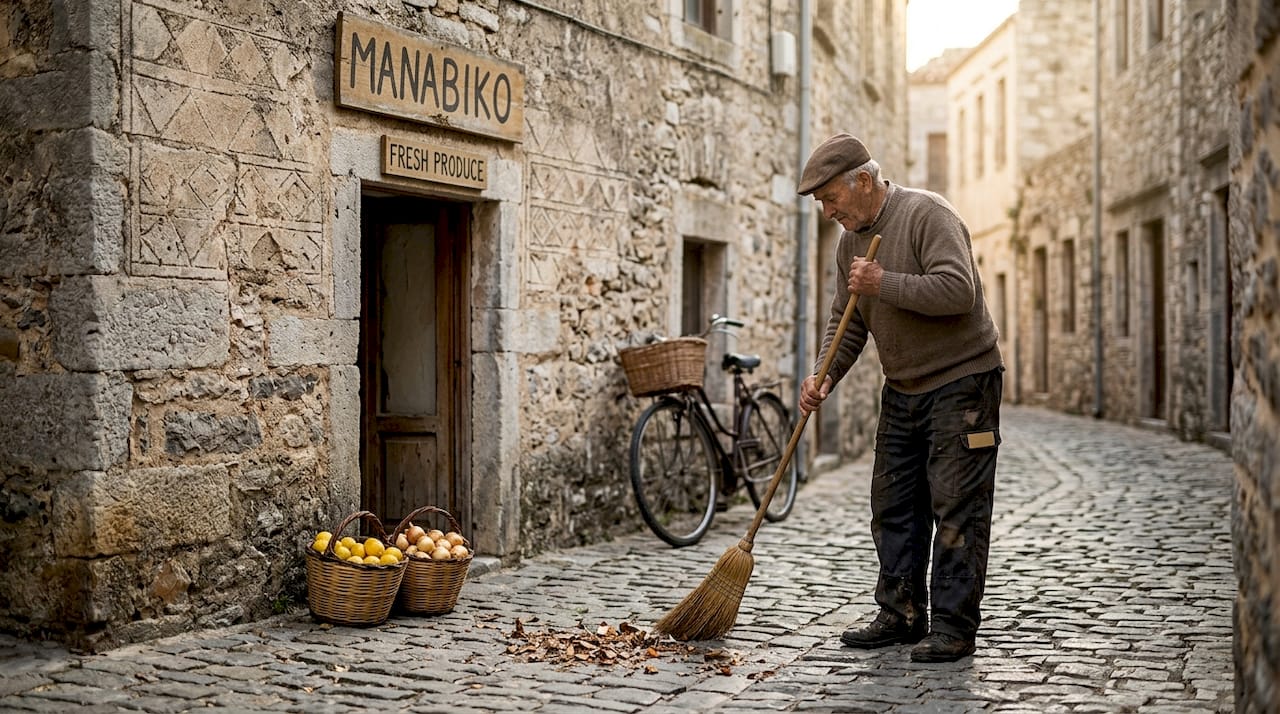
The most celebrated of these villages are Pyrgi and Mesta. Each has a distinct character, and together they represent one of the most unusual architectural traditions in all of Greece.
| Feature | Pyrgi | Mesta |
|---|---|---|
| Facade style | Xysta geometric patterns in black and white | Plain stone, more austere |
| Layout | Dense, labyrinthine streets | Compact, fortified medieval grid |
| Main draw | Visual drama and craftsmanship | Preserved medieval atmosphere |
| Mastic culture | Strong connection to mastic harvest | Equally central to mastic life |
| Best for | Photography and architecture lovers | Those seeking quiet immersion |
Beyond their striking looks, both villages pulse with a living culture built around mastic harvesting. Mastic, a natural resin tapped from trees found almost exclusively on Chios, has been cultivated here since antiquity. It flavors food, scents cosmetics, and has been traded across the Mediterranean for centuries.
For those who have explored authentic Cycladic village experiences, the Mastihohoria will feel like a fascinating new chapter. The atmosphere is quieter, denser, and steeped in a different kind of Greek tradition.
Nymfaio: Aristocratic mansions amid northern forests
Beyond the Aegean, heading north opens up a world of leafy forests and stately elegance. Nymfaio is a village that surprises people. Tucked into the mountains of western Macedonia, it feels less like a typical Greek village and more like a place that time has polished rather than forgotten.
Nymfaio is voted among Europe’s most beautiful, with Vlach mansions and a nearby bear sanctuary adding layers of character that few other villages in Greece can claim. The Vlach community, historically semi-nomadic pastoralists, built grand stone mansions here that have been carefully restored into boutique guesthouses and small museums.
| Attraction | What to expect |
|---|---|
| Vlach mansions | Restored aristocratic stone houses, many operating as boutique hotels |
| Arcturos bear sanctuary | A refuge for rescued bears, located just outside the village |
| Forest walking trails | Dense oak and beech forests ideal for gentle walks |
| Village museum | Documents Vlach history, traditions, and migration patterns |
| Local cuisine | Rich mountain food featuring game, cheese, and regional pies |
Nymfaio also draws visitors with its exceptional micro-climate, cool and forested in summer when the rest of Greece bakes. It is the kind of place where you sit on a stone terrace with a coffee and feel no urge to move. For a sense of the lush, authentic side of Greece that goes beyond postcard images, discover lush authentic Greece and let that curiosity lead you further north.
The value of choosing beyond the usual island circuit
Here is something worth saying plainly: the islands are extraordinary. Santorini, Mykonos, Paros, Rhodes, Karpathos, and the rest deserve their reputations. But the assumption that the best Greek experience must involve a beach and a ferry schedule can quietly limit what you actually discover.
Mountain villages emphasize hiking, gorges, and authenticity in ways that coastal settings rarely can. When you sit in a stone-paved square in Dimitsana or walk the lanes of Mesta at dusk, there are no crowds moving around you. There is just the village, its people, and the particular quality of light that falls on old stone. That experience tends to stay with you longer.
We have seen this pattern consistently over decades of guiding travelers through Greece. The guests who venture to Karpathos Greek island authenticity or into the highland villages of Epirus often return home describing not just what they saw, but how they felt in those places. There is a depth to unhurried village life that reshapes how you think about travel. Choosing beyond the obvious is not a compromise. It is usually an upgrade.
Start planning your authentic village holiday
The villages in this guide are not interchangeable. Each one offers its own rhythm, its own architecture, and its own invitation to slow down and pay attention. Whether Papigo’s granite peaks call to you, or Nymfaio’s forested elegance, or the geometric wonder of Pyrgi’s facades, the right village is waiting.
At Longevity Travel, we have been curating authentic Greek experiences since 1990, and we know that the best holidays begin with the right match between traveler and place. Explore our village-focused travel programs designed around genuine immersion and local culture. If you are looking for something even more tailored, browse our unique activity packages and let us help you design a journey that feels exactly right for you.
Frequently asked questions
Which Greek traditional village is best for hiking and nature?
Papigo is frequently recommended for mountain views and Vikos Gorge hiking, making it the top choice for nature lovers and active travelers seeking authentic village settings.
When is the best time to visit traditional Greek villages?
Spring and fall are ideal. Traditional villages excel in shoulder seasons for festivals and fewer crowds, giving you a far more genuine experience than peak summer.
Which Chios villages are famous for mastic cultivation?
Pyrgi and Mesta are the most renowned, with deep cultural ties to mastic groves and a medieval fortress character that sets them apart from any other village in Greece.
What makes mountain villages different from island villages in Greece?
Mountain villages emphasize hiking, gorges, and authenticity over coastal scenes, offering stone architecture, local traditions, and a quieter pace that rewards travelers who want cultural depth alongside natural beauty.
Recommended
Planning a family holiday in Greece? We'll help you pick the right island and hotel.
Explore Greek destinationsNewsletter
A memory for life
Weekly to your inbox: inspiration, longevity insights and exclusive travel offers.