
Why Mindfulness on Vacation Enhances Longevity
Learn why mindfulness on vacation is vital. Explore stress reduction, authentic connection, travel types, risks, and proven benefits for longevity.

A packed itinerary and endless scrolling may leave you feeling more drained than restored after vacation. For wellness-focused travelers searching for something deeper, mindfulness offers a path to meaningful renewal. Research shows that present-moment awareness during travel leads to greater satisfaction, more memorable experiences, and a stronger connection to place. Unveiling the core principles behind mindful vacationing in Greece, this guide reveals how to transform your journey into lasting well-being and rejuvenation.
Table of Contents
- Mindfulness on Vacation: Core Principles
- Types of Mindful Travel and Experiences
- Key Benefits for Wellness and Longevity
- Common Pitfalls of Unmindful Travel
- How to Create a Mindful Journey in Greece
Key Takeaways
| Point | Details |
|---|---|
| Practice Present-Moment Awareness | Focus on what is happening now to enhance your travel experience and connect deeply with your surroundings. |
| Incorporate Mindfulness into Daily Routines | Integrate short mindfulness practices into your vacation to foster lasting well-being and reduce stress. |
| Engage Authentically with Local Culture | Participate in local activities to cultivate genuine connections and enrich your travel experience. |
| Prioritize Quality Over Quantity | Choose fewer destinations with longer stays to allow for deeper exploration and restoration during your vacation. |
Mindfulness on Vacation: Core Principles
Mindfulness on vacation is not about forcing yourself to relax or perfecting a meditation posture on a beach chair. It’s about being fully present with what’s actually happening around you and within you, moment by moment. This approach transforms an ordinary trip into something far more restorative, grounding you in genuine experiences rather than the constant mental chatter that follows most travelers home. Research on mindfulness in tourism shows that travelers who practice present-moment awareness report greater satisfaction, more memorable experiences, and a stronger connection to the places they visit.
The foundation of mindful vacation travel rests on three interconnected principles that shift how you move through your journey:
- Present-moment awareness: Directing your full attention to what’s happening right now, rather than mentally reviewing yesterday’s meetings or planning next week’s schedule
- Internal and external attention: Noticing both your internal experiences (thoughts, emotions, physical sensations) and your external environment (sights, sounds, textures, tastes)
- Nonjudgmental observation: Experiencing moments without labeling them as good or bad, perfect or disappointing
These principles sound simple, but they require conscious practice. Your mind, trained by years of multitasking and scrolling, naturally drifts into planning mode or judgment. When you’re walking through a Grecian village, your brain might be evaluating whether the restaurant is “good enough” or wondering if you should’ve chosen a different destination. Mindfulness invites you to simply notice the white-washed walls, the sound of bells on goats passing by, the warmth of Mediterranean sun on your skin.
The practice begins with attention, not achievement. You’re not trying to feel a certain way or reach a specific state of calm. You’re simply noticing what’s already present.
The magic happens when you integrate specific practices into daily moments rather than treating mindfulness as something separate from your vacation. This might look like spending 10 minutes with your morning coffee noticing its aroma and warmth before taking the first sip. It could mean pausing during a walk to feel your feet on the ground, or sitting quietly for five minutes before dinner, observing the light as it changes. Incorporating mindfulness practices during leisure produces lasting benefits including reduced fatigue, improved emotional regulation, and sustained well-being that extends well beyond your return home.
What makes these practices powerful for longevity is their cumulative effect. You’re not trying to achieve perfection during a two-week escape. Instead, you’re building a mental foundation that supports how you move through life. Travelers who practice mindfulness on vacation report carrying these habits forward, experiencing better stress management, improved sleep quality, and stronger relationships in the months that follow. The vacation becomes the training ground for a more sustainable, present way of living.
For affluent travelers seeking deeper rejuvenation, mindfulness operates differently than passive relaxation. You’re not scrolling your phone by the pool. You’re actively engaging with your environment, your body, and your inner experience with full presence and curiosity.
Pro tip: Start your vacation with a single mindfulness anchor, such as noticing your five senses during your first meal or focusing on your breath for two minutes each morning. One consistent practice creates momentum, making it easier to expand into other mindful moments throughout your journey.
Types of Mindful Travel and Experiences
Mindful travel isn’t one-size-fits-all. Different experiences activate mindfulness in different ways, and choosing the right type depends on what resonates with you and what your body and mind need at this moment in your life. Some travelers thrive in structured meditation retreats, while others find deeper presence through wandering a Grecian olive grove or sitting with locals over a slow meal. The key is recognizing that various forms of mindfulness tourism offer distinct pathways to the same destination: a mind that’s genuinely present, less reactive, and more grounded in what matters.
Meditation Retreats and Structured Programs
A dedicated meditation retreat offers intensive practice in a controlled environment. These experiences typically range from weekend intensives to two-week programs, combining daily meditation sessions with mindful meals, walking practices, and often some form of yoga or gentle movement. The structure removes decision-making from your vacation, which paradoxically creates more mental space. You wake up knowing exactly what the day holds, and this predictability allows your nervous system to relax more deeply than it would in a busy itinerary.
For affluent travelers seeking transformation, meditation retreats in Greece offer an authentic approach grounded in both ancient philosophy and contemporary science. The advantage here is consistent practice in community. You’re surrounded by others committed to presence, which creates a container for genuine change. Many women report that the biggest shift happens in the second week, when the mind finally settles enough to access insights that don’t emerge during daily life.
Nature Immersion and Contemplative Exploration
Nature immersion takes mindfulness out of the meditation hall and into the landscape itself. This might mean hiking through Grecian mountains with full sensory awareness, sitting by the Aegean watching light change on water, or spending time in a garden noticing the details of plants and insects. Nature immersion activates mindfulness through direct engagement with the natural world rather than through formal practice.
The research on this approach is striking. When you practice mindfulness in nature, you’re not just benefiting from present-moment awareness; you’re also deepening your connection to the environment and often discovering unexpected personal insights. Nature has a way of revealing what you need to know about yourself when you’re quiet enough to listen. This type of experience tends to create lasting behavioral shifts, including more sustainable choices and stronger environmental awareness long after your return home.
Cultural and Spiritual Engagement
Mindful cultural travel invites you to experience local traditions, spiritual practices, and ways of living with genuine curiosity rather than as a spectator. This might involve participating in a traditional Greek cooking class, learning about local spiritual practices, or visiting sacred sites with intention and respect. The mindfulness emerges through deep listening and authentic connection with the people and traditions you encounter.
This approach requires a different kind of presence. You’re not observing from outside; you’re actively participating and learning. Many women find this transformative because it breaks down the separation between tourist and local, creating genuine human connection that feeds the soul in ways passive tourism cannot. When you’re fully present with a Greek fisherman explaining how his family’s been fishing for generations, or learning to make pasta from a woman who’s been doing it for 50 years, you’re practicing mindfulness through relationship.
Yoga and Movement-Based Mindfulness
Yoga retreats and movement-focused experiences integrate mindfulness through the body. Whether you’re practicing traditional yoga, taking mindful movement classes, or doing tai chi by the sea, you’re anchoring awareness in physical sensation. This appeals to travelers who find sitting meditation challenging or who naturally connect with their bodies more readily than their thoughts.
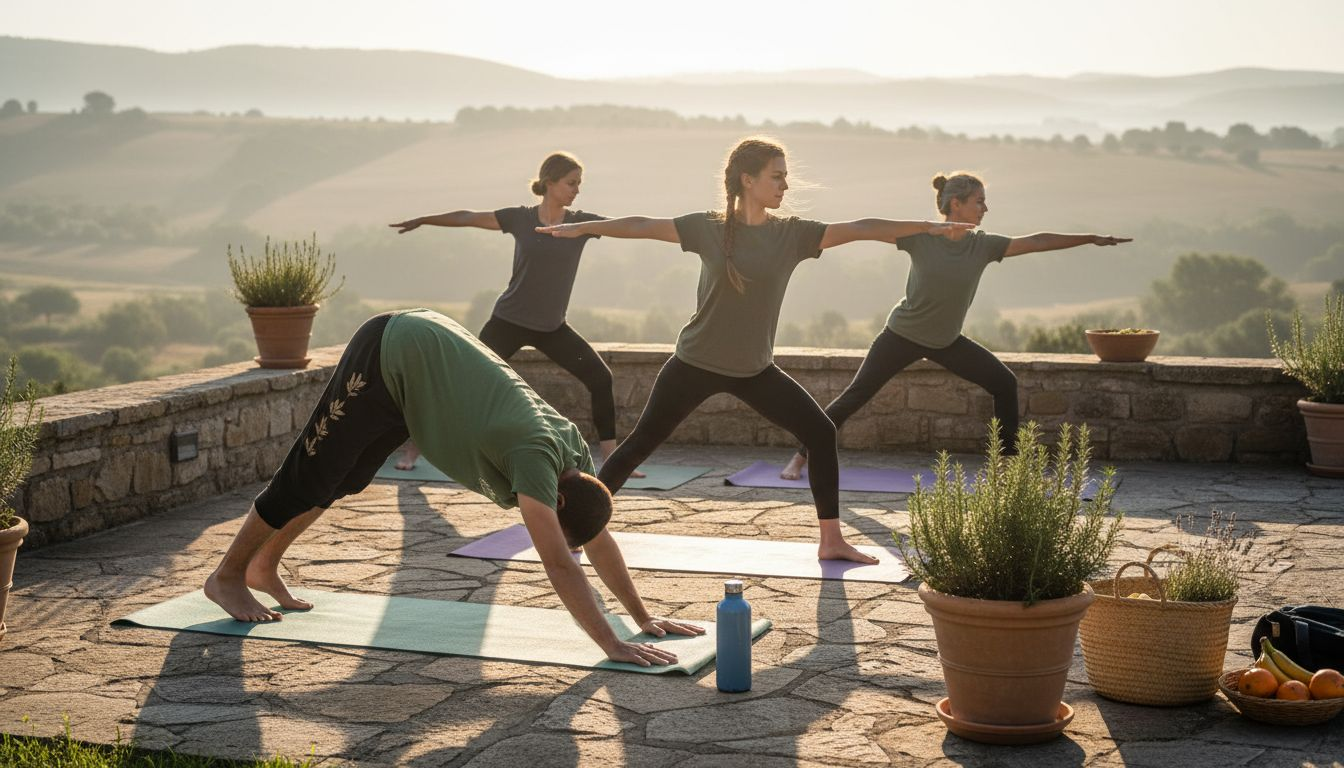
Movement-based mindfulness offers specific advantages for longevity. You’re building flexibility, strength, and body awareness while cultivating presence. Many women discover through yoga retreats that their relationship with their body shifts, becoming less critical and more appreciative of what their body can do and experience.
Here’s a quick comparison of mindful travel experiences to help you choose the best fit:
| Experience Type | Structure Level | Ideal For | Key Benefit |
|---|---|---|---|
| Meditation Retreats | Highly structured | Those seeking deep reset and community | Intensive mindfulness foundation |
| Nature Immersion | Flexible/self-guided | Travelers seeking solitude or sensory engagement | Enhanced nature connection |
| Cultural Engagement | Moderately structured | Learners who value authentic connection | Rich personal growth and understanding |
| Yoga & Movement | Balanced structure | People needing body-based awareness | Improved flexibility and body appreciation |
The best mindful travel experience is the one you’ll actually practice. Choose based on your temperament, not what you think you “should” do.
Choosing Your Mindful Experience
Consider these factors when selecting which type resonates:
- Your baseline temperament: Do you prefer structure or spontaneity? Solitude or community?
- Physical comfort: Can you sit for long meditation periods, or do you need movement?
- Time available: Can you commit to a full retreat, or do you prefer mixing mindfulness into a broader vacation?
- Current life needs: Are you seeking intense reset, gentle rejuvenation, or authentic connection?
- Learning style: Do you process experience through instruction, direct engagement, or movement?
Many travelers find that combining different approaches throughout a longer journey creates the richest experience. You might spend a few days in a meditation retreat, then move into nature immersion, then engage with local culture. This variety keeps the mind engaged while deepening the practice.
Pro tip: Choose one primary experience type for your vacation rather than attempting multiple intensive practices. Depth of practice matters more than breadth, and one rich experience creates more lasting change than scattered exposure to many approaches.
Key Benefits for Wellness and Longevity
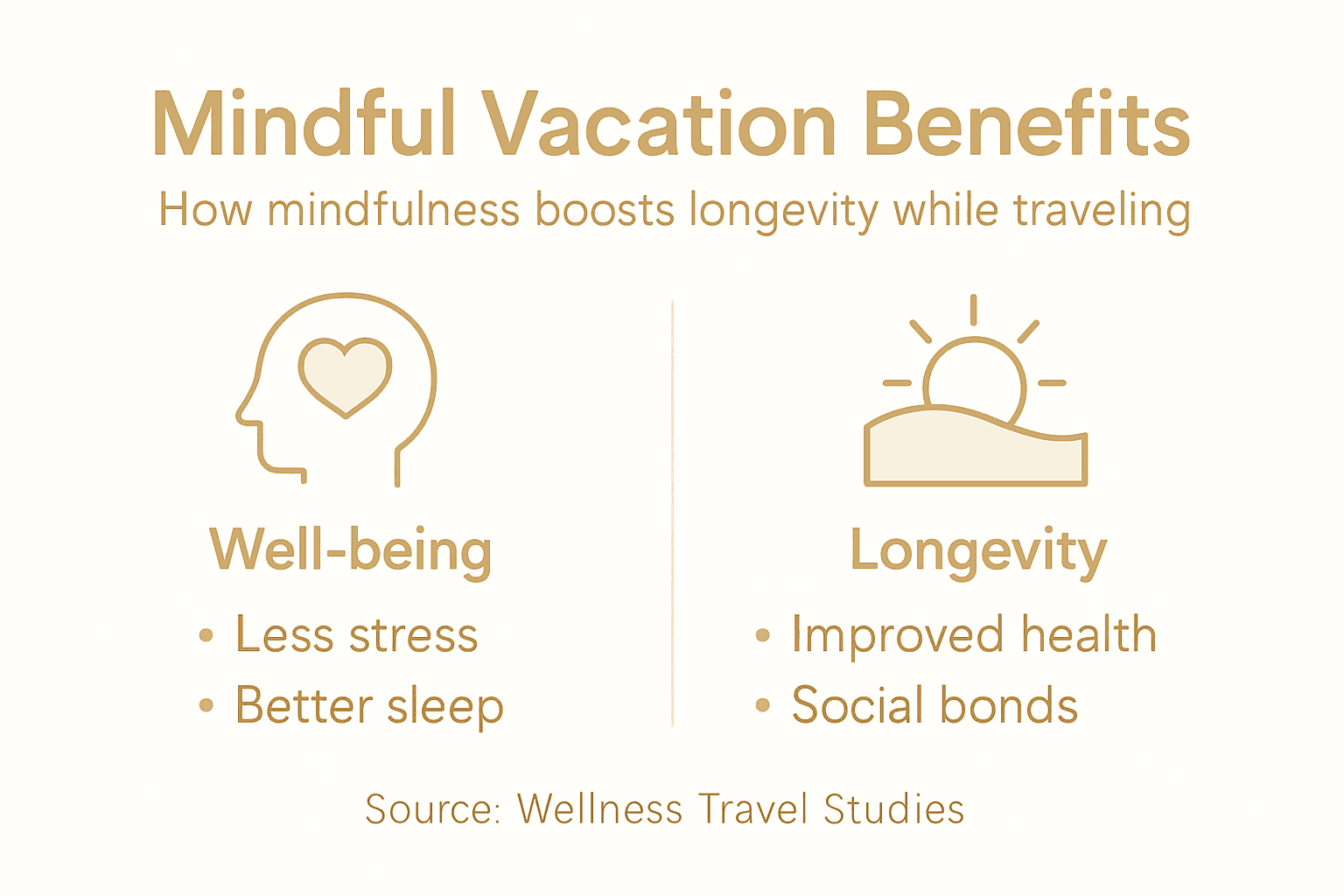
The connection between mindful vacation experiences and longevity isn’t mystical or vague. It’s measurable and specific. When you practice mindfulness while traveling, you’re activating physiological and psychological systems that directly support living longer, healthier, and more vibrant years. Research on wellness tourism reveals that mindfulness practices reduce stress, improve emotional regulation, enhance cognitive function, and build the foundation for sustainable well-being that extends far beyond your vacation. For affluent women in your demographic, these benefits translate into meaningful improvements in how you age and how you experience your life day to day.
Stress Reduction and Nervous System Regulation
One of the most immediate benefits of mindfulness on vacation is stress hormone reduction. When you’re fully present, your nervous system downregulates from its constant fight-or-flight baseline. Cortisol levels drop, blood pressure normalizes, and your body shifts into parasympathetic activation, the state where healing and restoration actually happen. This isn’t a temporary feeling that disappears when you board your flight home. The nervous system learns. Regular practice during vacation creates lasting changes in how reactive or calm you are in daily life.
Many women report that after a mindfulness-focused vacation, they notice themselves naturally pausing before responding to stressors. They breathe differently. They sleep better. Their resting heart rate decreases. These aren’t small things when you’re thinking about longevity. Chronic stress accelerates aging at the cellular level, literally shortening telomeres and increasing inflammation. When you interrupt that pattern through mindful travel, you’re quite literally buying yourself more healthy years.
Enhanced Emotional Regulation and Mental Clarity
Mindfulness teaches your brain to observe thoughts without being hijacked by them. This skill transforms your emotional resilience. You develop what neuroscientists call emotional granularity, the ability to distinguish between different emotional states rather than collapsing everything into “stressed” or “fine.” This clarity allows you to respond more skillfully to life’s inevitable challenges.
The cognitive benefits are equally significant. When you practice sustained attention and present-moment awareness, you’re literally training your prefrontal cortex, the part of your brain responsible for executive function, decision-making, and long-term planning. Regular mindfulness practice increases gray matter density in these regions. Over time, this translates into sharper thinking, better memory, and improved focus that persists long after your vacation ends.
Improved Sleep Quality and Regenerative Rest
Mindfulness vacation experiences create conditions for deep, regenerative sleep. When your nervous system is calm and your mind isn’t churning through anxiety loops, sleep becomes genuinely restorative. Many women find that the quality of sleep they experience during a mindfulness retreat resets their sleep baseline. They sleep better for months afterward because their body remembers what genuine rest feels like.
Quality sleep is perhaps the single most powerful longevity factor within your control. Poor sleep accelerates cognitive decline, increases inflammation, and disrupts metabolic processes. When you return home with improved sleep patterns and habits, you’re investing in every aspect of your long-term health.
Physical Health and Longevity Benefits
The physical benefits extend beyond stress reduction. Mindfulness practices:
- Lower blood pressure and improve cardiovascular health
- Reduce inflammation throughout the body
- Strengthen immune function
- Improve metabolic markers including blood sugar regulation
- Enhance digestion through parasympathetic activation
- Reduce chronic pain perception
When you combine mindfulness with the lifestyle elements of wellness travel—better movement, nutritious food, time in nature, quality sleep—the compound effect on your healthspan becomes remarkable. You’re not just living longer; you’re living with more vitality, mobility, and freedom from chronic disease.
Strengthened Relationships and Social Connection
Mindfulness naturally deepens your capacity for genuine connection. When you’re fully present with the people around you, conversations become richer. Relationships deepen. You return home with renewed capacity for attentiveness to your loved ones. Research consistently shows that strong social connections are among the strongest predictors of longevity and quality of life. Wellness retreats that foster meaningful connection create lasting shifts in how you relate to others.
Environmental Awareness and Sustainable Choices
Mindful travelers develop deeper awareness of their environmental impact. This often translates into more sustainable choices at home: conscious consumption, reduced waste, better food choices, and greater care for natural spaces. These behavioral shifts create a positive feedback loop where your choices support both your health and the health of the world you’ll live in as you age.
Use this summary to understand how mindful travel supports your overall wellness and longevity:
| Wellness Aspect | Mindful Travel Impact | Longevity Outcome |
|---|---|---|
| Stress Regulation | Reduces cortisol, calms system | Slower aging, lower inflammation |
| Emotional Resilience | Builds emotional awareness & clarity | Greater life satisfaction and adaptability |
| Cognitive Function | Boosts attention and memory | Sustains brain health over time |
| Sleep & Recovery | Deepens regenerative rest | Improved recovery and energy |
| Social Connection | Strengthens relationships | Higher quality of life |
| Environmental Consciousness | Fosters mindful choices | Long-term balance for self and planet |
Mindfulness on vacation creates cellular memory. Your body learns what ease feels like, and it remembers.
Building a Foundation for Sustained Well-being
The most transformative benefit is this: mindfulness vacation experiences create a foundation you carry home. You’re not just getting a break from stress; you’re establishing new baseline patterns of awareness and presence. Your nervous system recalibrates. Your mind learns that it’s possible to move through life without constant reactivity. Your body experiences what health actually feels like.
Over time, with continued practice, these benefits compound into measurable differences in your healthspan. You’re aging at a slower rate. You’re experiencing more vitality in your daily life. Your relationships are deeper. Your mind is clearer. These aren’t luxuries; they’re the substance of longevity itself.
Pro tip: Track one sleep metric (sleep duration or quality rating) for two weeks before your mindfulness vacation and two weeks after. You’ll have objective evidence of how the retreat shifted your foundational recovery patterns, which motivates continued practice at home.
Common Pitfalls of Unmindful Travel
Unmindful travel looks deceptively normal. You book a vacation, pack your bags, and arrive at a destination with the same stressed mindset you left home with. Your phone buzzes constantly. Your itinerary is packed shoulder-to-shoulder with activities. You’re racing from one Instagram-worthy spot to the next, mentally checking boxes rather than genuinely experiencing anything. By the time you return home, you’re exhausted rather than restored. This pattern is so common that most travelers don’t even recognize it as a problem. But unmindful travel actively undermines the longevity benefits you’re seeking.
The core issue with unmindful vacation travel is that it creates stress rather than relief. Over-scheduled itineraries keep your nervous system activated. Constant decision-making and stimulation prevent the downregulation your body desperately needs. You’re moving geographically without moving psychologically. Your mind remains in the same reactive, planning-obsessed state it inhabited back home. Research on travel patterns reveals that unmindful travel often leads to burnout and diminished well-being, defeating the entire purpose of taking a vacation.
The Over-Scheduled Trap
The classic unmindful vacation packs too much into too few days. You want to see everything, experience everything, optimize every moment. This mindset transforms vacation into another performance metric. Instead of resting, you’re executing a checklist. Instead of being present, you’re thinking about the next activity and worrying about missing something.
When your schedule is relentless, your body never fully downregulates. Cortisol remains elevated. Your parasympathetic nervous system never gets the signal to activate. You return home feeling like you need a vacation from your vacation. For longevity, this is counterproductive. You’re creating the opposite of the stress-reduction benefits that make mindful travel so powerful.
The Connectivity Trap
Many travelers bring their entire work and social life along on vacation through constant device connectivity. You’re answering emails, scrolling social media, responding to texts. Your attention is fragmented. Your mind never settles into presence. This constant digital stimulation creates the same mental exhaustion you were trying to escape.
Unmindful travelers often end up in a strange state: physically present in a beautiful location while mentally absent, navigating work crises or social media comparisons. The neurological cost is real. Your prefrontal cortex never gets the sustained rest it needs to reset. You return home without the cognitive restoration that vacation is supposed to provide.
The Environmental and Ethical Cost
Unmindful travel often ignores the impact of your choices. Excessive air travel creates a substantial carbon footprint. Traveling to popular destinations without awareness contributes to overtourism and environmental degradation. Treating destinations as consumption experiences rather than places worthy of respect results in behavior that damages local ecosystems and cultures.
What’s interesting is that this lack of awareness actually undermines your own longevity benefits. When you’re unconscious of your environmental impact, you’re not developing the environmental awareness that supports sustained well-being. You’re missing the deeper satisfaction that comes from making choices aligned with your values. You’re experiencing transactional consumption rather than meaningful connection.
The Shallow Experience Trap
Unmindful travel treats destinations as backdrops for experiences rather than living places with depth. You visit a Greek village to photograph it, not to understand it. You eat at restaurants to check them off, not to taste the food or connect with the people preparing it. You accumulate experiences without absorbing them.
This approach guarantees that your travel won’t create lasting benefits. Shallow experiences don’t rewire your nervous system. They don’t create the profound sense of renewal that transforms how you move through life. You return home with a collection of photos and memories that fade quickly because they weren’t truly integrated into your consciousness.
The Lack of Genuine Rest
Unmindful vacations often include no genuine rest. Every day is scheduled. Every moment is optimized. There’s no time for the boredom, the wandering, the quiet reflection that allows deep restoration to occur.
Your nervous system needs actual downtime to recalibrate. Your mind needs space to process. Your body needs unhurried movement and genuine rest. Without these, you’re not receiving the parasympathetic activation that makes vacation restorative. You’re just changing your location while maintaining your stress patterns.
The pitfalls of unmindful travel are worth understanding because recognizing them allows you to choose differently. Understanding what doesn’t work clarifies what does.
The quality of your vacation determines the quality of the benefits you receive. Rushed travel produces rushed returns home.
Pro tip: Before booking your next vacation, count the number of planned activities per day and aim for no more than one structured activity plus one exploratory activity per day, leaving at least two hours of completely unscheduled time for rest, wandering, and genuine presence.
How to Create a Mindful Journey in Greece
Creating a mindful journey in Greece requires a fundamental shift in how you approach travel planning. Instead of maximizing destinations, you’re optimizing for presence. Instead of rushing through experiences, you’re deepening into them. Greece, with its ancient wisdom about the good life, is the ideal setting for this approach. The country’s philosophy of eudaimonia (flourishing) and diaita (balanced living) aligns perfectly with mindful travel principles. When you design your Greek journey with intention, you transform a simple vacation into a transformative experience that reshapes how you move through life.
The foundation of mindful travel in Greece begins with strategic simplicity. Rather than attempting to see multiple islands and regions, focus your energy on fewer locations with longer stays. Planning a trip that emphasizes deeper exploration over constant movement reduces travel stress and creates space for genuine presence. When you spend four or five days in one location rather than moving every two days, your nervous system finally settles. You stop viewing each place as a checkbox and start genuinely experiencing it. You notice the way light changes throughout the day. You discover hidden corners locals frequent. You form actual connections with people you encounter repeatedly.
Design Your Itinerary Around Presence, Not Checklist
Start by selecting two, maybe three locations maximum for a two-week journey. Consider staying a full week in one place if possible. This structure fundamentally changes your experience. Instead of packing and unpacking constantly, you settle into a rhythm. You develop daily practices. You notice seasonal shifts. You stop being a tourist passing through and become a temporary resident actually living in a place.
When choosing your destinations, prioritize based on what serves your specific needs:
- For meditation and spiritual practice: Choose quieter islands or mountain regions with established retreat centers
- For nature immersion: Select locations known for hiking, olive groves, and coastal walks
- For cultural engagement: Focus on villages where you can participate in local practices, cooking classes, or artisan workshops
- For movement and physical practice: Choose destinations with yoga studios, beaches for swimming, or mountainous terrain
Create a Sustainable Daily Rhythm
Mindfulness requires consistency. Design your days with non-negotiable practices that anchor your presence. This might include morning meditation by the sea, a midday rest period, an evening walk, and a slow dinner with full sensory awareness. These practices don’t need to be elaborate. A 10-minute morning meditation followed by coffee with genuine attention is more powerful than elaborate rituals.
The beauty of staying longer in one location is that you can establish these rhythms without constant disruption. Your body learns what to expect. Your nervous system relaxes because there’s predictability. You move from tourist mode into a more grounded way of being.
Minimize Decision-Making Load
Decision fatigue is a major obstacle to mindfulness. Every choice you make depletes your mental resources. In unmindful travel, you’re constantly deciding where to eat, what to do, where to go next. Mindful travel simplifies this by reducing decisions.
Book accommodations where meals are included or available. Choose a base location and explore from there rather than planning complex transportation between destinations. Consider booking a guided program or retreat where decisions about daily structure are already made. This removes the cognitive load and frees your mind to actually be present.
Build in Genuine Downtime
Your itinerary needs unstructured time. Real time. This might seem wasteful when you could be “seeing” things, but unstructured time is where the deepest restoration happens. Your mind needs space to wander. Your nervous system needs genuine rest, not just different activities.
This might look like:
- A full day with no planned activities, just the freedom to follow your intuition
- Afternoons reserved for rest, reading, or quiet reflection
- Mornings with no agenda before your day begins
- Time to sit and simply observe without doing
Connect with Authentic Local Experience
Mindful travel in Greece means engaging authentically with the culture, not consuming it. Participate in activities that create genuine human connection. Take a cooking class with a local woman in her kitchen. Join a community meal. Learn about local traditions directly from people who practice them. Visit sacred sites with reverence, not just photography.
When you engage this way, you’re practicing mindfulness through relationship. You’re developing the philoxenia (sacred hospitality) that’s central to Greek culture. These connections create lasting memories and genuine cultural understanding that superficial tourism cannot.
Respect Environmental Impact
Mindful travel includes awareness of your environmental footprint. Choose direct flights when possible rather than multiple connections. Use public transportation. Stay in locally-owned accommodations. Support local restaurants and artisans. Make conscious choices about water usage and waste. This awareness deepens your presence and aligns your actions with your values.
The best itinerary is the one that allows you to stop rushing. Fewer destinations, longer stays, genuine presence.
Pro tip: Book your accommodations and primary activities before arrival, then leave the remaining 40-50% of your schedule completely open for spontaneous exploration, rest, and following what emerges during your journey.
Transform Your Vacation Into a Longevity Journey
Many travelers struggle with vacations that leave them feeling exhausted instead of restored. The challenge lies in escaping the “over-scheduled trap” and reconnecting deeply with the present moment. This article highlights the power of mindfulness on vacation to reduce stress, improve emotional health, and build lasting well-being. If you want to move beyond rushed travel and embrace the Greek principles of Eudaimonia and Diaita for true flourishing, your journey needs more than just a destination. It requires a thoughtful design that nurtures your body, mind, and spirit.
Explore our carefully crafted experiences focused on Emotional Health that help you build lasting resilience and presence.
Experience the transformation firsthand by choosing a mindful, balanced vacation that promotes vitality and longevity. Visit Longevity Travel and discover how our authentic Greek journeys, rooted in Philoxenia, foster genuine connection and deep rejuvenation. Start redesigning your next trip today for a life-enhancing experience that stays with you long after you return.
Frequently Asked Questions
What is mindfulness on vacation?
Mindfulness on vacation refers to being fully present and engaged in your surroundings and experiences, rather than getting caught up in planning, multitasking, or mental distractions.
How does practicing mindfulness while traveling enhance longevity?
Practicing mindfulness helps reduce stress, improve emotional regulation, enhance cognitive function, and strengthen relationships, all of which contribute to better health and longevity over time.
What are some simple mindfulness practices I can incorporate during my vacation?
You can start with simple practices like taking a few moments to breathe deeply, noticing the sensations of food during meals, or practicing gratitude by focusing on your surroundings and experiences.
Can mindfulness travel experiences help with my mental well-being after the vacation?
Yes, many travelers report that incorporating mindfulness practices during their vacation leads to improved mental clarity, reduced anxiety, and better emotional regulation, allowing them to carry these benefits home with them.
Recommended
Looking for a holiday that renews body and mind? Explore our curated longevity and wellness journeys.
Browse destinationsNewsletter
Spomin na življenje
Tedensko po e-pošti: navdih, izbrani nasveti za dolgoživost in ekskluzivne ponudbe potovanj.