
Your dream Greek beach vacation: golden shores await
Discover the secrets to unforgettable Summer Magic and Golden Beaches Greece Holidays. Plan your dream getaway to stunning islands now!

TL;DR:
- Visiting Greece in May June or September offers quieter beaches and better prices.
- Crete is ideal for families and exploring diverse beaches and scenery.
- Timing and choosing less crowded seasons enhance authentic, memorable Greek beach experiences.
Greece does not reveal its best self to those who simply show up in August and hope for the best. The islands are layered, each one with its own rhythm, its own light, its own way of pulling you in. Crete draws you deep into wild gorges and pink-sand coves. Mykonos pulses with energy that feels almost electric. Santorini stuns you into silence at sunset. And then there are the quieter wonders: Paros, Kefalonia, Samos, Karpathos, and Rhodes, each carrying a distinct kind of summer magic. This guide will help you find your perfect match and plan a Greek beach holiday that feels genuinely yours.
Table of Contents
- How to time your Greek beach holiday for the best experience
- Crete, Mykonos, and Santorini: Which Greek island matches your dream holiday?
- Top golden beaches and seaside adventures for every traveler
- Essential tips for planning a stress-free Greek beach escape
- Why most travelers underestimate Greece’s beach seasons
- Ready to plan your ultimate Greek beach escape?
- Frequently asked questions
Key Takeaways
| Point | Details |
|---|---|
| Smart timing matters | Shoulder seasons give you authentic seaside life and save on costs. |
| Islands offer unique magic | Crete, Mykonos, and Santorini each cater to distinct travel tastes and holiday styles. |
| Plan for flexibility | Mix early mornings and local travel modes to beat crowds and maximize enjoyment. |
| Choose signature experiences | Prioritize iconic and hidden beaches, and don’t miss out on local food and coastal adventures. |
How to time your Greek beach holiday for the best experience
Understanding when to visit is the single most powerful decision you can make. Most travelers default to July and August, drawn by the promise of guaranteed sunshine and a lively atmosphere. But those months also bring the heaviest crowds, the highest prices, and the longest lines at the beaches you most want to see.
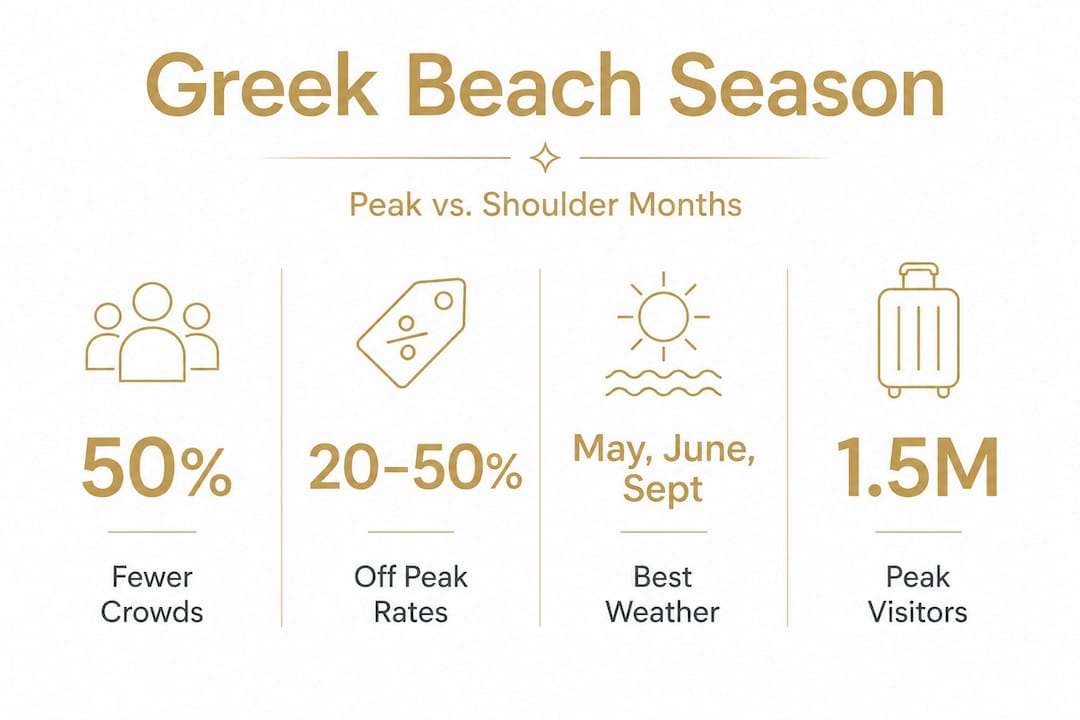
The Greek summer season runs from late April through October, and the sweet spots are on either side of the peak. May, June, and September offer warm sea temperatures, long sunny days, and a noticeably more relaxed pace. You can walk onto a beach that would otherwise require arriving at dawn to secure a sunbed. You can eat at a harborside taverna without a reservation. You can actually hear the waves.
Here is a quick look at how the seasons compare:
- May and June: Sea temperatures around 22 to 24°C, minimal crowds, accommodation prices 20 to 50% lower than peak
- July and August: Peak sun, peak crowds, peak prices, and peak noise, especially on Mykonos and Santorini
- September and early October: Warm sea (often 26°C), golden afternoon light, far fewer visitors, and a more local feel in cafes and restaurants
Shoulder season crowds and prices drop significantly compared to the July and August rush, making the overall experience far more enjoyable for most travelers. Experts who know the islands well consistently prioritize shoulder seasons for authentic seaside life without the peak chaos that can make iconic spots feel more like theme parks than paradise.
For those seeking something a little more intimate, our guides on romantic Greek getaways and hidden gems in Greece offer a deeper look at destinations that reward the traveler willing to look just a little further.
Pro Tip: Whatever season you choose, arrive at popular beaches before 9 a.m. The soft sand is yours, the light is beautiful, and the water is glassy calm. Rent a car or ATV on larger islands like Crete and Rhodes so you can reach the quieter coves that tour buses never find.
Crete, Mykonos, and Santorini: Which Greek island matches your dream holiday?
Once you’ve chosen your season, the next decision is which island best fits your idea of summer magic. These three are the most celebrated, and for good reason, but they serve very different travel styles.
| Island | Best for | Ideal stay | Signature feature |
|---|---|---|---|
| Crete | Families, explorers, beach variety | 7 to 10 days | Elafonissi pink sand, Samaria Gorge, diverse cuisine |
| Mykonos | Groups, nightlife, vibrant scenes | 3 to 4 days | Cosmopolitan energy, beach clubs, XLSIOR festival |
| Santorini | Couples, sunset chasers, romance | 3 to 4 days | Caldera views, volcanic beaches, iconic sunsets |
Crete is the island that rewards those who give it time. It is Greece’s largest island, and its sheer size means it absorbs visitors without feeling overwhelmed. You can spend a morning at a crowded pink-sand beach and an afternoon at a deserted cove ten minutes away. The food culture here is extraordinary, rooted in olive oil, fresh fish, and wild herbs. Crete for variety and depth requires at least 7 to 10 days to do it justice, while Mykonos and Santorini are best savored over 3 to 4 days each.
Mykonos is for those who want energy. The island hums with music, color, and movement from morning until well past midnight. The XLSIOR festival alone draws an extra 40,000 visitors in August, transforming the island into one of Europe’s most vibrant summer events. Learn more about Mykonos island energy and what makes it such a magnetic destination.
Santorini is in a category of its own. The caldera views, the white-washed buildings, the volcanic beaches, and those legendary sunsets create an atmosphere that feels almost cinematic. It is the most visited of the three, with up to 1.5 million annual visitors, which is precisely why timing your trip thoughtfully matters so much here.
“The best Greek island is not the most famous one. It is the one that matches the rhythm you are looking for right now.” This is a truth we have seen confirmed over decades of guiding travelers through these waters.
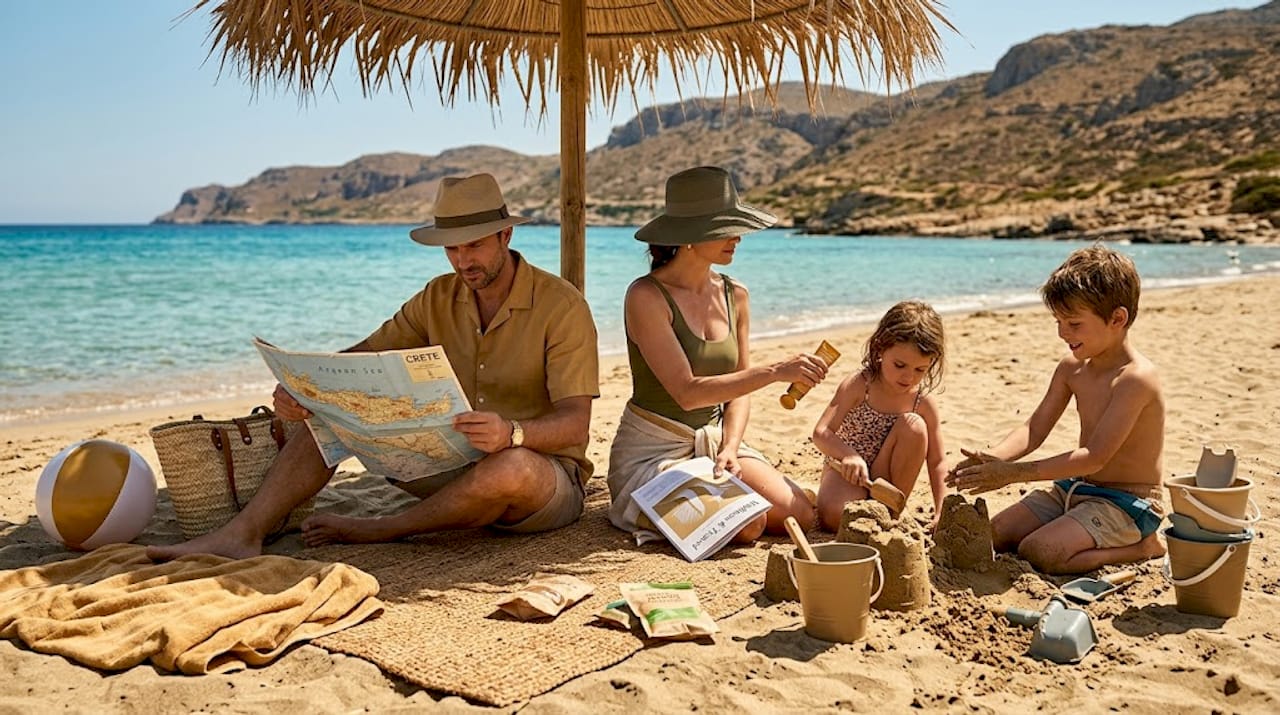
For families, Crete stands apart. Its family-friendly beaches and luxury resorts offer calm, shallow waters alongside organized facilities that make traveling with children genuinely enjoyable rather than stressful.
Top golden beaches and seaside adventures for every traveler
With your island chosen, let’s zoom in on the stunning beaches and experiences awaiting you. Greece has over 9,000 miles of coastline, and the variety is staggering. Pink sand, black volcanic rock, white pebbles, turquoise shallows, dramatic cliffs above deep blue water. There is a beach for every mood.
| Beach | Island | Character | Best for |
|---|---|---|---|
| Elafonissi | Crete | Pink sand, shallow lagoon | Families, sunbathing |
| Balos | Crete | Turquoise lagoon, remote feel | Couples, photographers |
| Paradise Beach | Mykonos | Vibrant, music, sunbeds | Groups, party atmosphere |
| Red Beach | Santorini | Volcanic red cliffs, dramatic | Adventurers, couples |
| Kamari | Santorini | Black sand, organized, lively | All travelers |
| Lindos | Rhodes | Clear water, historic backdrop | Culture lovers, families |
| Myrtos | Kefalonia | Dramatic white cliffs, vivid blue | Scenery seekers |
| Tsambika | Rhodes | Long golden sand, calm water | Families, sunbathers |
Crete handles visitor volume via its size, but Elafonissi and Balos each see thousands of visitors per day during peak season. Arriving early or visiting in shoulder months transforms these beaches entirely.
Here is a suggested order of priority for first-time visitors to Greece:
- Start with Santorini for the iconic caldera experience and sunset ritual at Oia
- Move to Mykonos for 3 to 4 days of vibrant beach life and seaside dining
- Spend a full week on Crete exploring its varied coastline, from Elafonissi to the quieter eastern beaches near Sitia
- Consider adding Paros for a more relaxed, authentically Greek island feel with beautiful beaches like Kolymbithres
- Explore Karpathos or Samos if you want dramatic scenery, strong winds for water sports, and almost no tourist crowds
Beyond sunbathing on soft sand, the Greek islands offer a remarkable range of seaside adventures. Snorkeling in the clear waters off Balos reveals an underwater world of color and calm. Cliff walks along Santorini’s caldera edge offer views that stay with you long after you return home. On Kefalonia, the vivid blue of Myrtos Beach is unlike anything else in the Mediterranean, and the drive down to it is an adventure in itself.
For those drawn to adventure on Greek islands, the options extend well beyond the main beaches. Kayaking around sea caves, hiking coastal paths at golden hour, and joining local fishermen for an early morning catch are experiences that turn a beach holiday into something genuinely memorable.
Karpathos deserves a special mention. It sits between Crete and Rhodes, relatively unknown to mass tourism, and its northern village of Olympos still preserves traditions that have barely changed in centuries. The beaches here, particularly Apella, are among the most beautiful in all of Greece, and you will likely share them with very few others.
Discover more about top Greek beach experiences and how to make the most of each island’s unique coastal character.
Essential tips for planning a stress-free Greek beach escape
Having explored the region’s highlights, ensure your experience is smooth with these practical tips. Greece rewards the prepared traveler, not the over-scheduled one. The goal is to build in enough structure to feel confident, and enough space to follow the day wherever it leads.
- Book ferries and accommodations early. Inter-island ferries fill up weeks in advance in July and August. If you plan to island-hop between Santorini, Mykonos, and Crete, secure your tickets at least a month ahead during peak season.
- Rent a car on Crete and Rhodes. These larger islands have beaches and villages that are genuinely inaccessible without your own transportation. A rental car opens up the island in a way that organized tours simply cannot.
- Arrive at beaches before 9 a.m. This single habit transforms your experience at popular spots. The sand is cool, the light is soft, and the sunbeds are empty.
- Eat where the locals eat. The best seafood tavernas are rarely on the main tourist strip. Walk one street back, look for handwritten menus and Greek-speaking customers, and sit down.
- Plan your golden hour intentionally. The light in Greece between 6 and 8 p.m. is extraordinary. Whether you are at a beach bar in Mykonos, a clifftop in Santorini, or a harbor in Samos, this is the hour that makes every photograph look like a painting.
Renting a car or ATV for beach access is one of the most consistently recommended strategies from experienced Greek island travelers, and it is advice we fully support. The beaches that require a little effort to reach are almost always the ones worth the effort.
Pro Tip: On Paros and Samos, ask your accommodation host about beaches they personally love. Locals rarely visit the famous spots in peak season. Their recommendations will lead you to places that feel like a private discovery.
For more detailed planning strategies, our guide on luxury family Greece tips covers everything from packing smart to choosing the right base for your family’s pace.
Why most travelers underestimate Greece’s beach seasons
Here is something worth sitting with. Most travelers plan their Greek beach holiday around the calendar rather than around the experience they actually want. They book July because it feels safe, because everyone else does it, and because the photographs from that month look irresistible. But those photographs rarely capture the full picture.
We have been guiding travelers to Greece since 1990, and the feedback we hear most consistently is this: the people who visit in June or September almost always say they wish they had known sooner. The beaches are the same. The sea is the same color. The food is just as good. But the atmosphere is calmer, the encounters are more genuine, and the overall experience feels more like living and less like sightseeing.
Shoulder season drops crowds by roughly 50% and prices by 20 to 50% compared to the July and August peak. That is not a marginal difference. It is the difference between waiting 45 minutes for a table at a harborside restaurant and being welcomed in immediately. It is the difference between sharing Balos with a thousand strangers and sharing it with a hundred.
Peak season travel delivers the iconic version of Greece. Shoulder season delivers the real one. Both have value, and neither is wrong. But we believe that knowing the difference, and choosing intentionally, is what separates a good holiday from a genuinely transformative one.
The travelers who get the most from Greece are those who approach it with a little flexibility and a willingness to step slightly off the well-worn path. Karpathos instead of Mykonos for one leg of the trip. Samos instead of Santorini for a quieter caldera-free experience. Kefalonia instead of Crete if dramatic scenery is what moves you most. Explore more ideas for off-season romance and quieter island experiences that reward the curious traveler.
Greece is generous. It gives you exactly what you bring to it. Bring intention, and it gives you back something that lasts.
Ready to plan your ultimate Greek beach escape?
You now have the knowledge to approach your Greek summer with real confidence. You know which islands suit your style, which beaches to prioritize, when to go, and how to move through these places in a way that feels natural and unhurried.
At Longevity Travel, we have been crafting authentic Greek journeys since 1990, and we bring that depth of knowledge to every trip we design. Whether you are drawn to the golden sands of Crete, the electric energy of Mykonos, the romantic stillness of Santorini, or the quiet beauty of Karpathos and Kefalonia, we will help you build an itinerary that fits the experience you are truly looking for. Browse our full range of Greek travel programs or discover our curated beachside golf retreats that combine the joy of the game with the Mediterranean’s most stunning coastal landscapes. Your summer on Greece’s golden shores is waiting.
Frequently asked questions
What is the best month to visit Greece for beach holidays?
May, June, and September offer ideal beach weather with fewer crowds and better rates than the July and August peak. Shoulder season offers a better experience for most travelers seeking both beauty and ease.
Which Greek island is best for families seeking beach fun?
Crete stands out for family-friendly resorts, extensive beaches, and diverse activities for all ages. Crete’s variety and depth make it the most rewarding island for families with a week or more to spend.
How crowded are Santorini and Mykonos in summer?
Santorini and Mykonos visitor volume peaks dramatically in July and August, with Santorini seeing up to 1.5 million annual visitors and Mykonos receiving an extra 40,000 during major events alone.
What are must-have experiences beyond the main beaches?
Renting a car or ATV for beach access to secluded coves, starting your day early to beat the crowds, and finding a local seaside taverna for fresh-caught fish are the experiences most travelers wish they had prioritized from day one.
Recommended
Looking for a holiday that renews body and mind? Explore our curated longevity and wellness journeys.
Browse destinationsNewsletter
A memory for life
Weekly to your inbox: inspiration, longevity insights and exclusive travel offers.