
Best Beaches in Crete: Top Picks for Every Traveler
Discover the best beaches in Crete for every traveler! From pink lagoons to secluded coves, find your perfect spot and make unforgettable memories.

TL;DR:
- Crete’s diverse coastline features over 600 beaches, offering a variety of experiences from pink sands to remote coves. Travelers should choose beaches based on access, crowd levels, and personal preferences, planning ahead for supplies and seasonal conditions. Staying regionally and exploring slowly enhances enjoyment, avoiding exhaustion from lengthy drives and crowded hotspots.
With over 600 beaches scattered across four distinct coastlines, Crete offers the most varied shoreline in all of Greece. That diversity is wonderful. It is also the reason so many visitors arrive excited and leave feeling like they missed something. The best beaches in Crete range from pink-sand lagoons and palm-backed coves to volcanic pebble shores and remote islands you reach only by ferry. Knowing which ones genuinely suit your travel style, your pace, and your group makes all the difference between a good trip and one you talk about for years.
Table of Contents
- Key takeaways
- 1. How to choose the best beaches in Crete for your trip
- 2. Elafonissi: the pink-sand lagoon of west Crete
- 3. Balos Lagoon: drama and preparation required
- 4. Falassarna: west Crete’s best sunset beach
- 5. Kedrodasos: the quiet neighbor worth knowing
- 6. Preveli: where the river meets the sea
- 7. Frangokastello: history and calm water combined
- 8. Matala: personality on the south coast
- 9. Vai Beach and Crete’s eastern treasures
- 10. Comparison: which beach fits your travel style
- My honest take after years of watching travelers visit Crete
- Plan your perfect Crete beach vacation with Longevitytravel
- FAQ
Key takeaways
| Point | Details |
|---|---|
| Arrive early at popular beaches | Getting to west coast beaches before 9:00 AM secures parking and beats the tour bus crowds. |
| Plan by region, not by list | Basing yourself in one area reduces daily driving and deepens your experience significantly. |
| Shoulder season transforms your visit | June and September drop visitor numbers from thousands to hundreds at even the most famous spots. |
| Match beach type to your travel style | Families thrive at shallow lagoons; adventurers get more from remote coves like Xerokambos. |
| Iconic does not mean equipped | Several top beaches have limited shade and no facilities, so bring your own supplies. |
1. How to choose the best beaches in Crete for your trip
Not every beach is right for every traveler. Before diving into specific spots, it helps to think clearly about what you actually want from a beach day.
Accessibility matters more than most people expect. Some of Crete’s most beautiful shores require a 4x4, a long hike, or a ferry ride. Others sit right off a paved road. Think honestly about what effort level suits your group.
Crowd density is shaped by both timing and location. Trying to visit too many beaches in one trip is one of the most common mistakes travelers make. Focusing on one coastal region keeps transit time low and satisfaction high.
Here are the core factors worth weighing before you go:
- Beach surface: Sandy beaches (Elafonissi, Falassarna) suit families and sunbathers. Pebble beaches (Glyka Nera) offer cleaner, calmer water and tend to draw fewer day-trippers.
- Amenities: Organized beaches rent sunbed and umbrella sets, typically costing 15 to 25 euros per day. Remote beaches often have nothing, so bring your own shade and water.
- Wind exposure: The Meltemi wind hits west coast beaches like Falassarna and Balos hard during summer. South coast beaches generally offer calmer, more sheltered swimming.
- Family suitability: Shallow lagoons with no strong current are ideal for children. Deep open-water beaches with waves suit stronger swimmers.
- Season: Shoulder season in June and September dramatically reduces crowds without sacrificing warmth or sunshine.
Pro Tip: Pack a compact beach umbrella and reef-safe sunscreen even when visiting organized beaches. Shade zones fill up fast, and some of the most beautiful spots along the south coast offer no rental equipment whatsoever.
2. Elafonissi: the pink-sand lagoon of west Crete
Elafonissi is the beach that appears on every Crete mood board, and it genuinely earns its reputation. The shallow turquoise lagoon, the soft sand, and the sense of standing somewhere truly rare make it unforgettable. That said, it helps to arrive with accurate expectations.
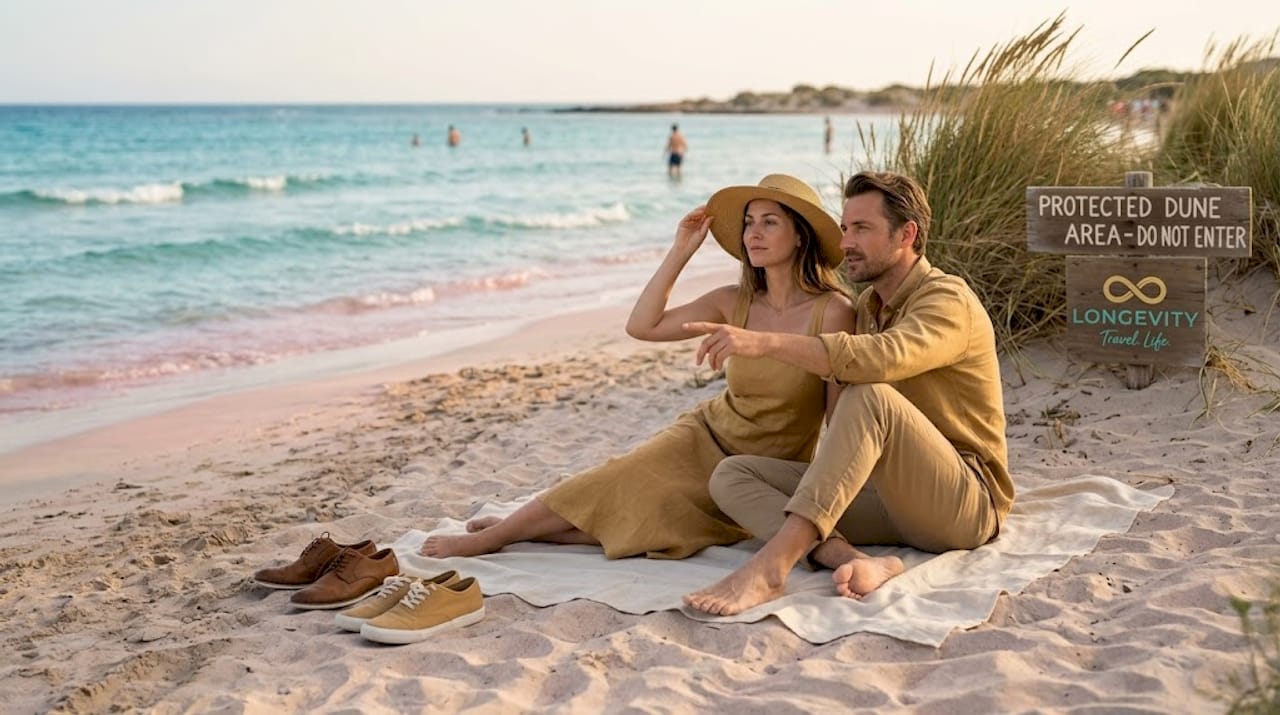
The pink color in the sand comes from tiny scattered shell fragments. It is subtle, not vivid. You see it most clearly away from the main lagoon, closer to the island section across the water. If you walk fifteen minutes from the main parking area, the crowds thin and the color becomes more apparent.
The beach is exceptionally family-friendly. The lagoon water is warm, clear, and rarely deeper than waist height for a long stretch. Children can wade freely while parents relax nearby. That combination drives massive popularity. Arriving before 9:00 AM or after 4:30 PM is the single most effective way to secure parking and avoid tour buses, which typically arrive by 11:00 AM.
Pro Tip: Elafonissi has an island section you can wade across to. It is quieter, more scenic, and offers the best views of the lagoon color. Most visitors never bother to cross.
3. Balos Lagoon: drama and preparation required
Balos may be the most photographed beach in all of Greece. The aerial image of its three-colored lagoon, shallow turquoise water, and white sand bar is genuinely striking in person. Getting there, however, requires a decision.
You can drive the access road in a standard rental car, but rental car insurance often excludes damage sustained on rough dirt tracks like this one. Many travelers are liable for the full cost of any damage. A ferry from Kissamos harbor is the safer, more enjoyable alternative. The boat trip itself takes about 45 minutes and delivers you to the beach from the water side, which is the better view anyway.
The lagoon is shallow and calm, making it suitable for all ages. The surrounding landscape, with its dramatic cliffs and pale sand bar, creates a sense of wild beauty that rewards the effort of getting there.
4. Falassarna: west Crete’s best sunset beach
Falassarna sits on the northwest coast and offers something the more famous lagoons cannot: consistent waves, space, and a magnificent western sunset. It is less crowded than Balos or Elafonissi and draws a mix of swimmers, kiteboarders, and travelers who simply want a long, lovely afternoon on a proper sandy beach.
The water here is deeper and more energetic than a lagoon setting. It suits confident swimmers and those who enjoy some wave action. On windier days, the Meltemi can make conditions choppy, which is worth factoring into your planning if you are traveling with young children or prefer calm water.
Sunbed rentals are widely available, and a handful of tavernas sit along the beach road. It feels more relaxed and local than the major tourist draw beaches, and that quality is quietly appealing.
5. Kedrodasos: the quiet neighbor worth knowing
Just a short walk from Elafonissi sits Kedrodasos, a beach backed by a natural cedar forest that most visitors to the area never find. The contrast is striking. While Elafonissi manages thousands of visitors on peak days, Kedrodasos remains calm, shaded, and genuinely peaceful.
The beach itself is a mix of sand and pebble with clear water. There are no facilities, no sunbeds, and no vendors. You bring everything you need and you leave with nothing but the memory of a place that felt like a real discovery. For travelers seeking hidden beaches in Crete, this is one of the most rewarding spots in the west.
6. Preveli: where the river meets the sea
Preveli is unlike any other beach on this list. A freshwater river cuts through a palm forest and empties into the sea at a narrow, sandy cove backed by towering cliffs. The effect is cinematic. The journey is part of the experience.
Reaching Preveli requires a hike down a steep path from the upper parking area. It takes roughly twenty minutes each way, and the return trip in midday heat is genuinely tiring. Bring water, good footwear, and more sunscreen than you think you need. The palm forest offers some shade near the river mouth, and the swimming in both the river and the sea is excellent.
This beach works best for active travelers who enjoy a bit of effort as part of their day. It is not a spot for very young children or anyone with mobility challenges.
7. Frangokastello: history and calm water combined
Frangokastello sits along the south coast and pairs a long, shallow sandy beach with a remarkably well-preserved Venetian fortress right on the waterfront. The water here is famously calm, protected from the Meltemi by the surrounding landscape, making it one of the best swimming spots in Crete for families with young children.
The village behind the beach is small and unhurried. A few tavernas, some simple accommodations, and a pace of life that feels genuinely Cretan rather than tourist-facing. If you want a family-friendly beach experience with real character and calm water, Frangokastello delivers on both counts.
8. Matala: personality on the south coast
Matala is not the most beautiful beach on this list. It is, however, one of the most interesting. The caves carved into the cliffs above the beach were home to early Christians and later became famous as a hippie gathering point in the 1970s. Joni Mitchell reportedly spent time here. That history still shapes the atmosphere.
The beach itself is a pleasant sandy cove with calm, clear water. The town behind it is lively, full of tavernas and small shops. It suits travelers who want beach time combined with social atmosphere and local culture rather than isolation and scenery. For solo travelers or couples who like to explore, Matala rewards wandering.
9. Vai Beach and Crete’s eastern treasures
Eastern Crete operates at a slower pace and rewards travelers who make the journey. Vai Beach, near the island’s eastern tip, sits within Europe’s largest natural palm forest. The combination of lush green fronds and clear blue water is genuinely striking. It is organized and popular, but the setting is unique enough to justify a visit.
Chrissi Island, reached by ferry from Ierapetra, is a wildlife sanctuary with pink-shell sand beaches and shallow turquoise water. It is remote, pristine, and allows only day visitors to protect the ecosystem. Arrive on the first ferry if possible.
For those who want luxury experiences near quieter waters, the coves around Elounda offer calm, clear swimming alongside some of Greece’s finest resort properties.
Xerokambos, further south, is a true off-the-beaten-path find. Rough roads, minimal facilities, and extraordinary stillness define it. Visitors who make the trip report it as one of the most memorable spots they encountered in all of Crete.
10. Comparison: which beach fits your travel style
Use this table to match your priorities to the right shoreline.
| Beach | Access | Crowd level | Best for | Unique feature |
|---|---|---|---|---|
| Elafonissi | Easy | High in peak season | Families, photographers | Pink-tinted lagoon |
| Balos | Difficult (road or ferry) | High | Couples, scenery seekers | Three-colored lagoon |
| Falassarna | Easy | Moderate | Sunset lovers, swimmers | Long sandy beach, views |
| Kedrodasos | Moderate (short walk) | Low | Quiet seekers | Cedar forest backdrop |
| Preveli | Moderate (steep hike) | Moderate | Active travelers | River meets sea, palms |
| Frangokastello | Easy | Low to moderate | Families, culture lovers | Venetian fortress |
| Matala | Easy | Moderate | Solo travelers, couples | Cave cliffs, hippie history |
| Vai | Easy | Moderate to high | Nature lovers | European palm forest |
| Chrissi Island | Ferry required | Moderate | Remote beach seekers | Pink-shell sand |
| Xerokambos | Difficult (rough road) | Very low | Off-the-beaten-path | True solitude |
Pro Tip: Shoulder season visits in June or September bring crowds down from over 4,000 daily visitors to just 300 to 400 at many major beaches. The water is still warm, the light is beautiful, and the experience is genuinely restorative.
One more thing worth repeating: daily round-trip drives across Crete can exceed three to four hours if you are poorly based. Choose accommodations in or near the region you plan to explore most. It changes everything.
My honest take after years of watching travelers visit Crete
I have seen the same pattern repeat across many trips. Travelers build ambitious lists, trying to cover Elafonissi, Balos, Preveli, and Vai in a single week, and they end up exhausted. They spend more time in the car than on the sand.
The most satisfying Crete beach experiences I have witnessed come from travelers who pick a home base, commit to a region, and explore it slowly. The person who spends three days around Chania and discovers Kedrodasos on a quiet Tuesday morning, or who takes the ferry to Chrissi Island on a calm September afternoon. Those are the memories that last.
I also think the expectation gap around iconic beaches deserves more honesty. Many top beaches have limited shade and no amenities. Arriving without supplies and expecting a resort experience leads to frustration. The beach itself is magnificent. The comfort depends entirely on your preparation.
Crete rewards travelers who are curious and unhurried. Go slow. Go prepared. Let the island show you what it actually is, not just what the photographs promise.
Plan your perfect Crete beach vacation with Longevitytravel
At Longevitytravel, we have spent more than three decades developing intimate knowledge of Crete’s coastline, its rhythms, and its finest places to stay. We know which beaches shine in September and which ones are genuinely worth the difficult access road. We know where to base yourself to get the most from a week without a single wasted hour in the car.
If you want a Crete beach vacation shaped around how you want to feel, not just a list of coordinates to tick off, our travel consulting service offers personalized guidance tailored to your exact travel style, dates, and priorities. Whether you are planning a family trip, a restorative couple’s retreat, or your first visit to Greece, we help you get it right from the start. Explore our thinking on dream Greek beach vacations and reach out when you are ready to plan something genuinely worthwhile.
FAQ
What is the most famous beach in Crete?
Elafonissi is widely considered the most iconic beach in Crete, known for its shallow pink-tinted lagoon and turquoise water. Balos Lagoon is a close second, recognized for its dramatic three-colored water and wild landscape.
When is the best time to visit Crete’s beaches?
Shoulder season in June and September offers the best balance of warm water and manageable crowds. Peak season in July and August brings the highest visitor numbers, with some beaches exceeding 4,000 daily visitors.
Are there hidden beaches in Crete worth visiting?
Yes. Kedrodasos, Xerokambos, and Glyka Nera are among the least crowded and most rewarding spots for travelers willing to make the extra effort. Each offers natural beauty without the organized tourist infrastructure of the major beaches.
Which Crete beaches are best for families with young children?
Elafonissi and Frangokastello are the top choices for families, offering shallow, calm water and sandy shores. Frangokastello in particular benefits from south coast protection from the Meltemi winds, keeping the water exceptionally calm throughout summer.
Do I need a car to visit the best beaches in Crete?
For most top beaches, a rental car gives you the most flexibility, though Balos is better reached by ferry from Kissamos to avoid rough road risks and potential insurance issues. Eastern beaches like Chrissi Island are accessible only by ferry from Ierapetra.
Recommended
- Your dream Greek beach vacation: golden shores await – Longevity Travel
- Top family-friendly holidays in Greece: best islands – Longevity Travel
- Explore Hidden Caves and Stunning Coastlines Across Greece – Longevity Travel
- Family-friendly beaches and luxury resorts in Rhodes and Crete – Longevity Travel
Planning a family holiday in Greece? We'll help you pick the right island and hotel.
Explore Greek destinationsNewsletter
A memory for life
Weekly to your inbox: inspiration, longevity insights and exclusive travel offers.