
Best foodie holidays in Greece: islands, wine & flavors
Discover the best foodie holidays in Greece across Crete, Santorini, Mykonos, and beyond. Explore local wines, fresh seafood, olive oil tastings, and authentic culinary experiences on the Greek islands.

TL;DR:
- Greek island cuisine is diverse, shaped by local soil, sea, and tradition.
- Authentic Greek food emphasizes simple, high-quality ingredients and local farm-to-table practices.
- Immersive experiences like markets, farm visits, and festivals deepen culinary understanding.
Greece has a way of surprising even the most seasoned food traveler. You arrive expecting moussaka and souvlaki, and you leave having tasted wild fennel honey from Crete, sipped volcanic wine on Santorini, and shared a table with a fisherman’s family on Samos who insisted you try their grandmother’s recipe. Greek island cuisine is not a single story. It is hundreds of them, layered across eight distinct culinary destinations, each shaped by its own soil, sea, and memory. This guide is your insider roadmap to the flavors, experiences, and islands that will make your next Greek holiday unforgettable.
Table of Contents
- What makes Greece a top destination for foodies?
- Essential culinary experiences on Crete, Santorini, and Mykonos
- How to plan your ultimate foodie itinerary
- The role of local ingredients and food culture
- Why most food travelers overlook the true spirit of Greek cuisine
- Plan your gourmet adventure with expert help
- Frequently asked questions
Key Takeaways
| Point | Details |
|---|---|
| Diverse island flavors | Greek islands like Crete, Santorini, and Mykonos offer unique gourmet experiences beyond the mainland. |
| Hands-on culinary travel | Authentic cooking classes and local tours deepen your food journey in Greece. |
| Plan with purpose | A mix of structured tours and spontaneous discoveries creates a richer holiday. |
| Seasonal ingredients matter | Fresh, local produce and tradition shape every memorable Greek meal. |
| Expert help enhances trips | Specialist travel companies can connect you with exclusive food and wellness experiences. |
What makes Greece a top destination for foodies?
Greece is not one cuisine. It is a mosaic. Every island carries its own pantry, built over centuries by local farmers, fishermen, and home cooks who never needed a trend to tell them what to eat. Crete has its wild greens and aged graviera cheese. Samos presses some of the most aromatic muscat wine in the Mediterranean. Karpathos still bakes its pitaroudia flatbreads in wood-fired ovens passed down through generations. This regional diversity is precisely what draws food travelers from around the world.
Greek culinary travel has matured well beyond the taverna circuit. Hands-on cooking classes and private food and wine tours are now core to how serious food lovers experience these islands. You are not just eating. You are grinding your own flour, pressing your own olives, and learning why Greek cooks insist on eating with the seasons.
The farm-to-table philosophy that high-end restaurants around the world market so carefully has simply always been the Greek way. A village cook in Paros does not call it a philosophy. She calls it Tuesday. The island’s rocky terrain, salt-laced air, and sun-drenched growing seasons create produce with an intensity that chefs in other countries spend fortunes trying to replicate.
When you pair that produce with Greece’s extraordinary wine culture, things get genuinely exciting. Indigenous grape varieties like Assyrtiko, Xinomavro, and Liatiko are gaining global recognition, yet remain deeply tied to their home islands.
| Island | Signature ingredient | Wine highlight |
|---|---|---|
| Crete | Extra virgin olive oil | Dafnes red (Liatiko) |
| Santorini | Cherry tomatoes | Assyrtiko white |
| Mykonos | Fresh seafood | Cycladic rosé |
| Samos | Honey | Muscat of Samos |
| Rhodes | Figs and herbs | CAIR sparkling |
Planning a trip that honors all of this depth starts with reading widely and dreaming specifically. For inspiration on building a thoughtful itinerary, our guide on planning a luxury wellness vacation in Greece offers a strong foundation. And if you want to go deeper on what you’re eating, our list of 100 Greek longevity foods reveals why these ingredients have nourished Greek communities for millennia.
“Greek food is not about complexity. It is about the absolute best version of a simple, honest ingredient.” — A guiding principle of Aegean cooking
Essential culinary experiences on Crete, Santorini, and Mykonos
Now that you know why Greece is a magnet for food lovers, let’s zero in on what each major island offers.
Crete is the heavyweight. The island’s cuisine draws from ancient Minoan traditions, Byzantine influences, and centuries of Venetian occupation, all folded into a landscape bursting with olive groves, herb-covered hillsides, and coastal fishing villages. An olive oil tasting here is not a quick drizzle over bread. It is a guided sensory experience, similar to a wine tasting, where you learn to read color, viscosity, and aroma. Market tours through Heraklion’s central market reveal dried herbs you’ve never heard of, barrels of aged cheese, and honey so thick it barely pours.
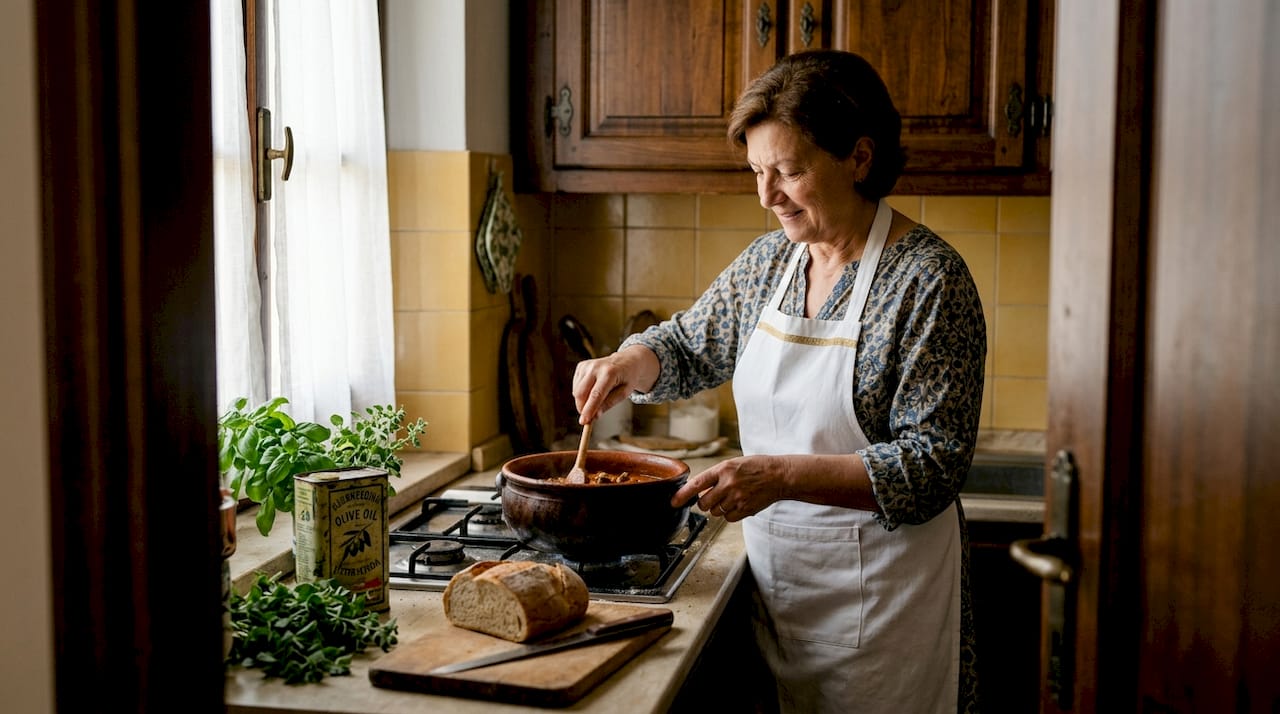
Santorini plays a different game entirely. The volcanic terroir gives its cherry tomatoes and white eggplants a concentrated sweetness that you simply cannot find anywhere else. Sunset dinners in Oia are famous for a reason, but the real discovery is a private vineyard walk through Megalochori, learning how Assyrtiko thrives in basket-trained vines that protect grapes from Aegean winds. The island’s indigenous wine varieties and volcanic terroir tastings offer something genuinely unlike any other wine region in the world.
Mykonos leans into its energy. Fresh seafood arrives daily from local fishermen, and the island’s beachside farm-to-table scene has grown into something truly impressive. Think grilled octopus dried in the morning sun, whole sea bream with wild capers, and homemade loukoumades dusted with local thyme honey.
Here are four experiences worth booking before your flights:
- A guided cheese-making workshop in a Cretan village dairy
- A private sunset tasting dinner paired with Santorini Assyrtiko
- A morning seafood market tour in Mykonos Town
- A honey and herb farm visit in the hills above Crete’s Lasithi plateau
Pro Tip: Bring a small cooler bag to markets. Local producers often sell vacuum-sealed cheese, honey, and cured meats that travel well and make extraordinary gifts.
Our wellness travel checklist helps you stay organized while leaving room for spontaneous discoveries. And if you want to understand the nutritional depth behind what you are tasting, our guide on island specialty foods adds valuable context.
How to plan your ultimate foodie itinerary
Looking to build your own trip? Let’s walk through designing a foodie-focused Greek holiday.
Start with the season. Late spring and early fall are the sweet spots. Summer markets are vibrant but crowded. September brings the grape harvest on Santorini, which is one of the most atmospheric times to visit a Greek vineyard. October on Crete means olive picking season, where you can join local families for the harvest. These seasonal rhythms shape what’s on every plate.
Next, build your trip around two or three culinary anchors, specific experiences that require advance booking. Tours with hands-on activities and a focus on local ingredients consistently deliver the most memorable travel moments. A cooking class, a vineyard visit, and a guided market tour give your trip structure without removing the joy of wandering into a side-street bakery that smells too good to pass.
Here is a simple planning sequence:
- Choose your islands based on culinary interests, not just beauty
- Research local food festivals and seasonal harvest calendars
- Book at least one hands-on class or farm visit per island
- Leave two or three unscheduled lunches for spontaneous discoveries
- Connect with a local guide who can take you beyond the tourist trail
- Document what you eat, producers you meet, and recipes you want to recreate
Pro Tip: Ask your accommodation host which market day falls during your stay. Village market days are where locals shop, and they are completely different from the tourist-facing markets near harbors.
For broader planning guidance, our resource on how to plan a Greek luxury trip covers the practical details well. Families traveling with children will also find our luxury family vacation tips useful for balancing gourmet stops with younger travelers’ preferences.
The role of local ingredients and food culture
Key to understanding Greek food is looking at what’s on your plate, and how it got there.
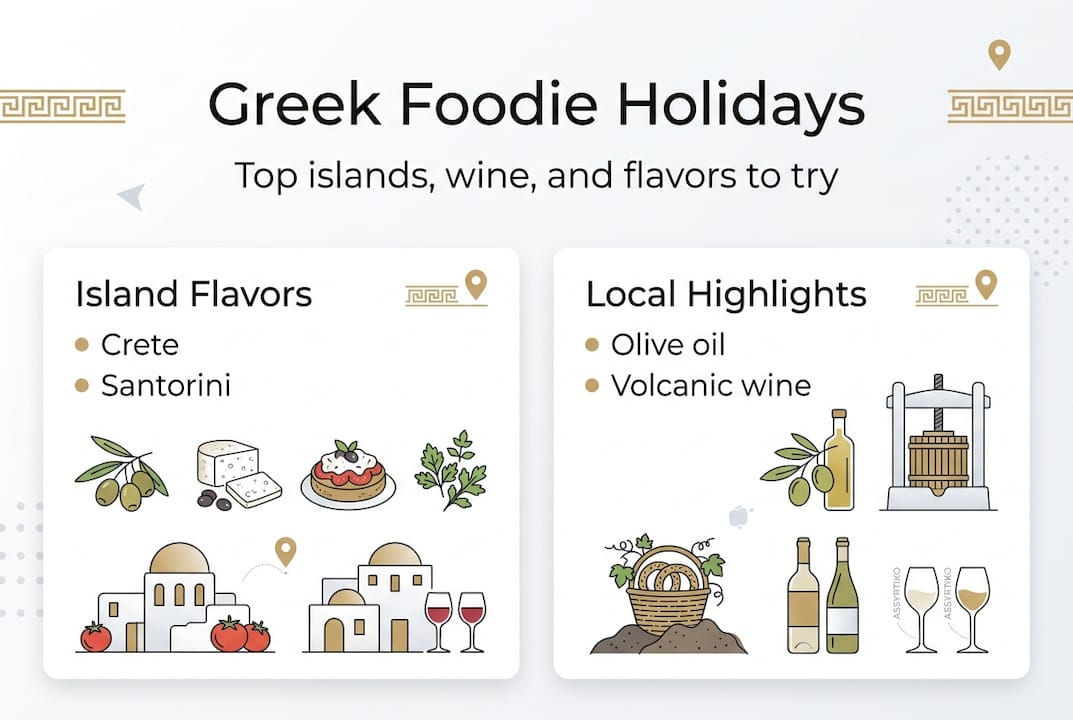
Greek cooking is not pretentious. It does not hide behind technique or complexity. A perfect Greek tomato, grown in volcanic soil on Santorini, needs almost nothing. A wedge of aged myzithra cheese from Crete, eaten with a spoonful of local thyme honey, is already complete. This commitment to the ingredient itself is what separates Greek cuisine from many other Mediterranean traditions.
Market explorations and farm-to-table visits are central to the best Greek foodie experiences, and for good reason. When you visit a small producer in Karpathos making their own capers, or a beekeeper on Rhodes explaining how thyme and wildflowers shape the honey’s flavor, you understand the food differently. Every bite carries a story.
Greek food culture also values shared meals above almost everything else. Eating alone in Greece is almost frowned upon. A plate of mezes is not a starter. It is an invitation to slow down, pour another glass, and stay a little longer.
Here are the ingredients that define Greek island cooking:
- Extra virgin olive oil: The foundation of almost every dish, especially on Crete and Kefalonia
- Fresh seafood: Octopus, sea urchin, red mullet, and anchovies sourced daily
- Local honey: Thyme honey from Rhodes and herb honey from Samos carry distinct floral notes
- Wild herbs: Oregano, savory, and fennel grow freely across every island
- Legumes: Fava from Santorini, lentils from Samos, and chickpeas from Crete
“The secret of Greek cooking is the land. Every ingredient tells you where it comes from.”
To go deeper on what these ingredients do for your body and your table, our guide on Greek longevity foods is worth reading alongside your travel planning. And for a wider view of how eating locally connects to feeling better on the road, our piece on healthy local ingredients adds a practical layer.
Why most food travelers overlook the true spirit of Greek cuisine
After exploring the foundations of Greek food, here is a perspective that can genuinely shift how you travel.
Most food travelers arrive with a checklist. Moussaka in Athens. Baklava in Thessaloniki. Sunset dinner in Oia. They eat well. But they rarely eat deeply. The most extraordinary Greek food moments do not happen in celebrated restaurants. They happen at a village panigiri, a local festival where someone’s yiayia is frying loukoumades over an open flame and handing them to strangers with a smile.
Slow travel changes everything. When you spend three days on Karpathos instead of three hours, you start noticing things. The specific way they season their pork. The bread they bake only on feast days. These are the flavors that stay with you for years.
We believe that rediscovering authentic Greek flavors is not about finding the most exclusive restaurant. It is about being curious enough to wander off the harbor and follow a good smell. That is where Greece reveals itself.
Plan your gourmet adventure with expert help
Ready to elevate your culinary exploration? Trust the experts to help you design the perfect itinerary.
At Longevity Travel, we have spent over three decades building relationships with the producers, guides, and village hosts who make Greek food travel genuinely extraordinary. We know which vineyard on Santorini offers the most intimate tasting experience, and which Cretan cooking class takes you into a real family kitchen, not a tourist set piece.

Our culinary and wellness programs are designed for food lovers who want more than a reservation. They want a connection. If you are ready to explore what sets these journeys apart, discover why choose Longevity Travel and how we turn a Greek holiday into something you carry with you long after you return home.
Frequently asked questions
What are the best times of year for a foodie holiday in Greece?
Late spring (May to June) and early fall (September to October) offer peak conditions for local harvests, culinary festivals, and comfortable travel weather without peak-season crowds.
Which Greek islands are most famous for unique food experiences?
Crete, Santorini, and Mykonos are the top picks, alongside rising stars like Karpathos, Samos, and Paros for those seeking less-traveled culinary depth.
How can I find authentic food tours in Greece?
Seek out local guides or curated hands-on tours that emphasize regional ingredients, small-producer visits, and direct access to local kitchens and markets.
Is it possible to combine gastronomy with a broader travel experience on a Greek holiday?
Absolutely. Many itineraries blend gourmet dining with cultural and culinary programs for a richer, more layered experience across the islands.
Are hands-on cooking classes available for travelers of all skill levels?
Yes, most Greek cooking experiences are designed to welcome all backgrounds, making them equally rewarding for first-time cooks and experienced home chefs.
Recommended
- Magical sunsets & romantic holidays in Greece: Best islands – Longevity Travel
- Top hiking and watersports holidays in Greece: Crete, Rhodes & Santori – Longevity Travel
- Discover hidden gems and adventure on Greece’s islands – Longevity Travel
- Athens Cruise Vacation - Explore the Cyclades | Elite Travel
Planning a family holiday in Greece? We'll help you pick the right island and hotel.
Explore Greek destinationsNewsletter
Spomin na življenje
Tedensko po e-pošti: navdih, izbrani nasveti za dolgoživost in ekskluzivne ponudbe potovanj.