
Explore Hidden Caves and Stunning Coastlines Across Greece
Discover the Hidden Caves and Coastal Wonders in Greece. Uncover secret coves and breathtaking coastlines beyond the usual sunbathing!

TL;DR:
- Greece offers diverse sea caves and rugged coastlines shaped by volcanic and limestone geology.
- Exploring beyond popular beaches reveals hidden caves like Crete’s Cave of Zeus and Kefalonia’s Melissani Lake.
- Responsible adventure requires local guides, proper gear, patience, and exploring during shoulder seasons.
Greece is famous for its postcard-perfect beaches, whitewashed villages, and crystalline water. Yet most travelers who arrive each summer never venture beyond the sunbeds and shoreline bars. Beneath limestone cliffs and volcanic headlands, a spectacular world waits: sea caves carved by millennia of wave action, hidden coves reachable only by boat, and rocky coastal routes that feel like the edge of the ancient world. From Crete and Rhodes to Kefalonia, Santorini, and Samos, Greece holds natural wonders that reward every adventurous spirit willing to look a little further.
Table of Contents
- Why Greece is a paradise for cave and coast explorers
- Highlights of Crete: The legendary Cave of Zeus
- Breathtaking blue: Melissani Cave in Kefalonia
- Discovering Rhodes and Santorini: From ancient caves to vibrant coasts
- Practical tips for planning your Greek cave and coastal adventure
- What most travelers miss: A deeper connection to Greece’s wild side
- Turn your dream adventure into a reality with expert travel programs
- Frequently asked questions
Key Takeaways
| Point | Details |
|---|---|
| Unique adventure settings | Greece’s caves and coastlines deliver natural beauty and geological intrigue rarely found elsewhere. |
| Accessible exploration | Many famous caves, like the Cave of Zeus, are easy to reach with multiple path options and guides. |
| Stunning variety | From Crete to Kefalonia, each island offers its own brand of cave and coastal experience. |
| Plan and respect | Proper preparation and responsible choices enhance safety and preserve these beautiful sites for the future. |
Why Greece is a paradise for cave and coast explorers
Greece sits at the crossroads of tectonic forces that have shaped the Mediterranean for millions of years. Volcanic islands like Santorini and Milos reveal dramatic sea-level caves carved from igneous rock, while limestone regions across Crete, Kefalonia, and Samos produce deep karstic caverns filled with stalactites, underground lakes, and hidden chambers. This geological variety means no two coastal adventures feel the same.
For travelers who want more than a beach chair, that diversity is everything. You can kayak into a sea cave at sunrise, hike a clifftop path above the Aegean, or take a small boat around a headland to discover a cove that does not appear on any tourist map. Greece’s adventure islands guide offers a wide overview of islands that reward exploration beyond the obvious.
Here is what makes Greece so well-suited to this kind of travel:
- Geological richness: Limestone, volcanic, and marble formations create sea arches, blowholes, and caves across the island chain.
- Accessible mythology: Many caves are tied to ancient Greek myths, adding cultural depth to every visit.
- Varied skill levels: From guided boat tours requiring no physical effort to multi-hour cliff hikes, options exist for every fitness level.
- Warm, calm seas: The Mediterranean climate keeps waters manageable for much of the year, making boat-based cave access safe and enjoyable.
“Crete’s Cave of Zeus is easily accessible yet often overlooked for its mythic and geological significance,” according to the Lassithi Plateau municipality, which notes the cave sits at an altitude of roughly 1,025 meters and spans 2,200 square meters with around 250 meters of illuminated internal pathways.
The cave culture of Greece is not a niche interest. It is woven into the landscape, the mythology, and the daily rhythms of island life. Once you understand that, you begin to see Greece very differently.
Highlights of Crete: The legendary Cave of Zeus
No conversation about Greek caves starts anywhere other than Crete. The island is enormous, geologically ancient, and layered with hidden natural features that most visitors never reach. The Cave of Zeus, known locally as Diktaion Antron, is perhaps the most storied cave in all of Greek mythology. According to legend, it is the birthplace of Zeus himself.
Planning your visit is straightforward. The cave is located near the village of Psychro, on the Lassithi Plateau. The cave sits at roughly 1,025 meters elevation, and there are two approach paths from the parking area. The easier path leads off to the left and is well-maintained. The older, original path is steeper and worn, and can be slippery, so it rewards caution. Parking is ample. The hike from the trailhead takes approximately 15 minutes at a comfortable pace.
| Feature | Details |
|---|---|
| Altitude | ~1,025 meters above sea level |
| Cave area | 2,200 square meters |
| Internal path length | ~250 meters |
| Hike duration | ~15 minutes |
| Illumination | Fully illuminated |
| Alternative access | Donkey ride for a small fee |
Inside, the cave is fully illuminated, which makes it accessible to visitors who are not experienced cavers. You will find imposing stalactite and stalagmite formations, a small sacred lake at the cave’s heart, and ancient votive offerings discovered by archaeologists over the decades. The scale is genuinely impressive: the ceiling soars in places, and the interior feels both ancient and alive.
Here is how to make the most of your visit:
- Arrive early. The Lassithi Plateau fills with tour buses by mid-morning. Arriving at opening time gives you near-solitude inside the cave.
- Wear sturdy footwear. The internal path is uneven stone. Sandals or flip-flops are not suitable.
- Take the easier path up. Save your energy for exploring inside. The harder path can serve as your descent for variety.
- Allow 60 to 90 minutes total. Between the hike, the interior, and a few minutes to sit and absorb the atmosphere, you will want the time.
- Pair it with the plateau. The Lassithi Plateau surrounding the cave is extraordinary, with windmills and traditional villages worth an hour of exploration on your own.
Pro Tip: If you are traveling with older family members or anyone who finds the hike challenging, donkeys are available near the trailhead for a small fee. It is a memorable experience in its own right, and completely practical.
For a broader look at Crete’s outdoor side, the wild side of Crete is worth reading before you finalize your itinerary.
Breathtaking blue: Melissani Cave in Kefalonia
From Crete, we travel north to Kefalonia, an island that surprises nearly every visitor with its raw, dramatic scenery. Melissani Cave is the island’s greatest natural wonder. Nothing about it feels ordinary.
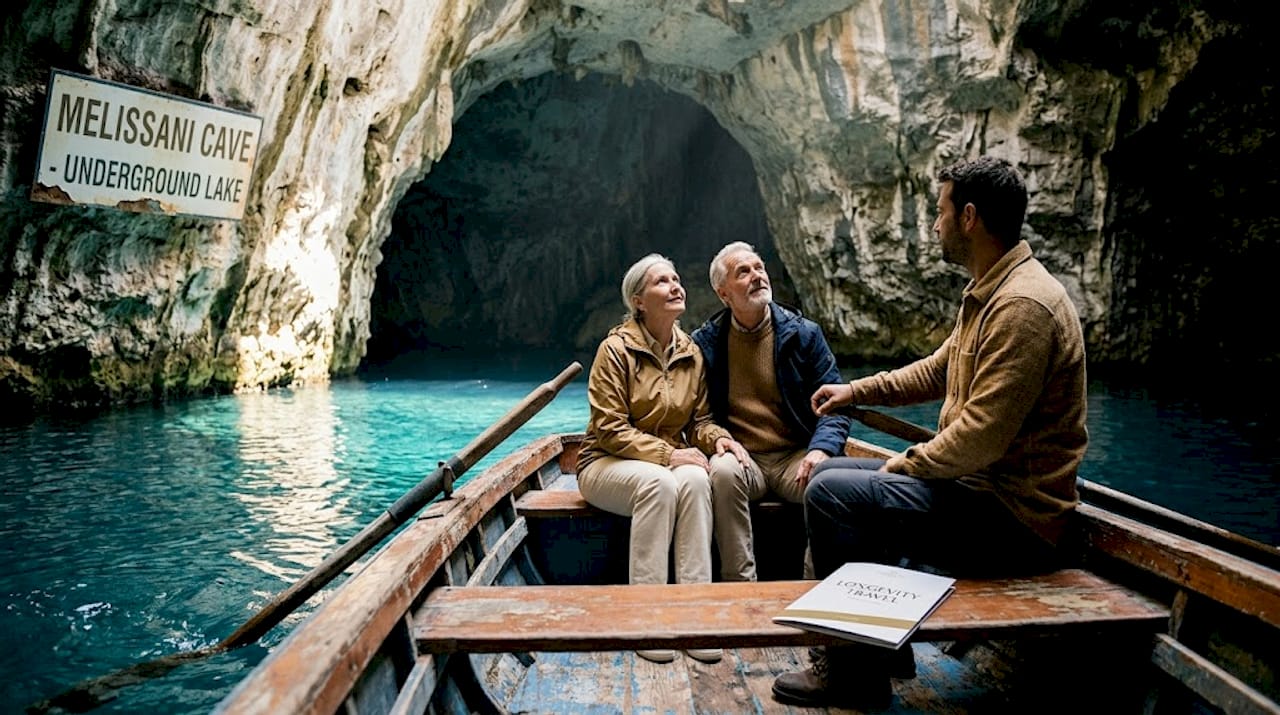
The cave houses an underground lake, and its most distinctive feature is a partially collapsed ceiling that allows sunlight to pour directly into the chamber during midday. When the sun hits the turquoise water at the right angle, the lake glows with a color that feels almost unreal. Melissani features a lake explored by guided boat tour, giving every visitor the chance to experience it up close regardless of swimming ability or physical fitness.
How does Melissani compare to cave experiences on other major Greek islands? The contrast is revealing:
| Cave / Coastal Feature | Island | Access Type | Key Draw |
|---|---|---|---|
| Melissani Cave | Kefalonia | Guided boat | Turquoise lake, collapsed ceiling |
| Diktaion Antron (Cave of Zeus) | Crete | Walking path | Mythology, stalactites |
| Blue Cave | Kastellorizo | Swim-in / boat | Bioluminescent light effect |
| Volcano caldera coastline | Santorini | Boat tour | Volcanic cliffs, sea views |
Melissani stands apart because the experience is essentially effortless. You step into a flat-bottomed boat, a local guide rows you through the chamber, and the light does all the work. That said, there are ways to make your visit even better:
- Visit between 11 a.m. and 1 p.m. to catch the sun directly overhead through the collapsed ceiling.
- The cave stays cool even in summer heat, so a light layer is welcome.
- Combine Melissani with Drogarati Cave, located nearby, for a full underground day.
- Book tickets in advance during peak season, as queues can extend significantly.
Pro Tip: Rent a small boat or join a private coastal excursion around Kefalonia the same day. The island’s coastline holds hidden sea caves and rock arches that rival Melissani in their own quieter way.
For more ideas on planning an explorer’s trip to the island, the Kefalonia for explorers page has solid local guidance.
Discovering Rhodes and Santorini: From ancient caves to vibrant coasts
Rhodes and Santorini could not be more different from each other, yet both reward coastal adventurers in unexpected ways.
Rhodes is a large island with a coastline that runs for over 220 kilometers. Much of it remains wild and accessible only by boat or on foot. Sea caves dot the rocky western coast, and boat excursions from Rhodes Town or Lindos commonly include stops at otherwise unreachable coves. The water around Rhodes is exceptionally clear, making snorkeling inside coastal caves a genuinely memorable activity. The island also offers cliff-edge hiking trails in the south that deliver sweeping views with very little foot traffic.
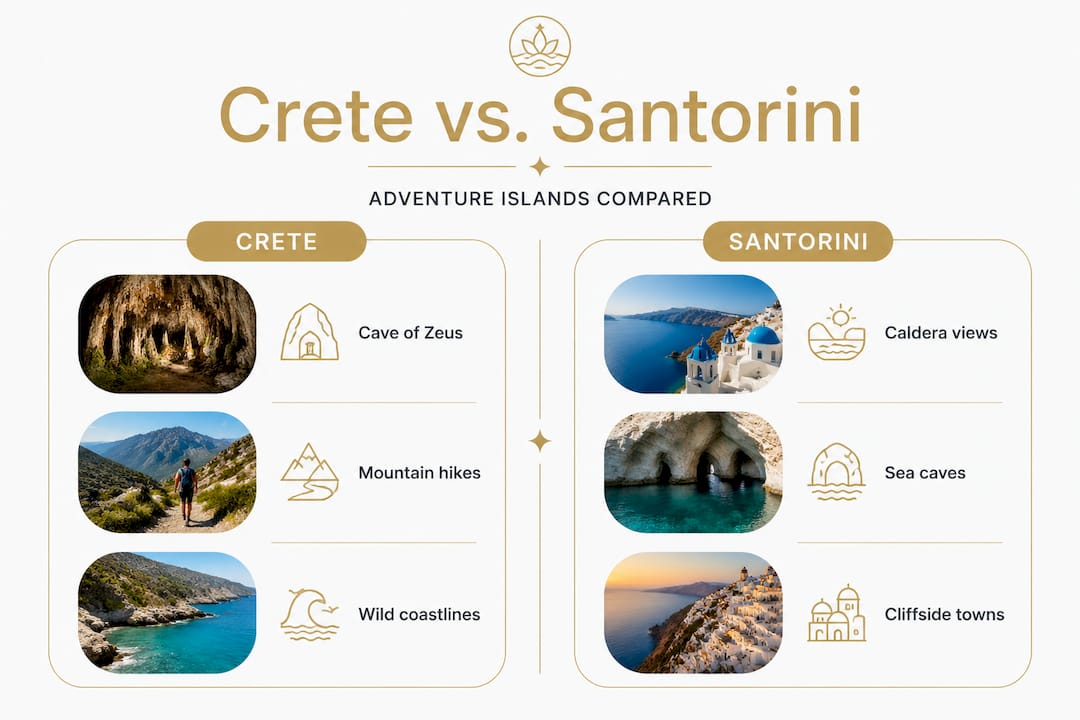
Santorini is volcanic in origin, and that geology shapes everything. The caldera cliffs rise dramatically from the water, and small boat tours circle the island’s base, ducking into lava-formed caves and sea-level arches. The Red Beach area near Akrotiri reveals colored cliff faces that look almost painted. Santorini package options often combine coastal boat excursions with visits to dramatic cave formations along the caldera wall, offering a natural spectacle that no amount of planning can fully prepare you for.
Here is a brief look at what both islands offer adventurous coastal travelers:
- Rhodes: Sea cave kayaking, cliff hiking near Prasonisi, boat tours to Antony Quinn Bay, snorkeling in coastal grottos.
- Santorini: Caldera boat tours, Red Beach coastal walk, kayaking beneath volcanic cliffs, sunset sailing with cave stops.
“The sea around Santorini and Rhodes holds some of the Aegean’s most dramatic coastal architecture, where volcanic rock and ancient limestone create caves and arches that no photograph fully captures.”
The two islands also work beautifully together in a combined itinerary. Spending four days on Rhodes followed by three on Santorini gives you the variety of a large, historically rich island contrasted against the concentrated drama of the caldera. For families, family-friendly resorts in Rhodes and Crete offer practical lodging recommendations alongside guided coastal excursion options that suit all ages.
Beyond these two standouts, consider adding Karpathos, Paros, Samos, or Mykonos to your planning. Karpathos in particular is underrated: remote sea caves on the northern coast around Diafani are accessible only by small wooden fishing boat, and the experience of floating through those chambers in near silence is something that stays with you.
Practical tips for planning your Greek cave and coastal adventure
Adventure travel in Greece is accessible and well-organized in many areas, but preparation still makes a meaningful difference. Here is what experienced coastal explorers carry and consider:
- Footwear first. For cave visits, closed-toe shoes with grip are essential. Water shoes are ideal for boat-to-cave transitions where you may need to step on wet rock.
- Carry a small flashlight. Most major caves like the Cave of Zeus are fully illuminated, but remote sea caves reached by kayak often are not.
- Hydrate more than you think you need. Coastal hiking in Greek summer heat is demanding. Carry at least one liter of water per person beyond what you expect to drink.
- Know your boat options. Many coastal caves in Greece are reachable only by water. Hiring a local captain for a private half-day excursion is often more rewarding than joining a large group tour.
- Respect marked boundaries. In accessible caves, stay on designated paths. The Lassithi municipality clearly marks its paths at the Cave of Zeus for good reason: the uneven terrain is genuinely hazardous off-trail.
- Support local guides. Local guides carry knowledge that no guidebook captures. They know when the light is best, where the hidden coves are, and how to navigate responsibly around nesting seabirds and fragile rock formations.
Pro Tip: The shoulder season months of May and October offer the best balance of good weather, manageable crowds, and full access to cave sites and boat excursions. Summer is spectacular, but the caves and coastal paths are noticeably more peaceful outside of peak July and August.
For destination-specific hidden adventure tips, we recommend reviewing island-by-island breakdowns before you finalize your route.
What most travelers miss: A deeper connection to Greece’s wild side
Here is the honest truth about traveling in Greece: the famous views are wonderful, and they deserve every bit of their reputation. But they are also shared with thousands of other people every single day. The moment you step off the main path, something shifts.
We have watched travelers arrive in Crete or Rhodes with detailed itineraries built around the famous spots, and then spend an afternoon in a sea cave they stumbled upon by boat and come back looking quietly changed. Not dramatically transformed. Just quieter, more present, more satisfied. That is what the hidden coastline does to you.
The island adventure insights we have gathered over decades point to a consistent pattern: the experiences travelers remember longest are rarely the most famous ones. They are the cave that required a 20-minute boat ride to reach. The cove on Samos where the water was so still and clear you could see the bottom at eight meters. The rocky headland on Karpathos where no other boat appeared for three hours.
Greece rewards curiosity. It rewards patience. And it rewards the traveler who is willing to ask a local captain, “Is there somewhere you would take your own family that we would not find in a travel guide?” The answer is almost always yes, and almost always extraordinary.
Go beyond the guidebooks. Prepare well, move slowly, and let the coast surprise you.
Turn your dream adventure into a reality with expert travel programs
Greece’s caves and coastlines are extraordinary, and navigating them well takes local knowledge built over years of firsthand experience.

At Longevity Travel, we have been crafting authentic Greek adventures since 1990, and our curated travel program options are designed for travelers who want more than the standard tour circuit. Whether you are drawn to Kefalonia’s underground lake, Crete’s mythic cave, or the sea arches of Karpathos and Santorini, we can build a personalized route that fits your pace, your interests, and your sense of adventure. Our programs are designed to give you access to the Greece that most visitors never see, guided by people who genuinely love every corner of it.
Frequently asked questions
How difficult is the hike to the Cave of Zeus in Crete?
The hike takes about 15 minutes from the parking area, and there is an easier, well-maintained left path. For those who prefer not to walk, donkeys are available at the trailhead for a small fee.
What is special about Melissani Cave in Kefalonia?
Melissani features a turquoise lake visible through a partially collapsed ceiling, and visitors explore it entirely by guided boat tour. The midday sunlight creates a glowing effect on the water that is genuinely unlike anything else in Greece.
Are there adventure options for families visiting Rhodes and Crete?
Yes. Both islands offer family-friendly resorts and excursions that include guided coastal cave visits, snorkeling trips, and boat tours suited to children and adults of all ages.
Do I need special equipment to visit Greece’s caves?
Most well-known caves, including the illuminated Cave of Zeus, are fully accessible with sturdy closed-toe footwear. For remote sea caves reached by kayak or small boat, a personal flashlight and water shoes add meaningful safety and comfort.
How can I ensure I travel responsibly while exploring coastal caves?
Stick to marked paths, avoid touching cave formations, and choose local guides over large commercial operators when possible. Supporting small, locally owned boat operators directly benefits the communities that protect these natural spaces.
Recommended
Planning a family holiday in Greece? We'll help you pick the right island and hotel.
Explore Greek destinationsNewsletter
A memory for life
Weekly to your inbox: inspiration, longevity insights and exclusive travel offers.