
Holidays in Greece: Your Guide to a Perfect Getaway
Discover how to plan unforgettable holidays in Greece! From stunning beaches to vibrant culture, your perfect getaway awaits.

TL;DR:
- Holidays in Greece offer a unique blend of stunning scenery, tranquil towns, and a slow-paced lifestyle that lingers long after departure. Traveling in May and September provides pleasant weather, fewer crowds, and a chance to experience authentic local rhythms firsthand. Selecting quieter destinations like Folegandros and embracing the local dining and daily routines enriches the most genuine Greek experience.
Holidays in Greece are defined by a rare combination of deep blue seas, whitewashed houses with blue shutters, and a way of life that genuinely slows you down. Greece is not simply a destination. It is a feeling, one that stays with you long after you return home. Whether you are drawn to the quiet coves of the Cyclades, the ancient alleys of the Peloponnese, or a table of fresh seafood beside the water, Greece delivers a kind of rest that most places simply cannot. This is why travelers from around the world keep coming back, year after year.
When is the best time for holidays in Greece?
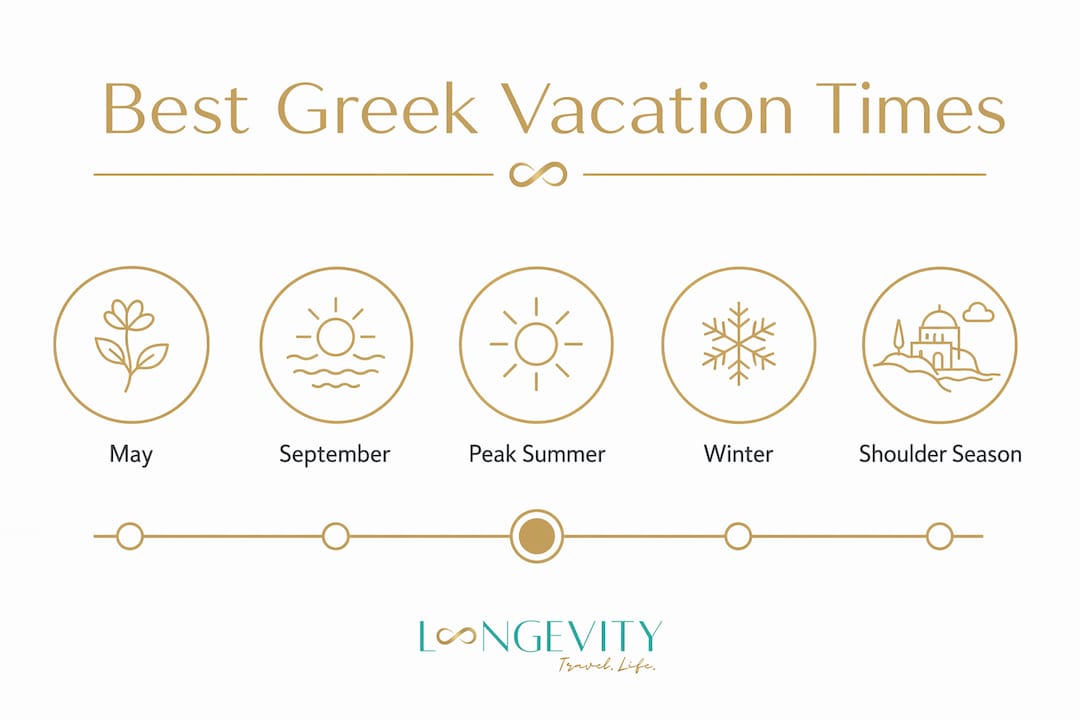
Choosing the right time to visit shapes everything, from the temperature of the water to the mood of the village square. May and September are the best months for warm weather, manageable crowds, and reasonable prices, with May temperatures sitting comfortably between 20 and 26°C. That combination is rare in Mediterranean travel. You get the warmth without the August crush, and prices at hotels and restaurants reflect that difference noticeably.
The shoulder seasons also give you something that peak summer cannot: space. Space on the beach, space at the taverna, and space to actually hear the sound of the sea. Locals are more relaxed, conversations come more easily, and the rhythm of the place is closer to its natural pace.
Cultural timing matters too. Orthodox Easter, which falls on April 12 in 2026, transforms Greek villages into something extraordinary. Candlelit processions, lamb roasting over open fires, and a sense of communal celebration that no tourist itinerary can manufacture. The Assumption holiday on August 15 brings a different energy, with public holiday weekends driving up domestic travel, prices, and crowds at popular spots.
Key timing considerations at a glance:
- May: Warm, uncrowded, and affordable. Wildflowers still color the hillsides.
- June: Beaches fill up, but the pace remains manageable outside of Santorini and Mykonos.
- July and August: Peak season. Vibrant and social, but plan ahead for accommodation and ferries.
- September: The sea is at its warmest. Crowds thin, and the light turns golden.
- Orthodox Easter (April 2026): Exceptional cultural atmosphere, but book accommodation early.
Pro Tip: If you are visiting around August 15, avoid the most popular islands and head instead to lesser-known spots like Folegandros or the Mani peninsula in the Peloponnese, where the holiday atmosphere feels local rather than touristic.
What are the most scenic and peaceful destinations to visit?
Greece rewards those who look beyond the obvious. Santorini and Mykonos are beautiful, and they deserve their reputation. But the most restorative Greek experiences tend to happen somewhere quieter.
Folegandros is the clearest example. Wallpaper* describes it as a “best-kept secret” in the Cyclades, and the reason is structural. The island has no airport and limited ferry service, which means the volume of visitors stays naturally low. Hidden coves are genuinely hidden. The beaches require a walk or a short boat ride, and that small effort filters out the crowds entirely. The result is a kind of seclusion that more accessible islands simply cannot offer, no matter how early you arrive.
Beyond Folegandros, the choices are rich. Here is a practical comparison of some of the best destinations for a calm, scenic Greek getaway:
| Destination | Best for | Crowd level | Standout feature |
|---|---|---|---|
| Folegandros | Seclusion and slow travel | Very low | No airport, hidden coves |
| Crete | Culture, food, and beaches | Moderate | Diverse landscapes, affordable stays from €388 |
| Kefalonia | Dramatic scenery and swimming | Low to moderate | Myrtos Beach, lush green hills |
| Rhodes | History and coastal beauty | Moderate to high | Medieval old town, clear water |
| Peloponnese | Ancient ruins and village life | Low | Authentic culture, fewer tourists |
Crete stands out for travelers who want variety. A week there with flights and half-board starts around €388 per person, making it one of the most accessible options for an immersive Greek experience. The island is large enough to feel like several destinations in one, from the Venetian harbor of Chania to the gorge of Samaria and the quiet eastern villages near Sitia.
For those who want to explore hidden gems across multiple islands, combining Kefalonia with a few days on a smaller Ionian neighbor creates a natural, unhurried rhythm that suits the spirit of Greek travel perfectly.
How to enjoy authentic Greek cuisine and local dining culture
Greek food is not just what you eat on holiday. It is a central part of how you experience the place. The table is where Greek culture lives most vividly, and understanding the rhythm of meals transforms a good trip into a great one.
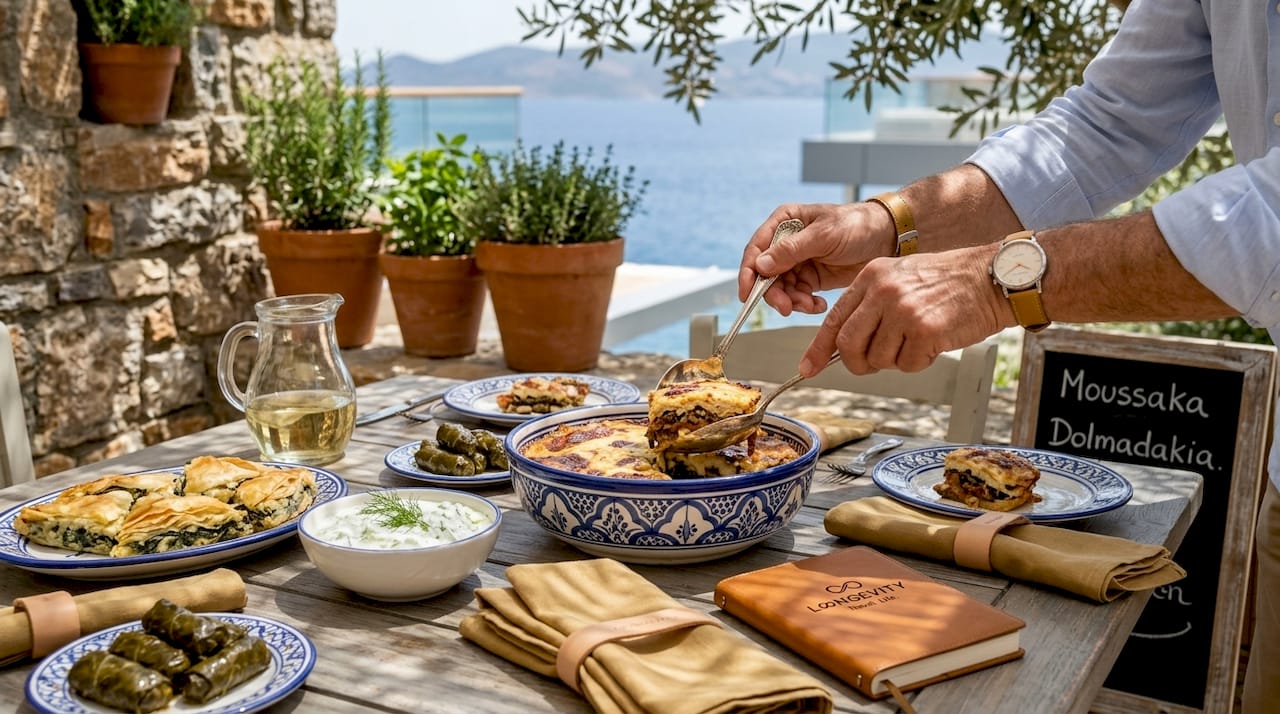
The structure of a Greek dining day is worth knowing before you arrive. Lunch happens between 2 and 3pm, and dinner in summer does not begin in earnest until around 9pm. Arriving at a taverna at 7pm is not wrong, but you will find it quiet and slightly out of step with the local energy. By 9 or 9:30pm, the tables fill, the conversations grow louder, and the whole experience shifts into something more alive.
Here is how to make the most of Greek dining culture:
- Order slowly. Greek meals are not rushed. Start with mezedes, the small shared plates, and let the evening build naturally. Tzatziki, taramasalata, and grilled octopus are the foundation of a proper Greek table.
- Find the family-run taverna. The best food in Greece is rarely in the places with the largest signs. Look for handwritten menus, mismatched chairs, and a proprietor who greets you personally.
- Eat the Greek salad as it is meant to be eaten. A proper horiatiki uses ripe tomatoes, cucumber, Kalamata olives, and a thick slab of feta, dressed only with olive oil and dried oregano. It is a dish that tastes entirely different when the ingredients are local and in season.
- Order the fresh catch. Ask what came in that morning. Grilled fish with lemon and olive oil, eaten beside the water as the sun goes down, is one of the defining pleasures of a Greek summer.
- Stay for dessert and coffee. Greek coffee, served thick and slow in a small cup, is not a quick caffeine fix. It is an invitation to sit longer, talk more, and let the evening continue at its own pace.
Pro Tip: The best foodie experiences in Greece happen away from the harbor front. Walk two streets back from the water and you will almost always find a better meal at a lower price, served by someone who actually wants to talk to you.
How does the slow-paced local lifestyle enrich your time there?
Travelers increasingly choose Greece for experience-driven, crowd-free holidays rather than fast-paced sightseeing. That shift reflects something real about what Greece offers. The country has a pace that is genuinely different, and the most memorable moments tend to happen when you stop trying to fill every hour.
The Greek concept of diaita, a balanced way of living that weaves together food, movement, and rest, is not a philosophy you read about in a museum. You feel it in the morning coffee ritual, in the afternoon quiet when shops close and the streets empty, and in the long evenings that stretch toward midnight without anyone checking the time.
Practical ways to embrace the local rhythm:
- Sit with your coffee. Order a Greek frappé or a freddo espresso at a café under a plane tree or an olive tree, and commit to staying for at least an hour. Watch the village wake up. This is not wasted time.
- Walk the historic alleys without a plan. The most beautiful corners of Greek towns, whether in Nafplio, Chania, or the hilltop villages of Folegandros, reveal themselves when you are not rushing toward a specific sight.
- Respect the afternoon pause. Between roughly 2 and 5pm in summer, Greece slows almost completely. Use this time for a swim, a nap, or a long lunch. Fighting it is exhausting and unnecessary.
- Visit traditional villages where the pace of life has changed little in decades. A morning in a Cretan mountain village or a Peloponnese stone-built town offers a kind of quiet that no beach resort can replicate.
- Let meals take as long as they take. The unhurried, social nature of Greek dining is not inefficiency. It is the point. Aligning your evening around a 9pm dinner and staying at the table for two hours is one of the most genuinely restorative things you can do on a Greek holiday.
Key takeaways
A Greek holiday is most rewarding when you align with the local rhythm rather than imposing your own schedule on it.
| Point | Details |
|---|---|
| Best timing | May and September offer warm weather, lower prices, and manageable crowds. |
| Peaceful destinations | Folegandros, Kefalonia, and the Peloponnese deliver seclusion that busier islands cannot match. |
| Dining culture | Plan dinners around 9pm in summer to experience the full warmth of a Greek taverna. |
| Slow travel mindset | Embracing afternoon pauses and unhurried mornings defines the authentic Greek experience. |
| Cultural awareness | Public holidays like Orthodox Easter create extraordinary atmosphere but require early planning. |
What a Greek holiday taught me about slowing down
I have spent a great deal of time in Greece over the years, and the thing that still surprises me is how quickly the pace gets under your skin. You arrive with a list. A list of islands, beaches, ruins, restaurants. And within two days, the list is forgotten. Not because you gave up on it, but because something better replaced it.
The hidden coves are real. I have swum in places on Folegandros and in the Ionian that felt entirely private, reached by a short walk down a rocky path with no signage and no other footprints. That kind of discovery does not happen on a schedule. It happens when you are moving slowly enough to notice the path.
What I find most people underestimate is the food. Not the quality, which they expect, but the social architecture around it. A Greek meal is not a transaction. It is a conversation that happens to involve eating. When you sit down at a family taverna at 9:30pm and the owner brings you something you did not order because he thinks you should try it, you are not a tourist anymore. You are a guest. That distinction matters, and it is available to anyone willing to show up at the right time and stay long enough.
My honest advice: resist the urge to island-hop too aggressively. One island, known well, is worth three islands seen quickly. Greece rewards depth over breadth, always.
— Simona
Plan your perfect Greek getaway with Longevitytravel
Greece is generous with those who approach it thoughtfully. Knowing which island suits your temperament, which villages reward a slow morning, and which tavernas serve the kind of meal you will still talk about a year later takes time to learn. Longevitytravel has spent more than three decades building exactly that knowledge.
Our personalized consulting service matches your preferences, travel style, and ideal pace with the Greek destinations and experiences that will genuinely resonate with you. Whether you are drawn to the quiet coves of the Cyclades, the culinary richness of Crete, or the ancient villages of the Peloponnese, we help you design a trip that feels considered rather than generic. Reach out to us and let us help you plan a Greek holiday worth remembering.
FAQ
When is the best time to visit Greece?
May and September are the best months, offering warm temperatures between 20 and 26°C, fewer crowds, and lower prices than peak summer.
Which Greek island is best for a quiet, relaxing holiday?
Folegandros is the strongest choice for genuine seclusion. Its limited ferry access and lack of an airport keep visitor numbers naturally low, preserving hidden coves and a slow local pace.
What time do Greeks eat dinner?
Greek tavernas fill around 9pm in summer. Arriving earlier means a quieter atmosphere; arriving at local time means the full social warmth of a Greek evening meal.
How do public holidays affect travel in Greece?
Major holidays like Orthodox Easter and August 15 increase domestic travel and crowd levels at popular spots. Government offices close, but most restaurants and tourist venues remain open.
What is the most affordable Greek island for a week-long stay?
Crete offers one of the best combinations of value and experience, with week-long packages including flights and half-board starting around €388 per person.
We would love to hear from you. Which Greek island holds your favorite travel memory? Share it in the comments below.
Recommended
Planning a family holiday in Greece? We'll help you pick the right island and hotel.
Explore Greek destinationsNewsletter
A memory for life
Weekly to your inbox: inspiration, longevity insights and exclusive travel offers.