
How Much Does a Coffee or Dinner Cost in Greece?
Discover how much does a coffee or dinner cost in Greece. Get real prices, tips on dining options, and budget wisely for your trip!

TL;DR:
- Knowing the cost of coffee and dinner in Greece helps travelers plan a relaxed trip and manage their budgets effectively.
- Prices vary significantly depending on dining format, location, and season, with local neighborhoods offering better value than tourist hotspots.
- Travelers should budget around €5–€10 daily for coffee and €12–€25 per person for casual to mid-range dinners, reserving special evenings for fine dining experiences.
Knowing how much does a coffee or dinner cost in Greece before you land makes the difference between a relaxed trip and a daily guessing game. Greece dining prices span a wide range depending on where you sit, what you order, and whether you are on a sun-drenched island or a quiet back street in Athens. This guide gives you real 2026 numbers across every dining tier, from a takeaway Freddo Espresso to a Michelin-starred dinner, so you can build a food budget that actually holds up.
Table of Contents
- Key takeaways
- 1. How much does a coffee or dinner cost in Greece: key factors first
- 2. What you will pay for coffee in Greece
- 3. Dinner costs by dining tier in Greece
- 4. Destination-by-destination price comparison
- My honest take on budgeting for food in Greece
- Plan a more nourishing trip to Greece with Longevitytravel
- FAQ
Key takeaways
| Point | Details |
|---|---|
| Coffee costs vary by format | Takeaway coffee runs €2.30–€2.80; sit-down with a pastry can reach €5. |
| Taverna dinners stay affordable | A casual taverna meal in Athens typically costs €12–€20 per person. |
| Fine dining scales steeply | Michelin-starred venues can charge €140–€180 per person for a full experience. |
| Location shifts prices significantly | Tourist hotspots charge more; local neighborhoods offer the same quality for less. |
| Sharing dishes saves money | Ordering several plates for the table is how locals reduce per-person spending. |
1. How much does a coffee or dinner cost in Greece: key factors first
Before we get into exact numbers, it helps to understand what actually moves Greece dining prices up or down. Three factors matter most, and once you see them clearly, the numbers start to make a lot of sense.
Dining style and format. There is a meaningful price gap between takeaway and sit-down service, even for the same coffee. The same logic applies to dinner: a casual taverna, a mid-range restaurant, and a fine dining venue serve different versions of the Greek food experience at very different price points.
Geography. Tourist hotspots charge noticeably more than local neighborhoods in the same city. A coffee on the main square of Santorini’s Oia village will cost more than the same drink two streets back. This is true in Athens, Mykonos, Crete, and Rhodes alike.
Meal composition and seasonality. A single espresso is one budget line. A full dinner with starters, a main, dessert, and a carafe of wine is another. Prices also shift with tourist season. From June through August, many restaurants in high-traffic areas quietly add a euro or two to the menu.
Consider these variables before setting a daily food budget:
- Format: takeaway coffee vs. café table; single course vs. full dinner
- Area: city center vs. residential neighborhood vs. island resort strip
- Season: shoulder season (April, May, September, October) vs. peak summer
- Extras: drinks, bread covers, and desserts add up faster than most travelers expect
Pro Tip: Budget takeaway and sit-down coffee separately. Separate budgeting by format improves accuracy more than trying to estimate a single average daily coffee spend.
2. What you will pay for coffee in Greece
Greece has its own coffee culture, and it runs on two drinks most visitors have never tried before landing: the Freddo Espresso and the Freddo Cappuccino. Both are cold espresso-based drinks, whipped to a frothy finish and served over ice. They are the daily habit of most Greeks, and they are the benchmark for the average coffee price in Greece.
Here is what to expect in 2026:
- Freddo Espresso (takeaway): €2.30–€2.60
- Freddo Cappuccino (takeaway): €2.50–€2.80
- Standard cappuccino or filter coffee (sit-down): €3.00–€4.50 depending on location
- Coffee plus a small pastry or koulouri (sit-down): around €3.50–€5
What surprises many travelers is that coffee prices in Greece remain steady even as global coffee commodity prices have dropped. Higher energy costs, rising rents, and increasing wages in the hospitality sector have kept Greek café prices from following the global trend downward. A €2.50 Freddo in a local Athens neighborhood may feel affordable, but the same drink on a Mykonos beach club terrace can reach €5 or €6.
If you are a regular two-coffee-per-day traveler, budget roughly €5–€10 daily for coffee depending on your sit-down habits and location.
Pro Tip: Look for kafeneions, the traditional Greek coffeehouses, especially in smaller towns and residential neighborhoods. They serve Greek coffee and freddo drinks at local prices, and they are worth every cent for the atmosphere alone.
3. Dinner costs by dining tier in Greece
This is where Greece dining prices tell the most interesting story. The cost of dinner in Greece is not about a single number. It is about which tier you choose, and that choice can mean a difference of €100 per person at the extremes.
Casual tavernas
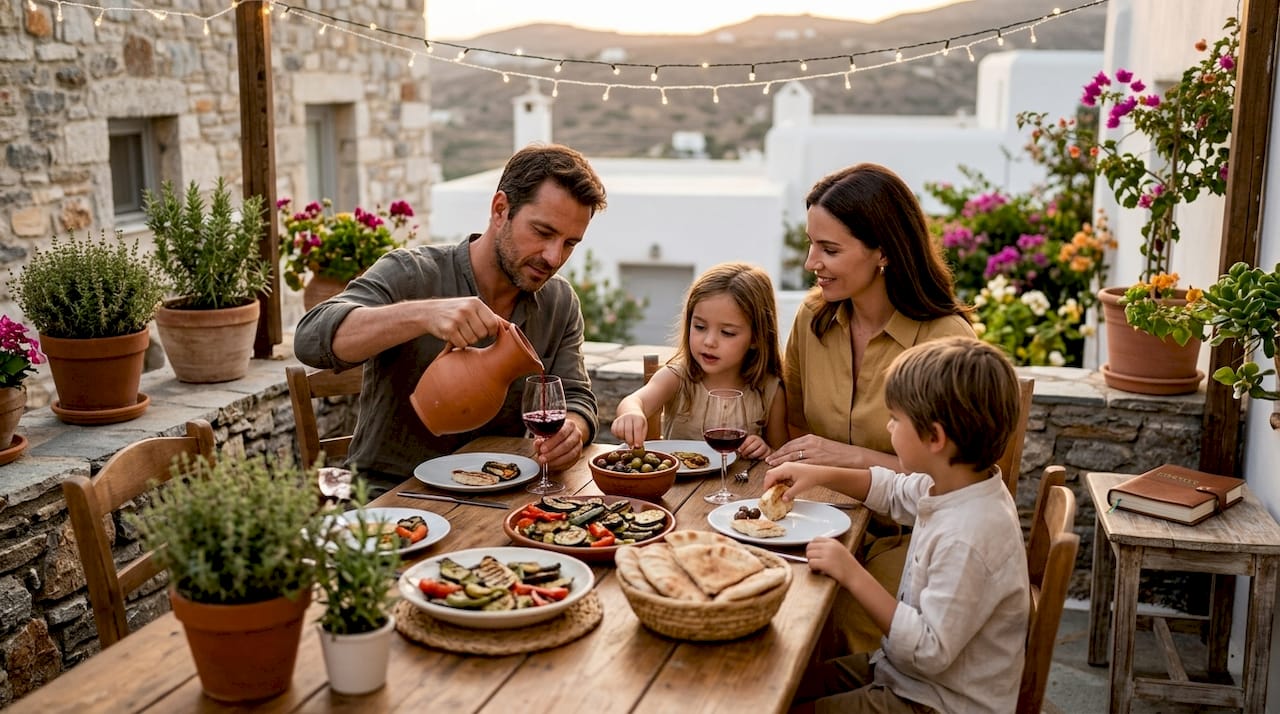
The taverna is the heart of Greek dining. Think simple rooms, paper tablecloths, and dishes that have not changed in decades. A casual taverna dinner in Athens typically costs €12–€20 per person, including a starter, a main, and a drink. That is not budget dining in a compromised sense. The grilled octopus, slow-cooked lamb, and fried zucchini at a neighborhood taverna in Kypseli or Koukaki regularly outperform food served at restaurants charging twice the price.
Mid-range restaurants
Step up one tier and you are looking at €15–€25 per person for a full dinner. This bracket covers restaurants with more developed menus, better wine lists, and table service that feels deliberate rather than functional. Grilled fish, creative mezze platters, and regional specialties dominate these menus. It is a comfortable tier for travelers who want a full experience without the ceremony of fine dining.
Fine dining and Michelin-starred venues
Athens and some of the larger islands now host serious fine dining. Expect €25–€65 per person at higher-end restaurants, and considerably more at Michelin-starred venues, where tasting menus can reach €140–€180 per person. These experiences are genuinely worth the investment on occasion, especially when the setting includes a rooftop view of the Acropolis or a clifftop terrace above the Aegean. You can explore what upscale dining in Greece looks like across the islands and in Athens to calibrate your expectations before you book.
One practical note: drinks can shift your final bill significantly at every tier. A carafe of house wine at a taverna might cost €5–€8. A bottle of wine at a mid-range restaurant can run €20–€40. Factor that in.
| Dining tier | Average cost per person | What it typically includes |
|---|---|---|
| Casual taverna | €12–€20 | Starter, main, house drink |
| Mid-range restaurant | €15–€25 | Mezze, main, wine by the glass |
| Fine dining | €25–€65 | Multi-course, curated wine |
| Michelin-starred | €140–€180 | Full tasting menu experience |
4. Destination-by-destination price comparison
Where you eat in Greece matters almost as much as where you sit in the restaurant. Here is a practical side-by-side guide to help you set realistic expectations across common destinations.
| Destination | Takeaway coffee | Sit-down dinner (casual) | Sit-down dinner (mid-range) |
|---|---|---|---|
| Athens (local neighborhood) | €2.30–€2.60 | €12–€18 | €15–€22 |
| Athens (tourist center/Plaka) | €3.00–€4.00 | €15–€22 | €20–€28 |
| Thessaloniki | €2.30–€2.60 | €12–€18 | €15–€22 |
| Santorini/Mykonos | €4.00–€6.00 | €20–€35 | €30–€50 |
| Crete (local town) | €2.40–€2.70 | €13–€20 | €16–€24 |
| Rhodes (resort strip) | €3.00–€5.00 | €18–€30 | €25–€40 |
The pattern is clear. Athens and Thessaloniki in local neighborhoods offer the best value on the mainland. The premium islands carry a significant surcharge, particularly in peak summer.
Here are some Greece food budget tips that consistently save travelers money without reducing the quality of what they eat:
- Eat lunch rather than dinner at mid-range or fine dining restaurants. Many offer set lunch menus at 30–40% less than evening prices.
- Walk two or three streets away from any major tourist site and prices drop noticeably.
- Ordering dishes to share is a common local practice that lets you try more of the menu while keeping the per-person cost down.
- Ask for the daily special. Tavernas often rotate fresh catch or seasonal dishes that represent the best value on the menu.
Pro Tip: For a taste of authentic Greek cuisine that also connects to the philosophy of eating well for a long life, explore Greece’s longevity foods. Many of these ingredients appear on taverna menus at the most affordable price points.
My honest take on budgeting for food in Greece
I have watched travelers make the same mistake for years. They read a generic “average cost of food in Greece” figure, apply it to every meal, and then feel confused when a dinner on Oia’s main terrace costs three times what they expected while a meal in an Athenian side street costs half.
The truth is that dining tier and location are the real levers of cost, not whether Greece is “expensive” or “cheap” as a country. Greece contains multitudes. You can eat extraordinarily well for €15 a head if you know where to look, and you can spend €180 at a tasting menu that justifies every euro.
What I have found rewarding is treating the meal itself as part of the trip rather than a logistical line item. The best dining experiences I have had in Greece were not the most expensive ones. They were the ones where I sat for two hours at a small taverna in a village no tour group had found, shared dishes with the table, and left feeling genuinely nourished. That is what the Greeks mean by diaita, the balanced way of living that includes how and what you eat.
My practical advice: set a realistic daily food budget of €30–€50 per person for a mix of coffee, lunch, and dinner at casual to mid-range venues. Allocate one or two evenings for a special dinner. And always, always walk away from the tourist strip before you choose where to sit down.
— Robert
Plan a more nourishing trip to Greece with Longevitytravel
Knowing the numbers is a good start. Knowing how to turn those numbers into a genuinely enriching experience is what Longevitytravel has been doing since 1990. Greece is not just a destination for us. It is the origin of the philosophy behind everything we curate: food that nourishes, places that restore, and experiences that stay with you long after you return home.
Whether you want help mapping a personalized dining itinerary that balances your food budget with authentic experiences, or you want to explore curated travel programs that include foodie and cultural immersion across the Greek islands and mainland, we can help you plan smarter. Our expertise means you spend less time second-guessing and more time truly present at the table. Reach out and let’s design a Greece journey shaped around how you want to feel.
FAQ
What is the average coffee price in Greece in 2026?
A takeaway Freddo Espresso costs €2.30–€2.60, while a sit-down coffee with a small pastry typically runs €3.50–€5 depending on the café and location.
How much is dinner in Greece at a typical taverna?
A casual taverna dinner including a starter, main, and drink costs around €12–€20 per person in Athens and most mainland cities.
Are restaurants more expensive on the Greek islands?
Yes, significantly. On popular islands like Santorini and Mykonos, casual dinners can cost €20–€35 per person and mid-range meals often exceed €40, compared to considerably lower prices on the mainland.
What is the best way to save money on food in Greece?
Eating lunch instead of dinner at nicer restaurants, ordering shared dishes, and choosing venues two or three streets from major tourist sites are the most effective ways to reduce the cost of meals in Greece without sacrificing quality.
Why are coffee prices in Greece not dropping despite global trends?
Rising energy costs, higher rents, and increasing wages in the hospitality sector have kept domestic coffee prices steady, even as global commodity prices have fallen.
Recommended
Planning a family holiday in Greece? We'll help you pick the right island and hotel.
Explore Greek destinationsNewsletter
A memory for life
Weekly to your inbox: inspiration, longevity insights and exclusive travel offers.