
Island hopping in Greece: Ports, routes & hidden gems
Discover how to plan the perfect Greek island hop across Santorini, Rhodes, Karpathos, and beyond. Ferry tips, itineraries, budgets, and hidden gems included.

TL;DR:
- Greece’s islands offer diverse scenery and cultural experiences beyond popular tourist spots.
- Effective planning includes understanding ferry options, crafting balanced itineraries, and timing well for crowds.
- Visiting lesser-known islands provides authentic experiences, fewer crowds, and unexpected adventures.
Greece is more than Santorini sunsets and Mykonos beach clubs. The real adventure starts when you step off the beaten route and discover that this country holds over 220 inhabited islands, each with its own personality, port culture, and scenery. From the rugged cliffs of Karpathos to the lush green hills of Kefalonia, the variety is staggering. This guide covers everything you need to know to plan a smart, exciting island hop: how ferries work, how to build the right itinerary, what to budget, and how to time your journey so you experience the best of Greece without the crowds.
Table of Contents
- How Greek island hopping works: Ports, ferries, and routes explained
- Crafting your dream itinerary: Blending iconic islands with offbeat gems
- Budgeting your Greek island adventure: What costs and savings to expect
- Best times for island hopping: Seasons, crowd patterns, and new 2026 trends
- What most island hopping guides miss: Local flavor and unexpected adventure
- Ready to plan your unforgettable island hopping adventure?
- Frequently asked questions
Key Takeaways
| Point | Details |
|---|---|
| Mix famous and hidden islands | Combining well-known destinations with offbeat gems creates a richer Greek island adventure. |
| Smart planning saves money | Traveling in the shoulder season and booking ferries early help you avoid crowds and cut costs. |
| Three nights per island works best | Staying at least three nights gives you time to experience local culture, hikes, and less stress. |
| New rules improve the experience | 2026 crowd caps on major islands mean fewer day-trippers and better value for authentic explorers. |
How Greek island hopping works: Ports, ferries, and routes explained
Understanding the ferry system is the foundation of every great Greek island trip. Greece has a well-developed network of sea routes, and once you understand how it flows, the whole archipelago opens up to you.
You have two main ferry categories to choose from. High-speed catamarans are fast, sleek, and significantly pricier. They cut travel times roughly in half, but they are more sensitive to rough weather and can be cancelled without warning during windy periods. Conventional ferries are slower, more affordable, and more stable on choppy seas. They also tend to have more deck space, which makes the journey part of the experience rather than just a means of transport.
Most routes originate from Athens, where three main ports serve different island groups. Piraeus is the largest and handles routes to the Cyclades, Dodecanese, and Crete. Rafina covers the eastern Cyclades including Mykonos and is often less congested. Lavrio is smaller and connects to islands like Kea and Kythnos. Ferries from Athens ports depart with operators like Blue Star Ferries, SeaJets, and Hellenic Seaways, and you can compare all schedules and prices through the Ferryhopper app in one place.
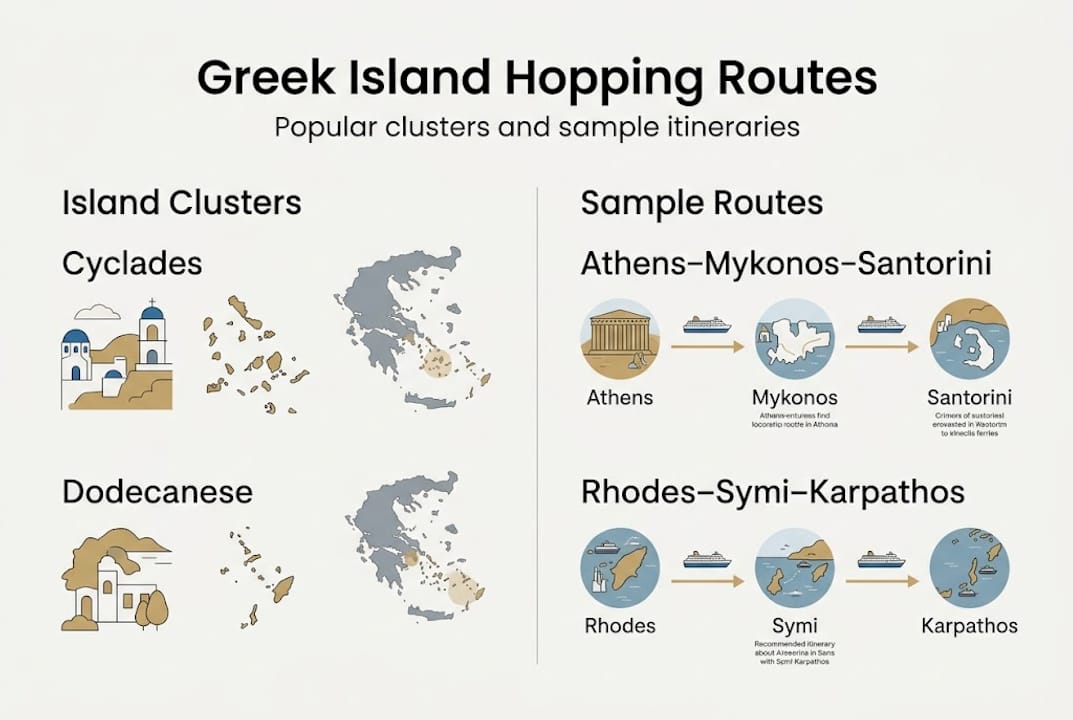
When planning your route sequence, think in island clusters. The Cyclades (Mykonos, Paros, Naxos, Santorini) connect frequently and easily. The Dodecanese (Rhodes, Symi, Kos) form another logical chain. Mixing clusters is possible but adds travel time, so plan transfers thoughtfully.
| Ferry type | Speed | Cost | Weather sensitivity |
|---|---|---|---|
| High-speed catamaran | Fast (1.5-3 hrs) | Higher | High |
| Conventional ferry | Slower (3-8 hrs) | Lower | Low to moderate |
| Small local boat (caique) | Variable | Low | High |
Pro Tip: Always build one flexible day into your schedule near the start of the trip. Summer winds in the Aegean, particularly the meltemi, can ground high-speed ferries with little notice. A buffer day protects your plans and keeps the adventure enjoyable rather than stressful. For inspiration on routes that take you beyond the familiar, our hidden gem islands guide is worth a read before you book.
Crafting your dream itinerary: Blending iconic islands with offbeat gems
The most memorable island hop is not the one that visits the most islands. It is the one that mixes familiar energy with genuine discovery.
Start with the icons if you want to. Mykonos delivers world-class beaches and a port town that buzzes day and night. Santorini’s caldera views are genuinely breathtaking, especially from Oia at sunset. These are worth your time. But they are also crowded, expensive, and heavily photographed. The deeper adventure begins when you pair them with something quieter.
Adventurous hopping in the Dodecanese covers islands like Rhodes (medieval Old Town, fortress walls), Symi (colorful neoclassical harbor, crystal coves), and Kos (ancient ruins, cycling paths). Alternatively, Karpathos and Kasos in the southern Aegean offer dramatic highland villages, wild coastlines, and a pace of life that feels completely removed from tourist Greece. Our guide to Karpathos authentic adventures goes deeper into what makes this island special.
Island groups by vibe:
- Nightlife and beaches: Mykonos, Paros, Ios
- History and culture: Rhodes, Samos, Crete (Heraklion)
- Nature and hiking: Karpathos, Kefalonia, Samos
- Off-grid quiet: Iraklia, Kasos, Koufonisia
- Romantic scenery: Santorini, Paros, Kefalonia
Sample 7-day itinerary (Cyclades focus): Athens (Piraeus) → Mykonos (3 nights) → Paros (2 nights) → Santorini (2 nights)
Sample 10-day itinerary (mixed adventure): Athens → Rhodes (3 nights) → Symi (1 night) → Karpathos (3 nights) → Crete/Heraklion (3 nights)
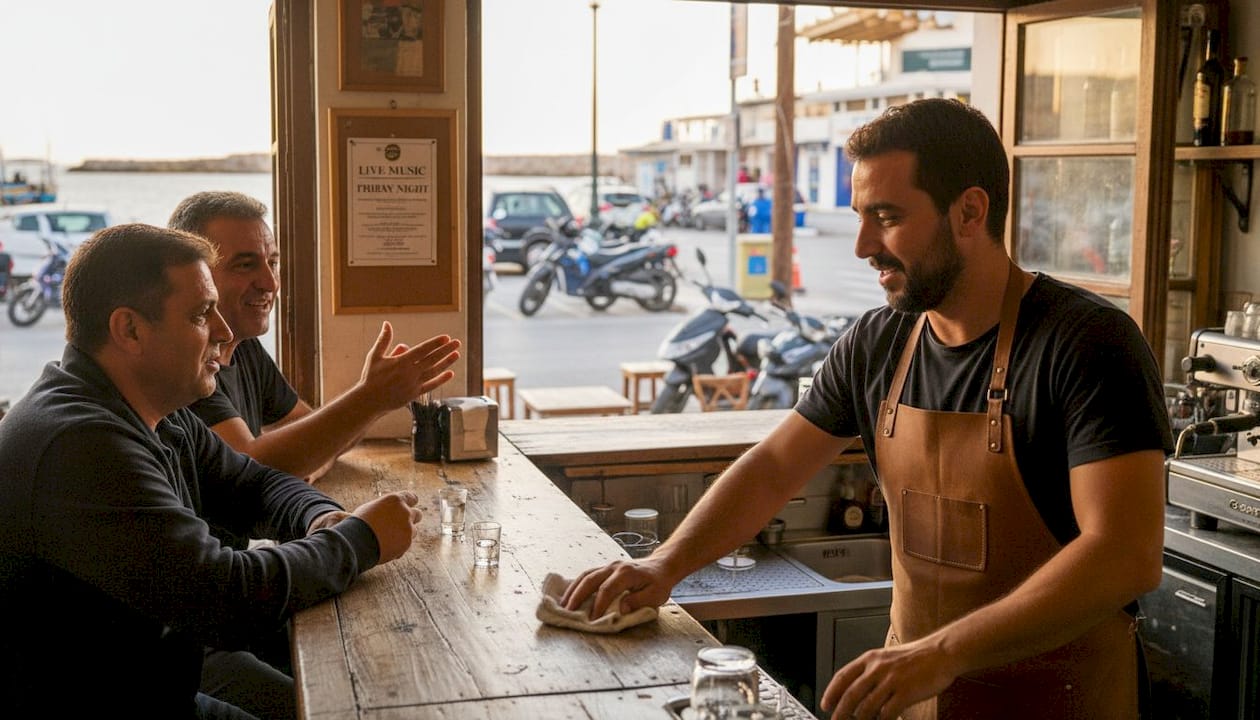
The vibrant port scene of each island also shapes the experience. Samos has a lively port with a strong local bar culture. Kefalonia’s Argostoli harbor is lined with cafes and has a relaxed, authentic rhythm that feels nothing like a tourist trap. You can also browse our hidden Greek island quests for more ideas on mixing popular and lesser-known stops.
Pro Tip: Spend at least three nights on each island. One night gives you almost nothing, two nights feels rushed, and three nights lets you actually settle in, find the good taverna, swim in two different coves, and catch a local evening. That is where the real memories are made.
Budgeting your Greek island adventure: What costs and savings to expect
Greece can be surprisingly affordable or quietly expensive, depending almost entirely on how and when you travel. Knowing the numbers before you go protects you from common budget surprises.
Ferry tickets vary widely. A short hop like Piraeus to Mykonos on a conventional ferry runs around €35-50. A longer leg such as Piraeus to Rhodes can hit €75-95 on a high-speed vessel. Ferry cost details vary by operator, season, and booking window, so booking two to four weeks in advance during peak season saves money and guarantees your preferred departure time.
Accommodation ranges from €50-€80 per night for a clean guesthouse on a smaller island to €175 or more per night on Santorini or Mykonos in July and August. Food is one of Greece’s great pleasures and a genuine value. A full meal with wine at a local taverna costs €15-25 per person. Tourist-facing restaurants near famous ports charge more, sometimes double.
A mid-range 7-day trip typically costs €1,400 to €1,890 per person, covering accommodation at €95-175 per night, food at €35-60 per day, and ferries at €35-95 per leg. A 10-day trip runs €1,500 to €2,650 mid-range, excluding flights.
| Trip length | Budget range (per person) | Notes |
|---|---|---|
| 7 days | €1,400 to €1,890 | Mid-range, excludes flights |
| 10 days | €1,500 to €2,650 | Mid-range, excludes flights |
| Shoulder season saving | Up to 30-40% | April-May, September-October |
Three budgeting mistakes island hoppers commonly make:
- Booking high-speed ferries for every leg. It adds up fast. Use conventional ferries for overnight or long routes and save the speed boats for short, critical hops.
- Staying in peak-season hotspots for the full trip. Two nights in Santorini is a treat. Five nights in Santorini in August is expensive and exhausting. Mix in romantic island stays on smaller islands to balance costs and crowd levels.
- Ignoring shoulder season. Traveling in June or late September can cut accommodation costs by 20-40% while offering better ferry availability and calmer beaches. Our page on hidden gems for value highlights destinations that stay affordable even in the summer months.
Best times for island hopping: Seasons, crowd patterns, and new 2026 trends
Timing changes everything in Greece. The same island can feel like paradise or an overcrowded open-air market depending on the month you arrive.
Peak season (July to August): The Aegean is warm, the skies are clear, and the islands are alive. But famous spots like Santorini and Mykonos reach maximum capacity. Cruise caps introduced in 2026 are actively reducing day-tripper numbers, which is genuinely improving the experience for independent travelers.
Shoulder season (May to June, September to October): This is where the smart money goes. June and September consistently rank as the best months for island hopping, offering warm water, manageable crowds, and full ferry schedules. Shoulder season can save up to 40% on accommodation compared to peak rates.
Low season (November to March): Ferry services thin out dramatically. Some smaller islands go quiet or close tourist infrastructure entirely. Not ideal for island hopping unless you are targeting specific experiences like carnival season.
Pros and cons of peak vs. shoulder season:
- Peak (July-August): Pros — Full nightlife, all beaches open, maximum energy
- Peak: Cons — High prices, crowded ports, limited ferry availability
- Shoulder (May-June, Sept-Oct): Pros — Lower prices, authentic atmosphere, hiking and swimming conditions
- Shoulder: Cons — Some smaller venues may not be open yet in May
Overtourism reached a tipping point in 2025. Santorini capped cruise passengers at 8,000 per day and introduced a €20 cruise tax. The result was a 17% visitor drop at peak, a 20-23% decrease in hotel rates, and a noticeably better experience for independent travelers who stayed. In 2026, these measures continue, making shoulder-season independent travel even more rewarding.
For adventurers who want to combine hiking and swimming, the wild side of Crete and neighboring islands like Karpathos are best explored in May or early October, when trails are cool and the sea is still warm enough to swim. Also check shoulder season advice for specific port recommendations tied to each month.
What most island hopping guides miss: Local flavor and unexpected adventure
Here is what we have learned after decades of crafting Greek journeys: the islands that people remember most are rarely the ones on the glossy covers.
Chasing only the Instagram-famous spots means you spend most of your time in places that have been optimized for visitors rather than lived in by locals. The ports that light people up are the ones where a fisherman hands you a grilled octopus straight off the line, where a village festival starts at 10 p.m. with no signage and no entrance fee, where caiques still run on the captain’s schedule rather than a booking platform’s.
Paros for nightlife and beaches, Naxos for mountain villages and festivals, Rhodes for medieval history all offer these moments if you slow down long enough to find them. And smaller islands like Iraklia or Koufonisia simply do not have the tourist infrastructure to hide the real thing. That rawness is the reward.
The unexpected detour is often the best part of the trip. A missed ferry that lands you in a harbor town for an extra night. A local who recommends a path that is not on any map. This kind of travel cannot be fully planned, but it can be made more likely by choosing itineraries that leave room for it. Our guides to Karpathos wellness escapes and romantic Greek escapes both lean into this philosophy.
Ready to plan your unforgettable island hopping adventure?
You now have the tools to build a Greek island journey that goes well beyond the obvious. From ferry logistics to itinerary design, budget planning, and smart seasonal timing, the path is clear.
At Longevity Travel, we have been crafting personalized Greek adventures since 1990, and we know how to match the right islands to the right traveler. Whether you want a structured itinerary or a starting point for your own exploration, we are here to help. Browse our island adventure options or discover more about why travel with Longevity Travel and how we turn a trip into something genuinely unforgettable.
Frequently asked questions
What are the best months for island hopping in Greece?
June and September offer warm weather, fewer crowds, and optimal ferry schedules for island hopping. Shoulder season travel can also save you up to 40% on accommodation compared to peak August rates.
How much should I budget for a 7-day Greek island trip?
A mid-range 7-day trip typically costs €1,400 to €1,890 per person, including ferries, accommodation, and food, but not flights. Shoulder season travel can bring this figure down significantly.
Should I pre-book Greek ferries or buy tickets at the port?
Pre-booking is strongly recommended, especially in July and August. Book via Ferryhopper for full schedule comparisons and to lock in your preferred departure time before seats sell out.
What are the advantages of visiting lesser-known islands?
Remote islands like Karpathos or Kasos offer dramatic scenery, far fewer crowds, and a more authentic encounter with Greek culture and daily life than famous tourist hubs can provide.
Recommended
Planning a family holiday in Greece? We'll help you pick the right island and hotel.
Explore Greek destinationsNewsletter
A memory for life
Weekly to your inbox: inspiration, longevity insights and exclusive travel offers.