
Quiet Greek Islands to Escape the Crowds in 2026
Discover quiet Greek islands to escape the crowds in 2026. Unwind in serene settings with our ultimate guide to tranquil getaways.

TL;DR:
- Quiet Greek islands remain peaceful through structural features like limited ferry access and small populations. Visiting outside peak season, especially September or May, enhances tranquility and authentic experience. Planning around infrequent ferries and seeking out family-run guesthouses ensures a restorative, undisturbed escape.
Greece gets under your skin in a way that photographs can never quite capture. But the Greece of your imagination, that slow morning coffee by a whitewashed church, the sea completely still, and not another tourist in sight, is harder to find than ever in places like Santorini or Mykonos. The good news is that it still exists. There are quiet Greek islands to escape the crowds where life moves at the rhythm of the tides, not the ferry timetables from tourist brochures. This guide is for those who want to find them.
Table of Contents
- Key takeaways
- 1. What actually makes a Greek island quiet
- 2. Sikinos: the island that time genuinely forgot
- 3. Hydra: silence without sacrifice
- 4. Folegandros: structured quietness
- 5. Antikythera: for those who want the deepest solitude
- 6. Tilos: the rewarded path less traveled
- 7. Comparing the best quiet islands in Greece
- 8. How to plan your quiet island escape
- My honest take on quiet island travel in Greece
- How Longevitytravel can help you find your quiet island
- FAQ
Key takeaways
| Point | Details |
|---|---|
| Access shapes tranquility | Islands with ferry-only access and infrequent connections naturally filter out crowds. |
| Timing matters as much as location | Visiting outside June to September transforms even moderately popular islands into peaceful retreats. |
| Car-free environments change everything | Islands like Hydra, where motorized vehicles are banned, offer a fundamentally different quality of silence. |
| Infrastructure limits are a feature | Fewer hotels and roads mean fewer casual visitors and a more authentic local atmosphere. |
| Combine islands for extended calm | Pairing two low-traffic islands on the same trip deepens the restorative effect of the journey. |
1. What actually makes a Greek island quiet
Before you start booking ferries, it helps to understand why some Greek islands stay peaceful while others are overwhelmed. The answer is rarely about beauty. Some of the most stunning islands in Greece are also the most crowded. Quietness is structural.
Access difficulty is the single biggest factor separating secluded Greek islands from their overrun neighbors. Islands served by airports or multiple daily ferries receive dramatically more visitors. Islands that require a slow, infrequent ferry ride, sometimes with a change in Piraeus and a wait, naturally filter out anyone looking for a quick getaway.
A few other factors shape the quiet experience:
- Population and settlement size. Smaller resident communities mean fewer services built for mass tourism. The culture stays local.
- Limited accommodation stock. When there are only a handful of guesthouses, large tour groups simply cannot arrive.
- Absence of nightlife infrastructure. No beach clubs means no crowd drawn to beach clubs. Simple, but powerful.
- Seasonal rhythms. Many less touristy Greek islands essentially close between October and May. This is not a drawback. For the right traveler, it is the whole point.
Pro Tip: If an island has a direct flight from a northern European hub, reconsider. That single airport connection often triples visitor numbers within a few years.
2. Sikinos: the island that time genuinely forgot
Sikinos sits in the southern Cyclades, close to Folegandros and Ios, yet it feels like a different century. Only around 350 residents call it home, and the island consists of just two settlements: Alopronia, the small port, and Chora, the hilltop village perched above it.
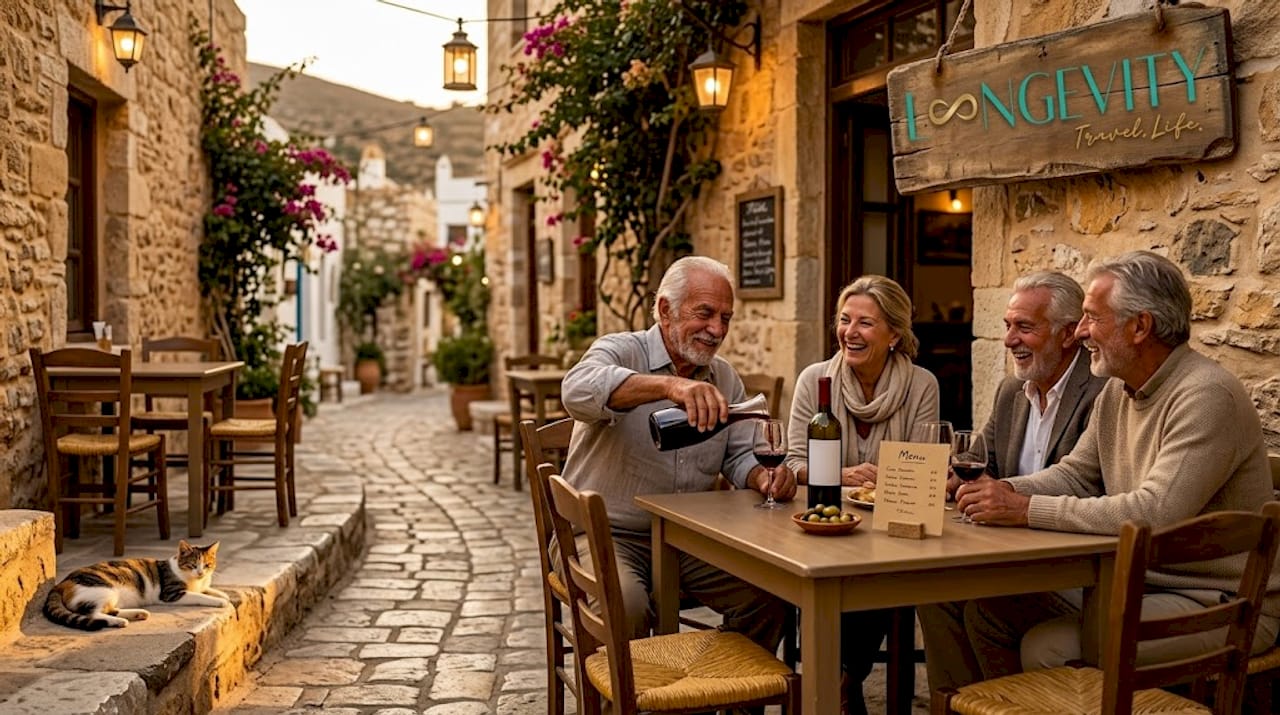
July and August bring a modest wave of visitors, mostly Greeks who know better than to follow the mainstream. Outside those months, the island retreats into a silence that is almost physical. Ferry services become infrequent from October through May, many accommodations close their shutters, and Chora belongs entirely to its residents. Walking the mule paths between the settlements at dawn, with nothing but the smell of thyme and the sound of goat bells, is one of the genuinely unrepeatable experiences in the Greek islands.
Visit in late September or early October for warm water, empty beaches, and the village tavernas still open but unhurried.
3. Hydra: silence without sacrifice
Hydra is the one quiet island that does not require you to give up comfort. It sits about 1 hour and 40 minutes by high-speed ferry from Piraeus, making it accessible without being overrun. What keeps it special is the law.
Since 1956, motor vehicles have been banned on Hydra. No cars, no motorbikes, no scooters. You move by foot, by donkey, or by water taxi. This single policy reshapes the entire sensory experience of the island. There is no traffic noise, no exhaust smell, no congestion at a roundabout. The harbor has a daytime pulse of day-trippers, but after 6 to 7 pm when day boats leave, the quiet is profound.
The real hidden spots on Hydra are reached by water taxi: isolated coves with crystalline water and no road access. This is exactly what movement restrictions achieve on an island like this. They distribute visitors unevenly, leaving large stretches of unspoiled Greek beaches available to anyone willing to make a small effort.
4. Folegandros: structured quietness
Folegandros has a reputation among those who have been there, and almost no profile among those who have not. That gap is precisely its value.
With no airport and limited ferry connections, Folegandros acts as its own crowd filter. The island has no nightlife to speak of, and many of its beaches are accessible only on foot along cliff paths or by small boat. These are not inconveniences. They are the architecture of a peaceful Greek island getaway. Casual day-trippers who want easy sun loungers and cocktail bars simply move on to somewhere easier to reach.
Chora on Folegandros is one of the most beautiful villages in the Cyclades, with medieval kastro streets and a church on the cliff edge that feels like it was placed there specifically to make you stop and breathe. The hidden gems in Greece that stay hidden are often protected by geography as much as obscurity.
5. Antikythera: for those who want the deepest solitude
Antikythera is not for everyone. That is the honest truth, and it is also the highest recommendation you can give it.
Located between Crete and Kythera, this tiny island has fewer than 50 permanent residents and receives almost no casual tourism. The reason is logistical. Supply boat arrivals are unpredictable, especially in winter, when rough weather can cut connections for days. Planning a visit to Antikythera requires a flexible itinerary and a genuine acceptance that you are at the mercy of the sea.
What you get in return is walking paths through wild beauty, isolated sand and pebble beaches, rich endemic flora, and the rare experience of being somewhere genuinely untouched. The island sits on a shipping lane that has been used since antiquity. The famous Antikythera Mechanism was found in a shipwreck nearby. History, silence, and nature exist here in a balance found almost nowhere else.
Pro Tip: On Antikythera, flexible itineraries are not optional. Build at least two extra days into your schedule to account for weather-dependent ferry connections.
6. Tilos: the rewarded path less traveled
Tilos sits in the Dodecanese, southeast of Rhodes. It is small, green, and self-consciously gentle. The island declared itself the first energy self-sufficient island in the Mediterranean, powered largely by wind and solar. But what draws thoughtful travelers is simpler than that: Tilos has no mass tourism infrastructure, a car-accessible interior that rewards walkers, and a pace of life that genuinely slows your nervous system down.
The beaches at Eristos and Lethra are among the most unspoiled Greek beaches in the Aegean, wide and clean without a sunbed in sight at either end of the season. Local summer festivals here are not performed for tourists. They are celebrated by a community that has been celebrating them the same way for generations.
7. Comparing the best quiet islands in Greece
Here is a side-by-side view of how these islands compare on the factors that matter most for tranquil Greek island vacations.
| Island | Ferry from Athens | Has airport | Cars allowed | Best for | Peak quiet season |
|---|---|---|---|---|---|
| Sikinos | 7–10 hours | No | Yes | Deep solitude seekers | October to May |
| Hydra | 1 hr 40 min | No | No | Couples, comfort seekers | Year-round after 7 pm |
| Folegandros | 5–7 hours | No | Yes | Culture and nature lovers | April to June, Sept |
| Antikythera | 4–5 hours from Crete | No | Limited | Extreme solitude travelers | May to September |
| Tilos | 15 hours or via Rhodes | No | Yes | Eco-conscious travelers | May to June, September |
Every island on this list shares one quality: they require intention. You do not end up on Sikinos or Antikythera by accident. That self-selection is what protects them.
8. How to plan your quiet island escape
Choosing the right island is only half the work. The other half is timing and logistics.
- Book outside peak summer. June to August brings the highest visitor numbers even to less touristy Greek islands. Late April, May, and September offer warm weather with dramatically thinner crowds.
- Check ferry timetables before anything else. For islands like Sikinos and Antikythera, ferries do not run daily. Build your entire itinerary around the schedule, not the other way around.
- Look for family-run guesthouses, not hotels. On small islands, local guesthouses are often the only option, and they are almost always the better one. Owners know the island, recommend beaches nobody publishes, and feed you as though you are family.
- Consider combining two quiet islands. If Folegandros connects to Sikinos on your travel days, combine them. The cumulative effect of a week spent entirely off the tourist trail is qualitatively different from a single quiet night.
- Leave room for stillness. The most common mistake is over-planning. These islands reward those who sit with a coffee and watch the light change over the water.
For couples looking to deepen the experience, romantic island getaways built around car-free or low-traffic islands like Hydra offer a particular kind of restorative magic.
Pro Tip: Searching for accommodation on small islands directly through local guesthouses, rather than major booking platforms, often reveals options that are never listed publicly. A single email or phone call can secure a room on Sikinos in prime season.
My honest take on quiet island travel in Greece
I have spent years in Greece, on its ferries, in its village kafeneions, and at its quieter shorelines. Here is what I have learned that most travel articles skip over.
The appeal of a truly quiet Greek island is not just aesthetic. It is restorative in the clinical sense. Removing yourself from noise, information overload, and the social performance of popular tourist destinations allows something to reset in you. The Greeks had a word for this balanced way of living: diaita. It was never just about food. It was about the rhythm of a life well-ordered.
What surprises most first-time visitors to places like Sikinos or Folegandros is how quickly they adapt to the pace. By day two, you stop reaching for your phone. By day four, you are genuinely reluctant to leave. That reluctance is not nostalgia. It is your nervous system telling you something true about what it needs.
The challenge is accepting that low tourism infrastructure is not a deficiency. The absence of a convenience store open at midnight, or a cocktail bar with a DJ, is not a problem to be solved. It is the feature you came for. Once you shift that inner orientation, quiet islands stop feeling like a compromise and start feeling like a gift.
The travelers who return to these islands, year after year, are not escaping something. They are returning to something. That distinction matters more than any beach ranking.
— Robert
How Longevitytravel can help you find your quiet island
At Longevitytravel, we have spent over three decades building intimate knowledge of Greece beyond its famous postcards. We know which guesthouse on Folegandros faces east for the best morning light. We know when the ferry to Sikinos runs in October and which weeks it does not. We know that the right island at the right time, paired with a rhythm of good food, walking, and genuine rest, does something to a person that a five-star resort simply cannot replicate.
Our personalized travel consulting is built around one question: how do you want to feel? If the answer involves less noise, more presence, and the particular peace of a Greek village that has not changed in fifty years, we know exactly where to send you. We also know how to get you there without the stress of managing infrequent ferries, closed accommodations, and unpredictable logistics on your own.
Explore our traditional Greek villages guide as a starting point, and then reach out. The quiet is waiting.
FAQ
Which Greek islands are the least touristy?
Antikythera, Sikinos, and Tilos consistently rank among the least touristy Greek islands, thanks to limited ferry access, small populations, and minimal tourism infrastructure. These islands attract travelers who prioritize authentic experience over convenience.
When is the best time to visit quiet Greek islands?
Late April to early June and September offer the best combination of warm weather and low visitor numbers. Outside these months, many businesses on smaller islands like Sikinos close and ferry connections thin out considerably.
Is Hydra worth visiting if you want true quiet?
Yes, especially if you stay overnight. Day-trippers leave on the evening ferries, and after 6 to 7 pm the harbor and village become genuinely peaceful. The car-free policy makes the silence on Hydra unlike anything else in the Aegean.
How do I get to very remote islands like Antikythera?
Antikythera is reached by ferry from Piraeus or from Crete, but connections are infrequent and weather-dependent. Build flexibility into your itinerary and confirm schedules directly with ferry operators before you commit to dates.
Can families enjoy quiet Greek islands, or are they better for couples?
Both. Families do well on islands like Tilos and Folegandros, where the pace is calm, beaches are safe, and local culture is welcoming. Couples tend to gravitate toward Hydra and Sikinos for the combination of romance and solitude.
Recommended
Looking for a holiday that renews body and mind? Explore our curated longevity and wellness journeys.
Browse destinationsNewsletter
A memory for life
Weekly to your inbox: inspiration, longevity insights and exclusive travel offers.