
Slovenia as a longevity destination, Part 3: Gourmet Slovenia
24 gastronomic regions, three wine-growing regions and more than 2,500 wine producers. A partner guide to Gourmet Slovenia for travel advisors.
Longevity Travel partner newsletter for travel advisors, issue 3.
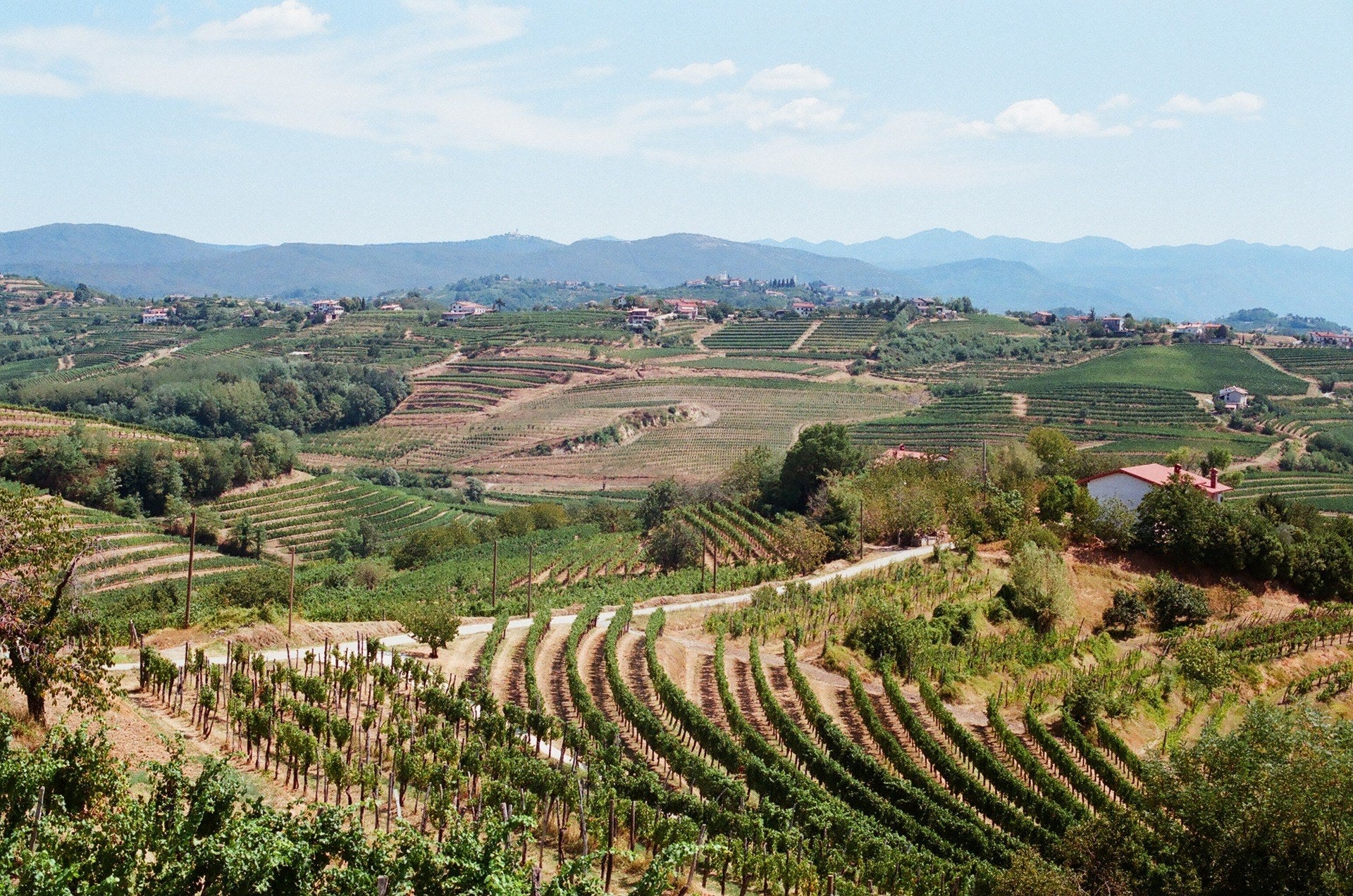
Photo above: Vineyards in Goriška Brda. Photo: tomislav medak, CC BY 2.0, via Wikimedia Commons.
A natural longevity destination, and still Europe's hidden gem
Small, green, safe and active, with everything a short drive away.
- 4thsafest country in the world, Global Peace Index 2026
- ~60%of the country is covered by forest
- 2.1Mpeople in a country you cross in a few hours
- No crowds. Quiet lakes, trails and towns, even in summer.
- Boutique scale. Family run hotels, estates and wineries.
- Alps meet the Adriatic. Sea in the morning, mountains in the afternoon.
- Green by design. Ljubljana was European Green Capital 2016.
- Healthy table. Local, seasonal food. European Region of Gastronomy 2021.
- Active every day. Hiking, cycling, golf and rivers on the doorstep.
Fly in, fly out
| Airport | Distance to Ljubljana (approx.) | Drive time (approx.) |
|---|---|---|
| Ljubljana (LJU) | 25 km | 30 min |
| Zagreb (ZAG) | 153 km | 1 h 35 min |
| Venice (VCE) | 230 km | 2 h 20 min |
| Vienna (VIE) | 378 km | 3 h 30 min |
| Budapest (BUD) | 461 km | 4 h 45 min |
New for US clients: from 12 May 2027, United Airlines plans a direct Newark to Ljubljana flight, four times a week, May to October (Fraport Slovenia).
The natural last stop
Slovenia borders Italy, Austria, Hungary and Croatia. Clients touring Vienna, Budapest, Zagreb, Venice or the Croatian coast can close their trip here with a few quiet days. Transfers are short. They fly home from Ljubljana or from any of the airports above. A calm end to a busy journey through Central and South East Europe.
Gourmet Slovenia
Slovenia has 24 gastronomic regions and 170 typical dishes, made from local ingredients. There are three wine-growing regions and more than 2,500 wine producers. In 2021 Slovenia held the title European Region of Gastronomy. Here is what the Slovenian Tourist Board highlights for this theme.
Twenty-four gastronomic regions
Flavours change from the Alps to the Adriatic, and from the Karst to the Pannonian Plain. Dishes are made from produce grown close to the kitchen: gardens, forests, waters, meadows and orchards. Chefs stay close to those roots. The Slovenian Tourist Board points to Ana Roš, World's Best Female Chef 2017, and to inns, tourist farms and restaurants recognised by Michelin and Gault and Millau. Guests also eat well in hotels and spa restaurants, which cook with local food.
Honey and the Carniolan bee
The Carniolan honeybee is a native Slovenian subspecies and one of the most widespread honeybees in the world. On Slovenia's initiative, the United Nations declared 20 May World Bee Day, the birthday of Anton Janša, a pioneer of modern beekeeping and the first beekeeping teacher at the court of Maria Theresa. In 2022, beekeeping in Slovenia was inscribed on the UNESCO Representative List of the Intangible Cultural Heritage of Humanity. Painted beehive panels are a folk art found only in Slovenia. The Museum of Apiculture in Radovljica holds a large collection, including the oldest known painted panel, more than 260 years old. Janša's apiary can be visited in Breznica, in the Žirovnica area near Bled.
Three wine-growing regions
The regions are Primorska, Posavje and Podravje. Fifty-two vine varieties thrive here. In Primorska, tastes are shaped by terra rossa, the bora wind and a Mediterranean climate. Taste Teran on the Karst, Rebula in Brda, and Malvazija and Refošk in Slovenian Istria. The Vipava Valley is home to indigenous whites such as Zelen, Pinela and Klarnica. In Posavje, Cviček is a local speciality, a light reddish wine made from at least four varieties. Podravje, the largest region, is known for white wines such as Rhein Riesling, Traminer and Furmint, and for sparkling wines around Gornja Radgona, where the tradition is 150 years old. Slovenian producers were among the first to revive macerated, or orange, wines.
The Slovenian table
Potica is the most typical Slovenian dessert, with about 80 fillings. The most common is walnut potica. Honey appears in many dishes. Slovenian salt comes from the northernmost traditional salt pans still operating in the Mediterranean. Look for foods with a protected designation of origin or a traditional speciality guaranteed label, among them cheeses, meats, oils and honey. Karst prosciutto is often served with Teran. Local mineral waters have long been poured at the table.
The oldest vine in Maribor
In Maribor, Slovenia's second largest town, a vine of the Žametovka, or Modra Kavčina, variety has been growing for more than 450 years. The Slovenian Tourist Board describes it as the oldest vine in the world. Behind it stands the Old Vine House. After the harvest, the grapes are made into Žametna Črnina wine. Nearby, Ptuj has the oldest winery in Slovenia, with the oldest vintage wine dating back to 1917.

Grapes on the old vine in Maribor. Photo: Melki Bes, CC BY 2.0, via Wikimedia Commons.
Wine roads and cellars
Wine roads run through Brda, Vipava, the Karst and Istria. In Posavje, vineyard cottages (zidanice) stand among the vines, and turnip caves (repnice) are cellars dug into the ground. Winemakers welcome visitors in their cellars. Guests can cycle among the vineyards and stop along the way. Festivals take place in the wine regions through the year.
Inns, farms and markets
Country inns and tourist farms serve traditional dishes from local ingredients. High-end restaurants, hotels and health resorts also cook with local produce. In Ljubljana, the Central Market brings together food from across the country. Seasonal culinary events run throughout the year.
Honey experiences
Certified honey experiences are marked with a sign of one, two or three bees. Guests can visit the Museum of Apiculture in Radovljica, see painted beehive panels, and visit Janša's apiary. In the neighbouring Lectar Workshop, they can see how honeybread hearts are made. Honey treatments are also offered in spas and health resorts.
What this means for your clients
- ■ Food lovers. Twenty-four gastronomic regions and 170 typical dishes in a country you can cross in a few hours. Inns, farms and recognised restaurants work with local ingredients.
- ■ Wine travellers. Three wine-growing regions, indigenous wines such as Teran, Rebula and Cviček, and orange wines. The old vine in Maribor is a natural stop in Podravje.
- ■ Families. The Museum of Apiculture in Radovljica, painted beehive panels, honey tastings and tourist farms sit close to the lakes from Part 1.
- ■ Couples. A cellar visit, a table at an inn, and wine hills a short drive from the spas in Part 2.
- ■ From the table to the sea. Piran salt, Istrian olive oil and the Adriatic table lead into Part 4: The Coast and the Karst.
Our way of working mirrors Slovenia: personal, boutique and tailor made
Private FIT programs for 2 to 8 guests, tailor made and answered fast.
- Personal. We know every hotel, guide and partner in person.
- No groups. Small by choice, like Slovenia.
- Tailor made. Each itinerary starts on a blank page.
- Responsive. Proposal in 48 hours, 24/7 support on the road.
How a booking runs
- Send your brief via longevitytravel.life
- Payment by bank transfer with a reference code
- Travel notice three weeks before departure
- Private host on the ground
Your client stays yours. Health data stays with the clinic.
Read Part 1: Lakes, Alps and Rivers
Part 4: The Coast and the Karst.
Sources: Slovenian Tourist Board, slovenia.info (food and wine, wines of Slovenia, Slovenian gastronomy, World Bee Day, Radovljica); UNESCO Representative List of the Intangible Cultural Heritage of Humanity, 2022, via slovenia.info; Global Peace Index 2026 (IEP). Distances and times are approximate, by car. Photos: tomislav medak, CC BY 2.0 (Goriška Brda); Melki Bes, CC BY 2.0 (old vine, Maribor); both via Wikimedia Commons.
Looking for a holiday that renews body and mind? Explore our curated longevity and wellness journeys.
Browse destinationsNewsletter
A memory for life
Weekly to your inbox: inspiration, longevity insights and exclusive travel offers.