
How anti-stress vacations unlock lasting well-being
Discover the benefits of anti-stress vacations! Uncover how thoughtful retreats can transform your well-being and provide lasting relief.

TL;DR:
- Research shows that genuine stress relief from vacations depends on psychological disengagement, control, and skill-building. Designed retreats in Greece leverage natural beauty, cultural traditions, and structured programs to produce lasting well-being, unlike passive leisure options. Extending post-retreat habits and choosing intentional experiences maximize long-term benefits and biological stress reduction.
There is a quiet assumption many of us carry: that a luxurious setting, by itself, will dissolve months of accumulated tension. Book the suite, sip the wine, watch the Aegean sunset, and return home restored. It is a seductive idea. But research tells a more layered story, one that distinguishes passive escape from genuine, measurable stress relief. This guide explores what science has actually found about anti-stress vacations, why certain design elements matter far more than scenery alone, and how thoughtfully engineered retreats, particularly in Greece, can create well-being that extends well beyond your final day of travel.
Table of Contents
- What science reveals about anti-stress vacations
- The active ingredients of a transformative anti-stress retreat
- Why luxury wellness vacations in Greece stand out
- Maximizing and extending the benefits after your return
- Why the secret to lasting well-being is design, not just destination
- Experience transformative wellness with Longevity Travel
- Frequently asked questions
Key Takeaways
| Point | Details |
|---|---|
| Evidence-based benefits | Anti-stress vacations offer measurable health gains, especially when structured for real detachment and skill-building. |
| Design matters | How you spend your time away is more important for stress reduction than the destination alone. |
| Role of luxury retreats | Luxury wellness getaways in destinations like Greece provide optimal settings when paired with expert guidance and personalization. |
| Sustaining results | To maintain benefits, establish routines and boundaries when you return and consider regular restorative travel. |
What science reveals about anti-stress vacations
Wellness travel has moved well beyond spa menus and thread-count counts. Researchers have spent years examining whether vacations actually reduce stress in meaningful, lasting ways. The answers are nuanced, and they should inform every choice you make when planning a restorative journey.
Studies consistently confirm that wellness vacations improve well-being, but they also reveal something that rarely appears in travel brochures: the benefits tend to fade within weeks of returning to work. This is not a reason to abandon the idea of restorative travel. It is, rather, a reason to think more carefully about the mechanisms that produce genuine relief in the first place.
The research points to three core drivers. First, psychological detachment from your professional role. When you genuinely step away from the mental loop of responsibilities, your nervous system begins to recalibrate. Second, a sense of control over your time and choices. Feeling free to shape your own day, even within a structured retreat, reduces cognitive load significantly. Third, skill mastery. Engaging in meaningful activities that build competence, such as a guided breathing practice, a movement class, or a cooking session rooted in local tradition, generates a kind of quiet confidence that counters the helplessness that chronic stress often produces. As the evidence shows, how people spend vacation time matters enormously for stress relief, and longer retreats offer more opportunity for all three factors to accumulate.
Understanding health enhancement travel explained in depth helps clarify why some trips genuinely transform your inner orientation while others simply offer a pleasant interruption.
| Vacation factor | Effect on stress | Duration of benefit |
|---|---|---|
| Passive leisure only | Mild, temporary relief | 1 to 2 weeks |
| Psychological detachment | Moderate to strong relief | 2 to 4 weeks |
| Structured skill-building | Strong, sustainable relief | 4 weeks and beyond |
| Combined purposeful design | Strongest, most lasting | Up to 3 months with reinforcement |
“The research suggests that the ‘why’ behind vacation benefit is less about the place and more about the psychological shift that happens when we truly disengage, exercise agency, and engage in meaningful activity.” — Psychology Today, Evidence-Based Living
This table and the science behind it reveal a simple truth: design is everything. The destination inspires; the structure delivers.
The active ingredients of a transformative anti-stress retreat
Understanding that vacation design matters, let’s uncover what truly differentiates standard relaxation from a high-impact anti-stress retreat.
Research and expert synthesis point to a set of active ingredients beyond scenery: psychological detachment from work, a sense of control, guided practices that enable skill and meaning-making, and enough duration for those processes to accumulate. After re-entry to routine, effects may partially attenuate, which makes the quality of these active ingredients during the retreat even more critical.
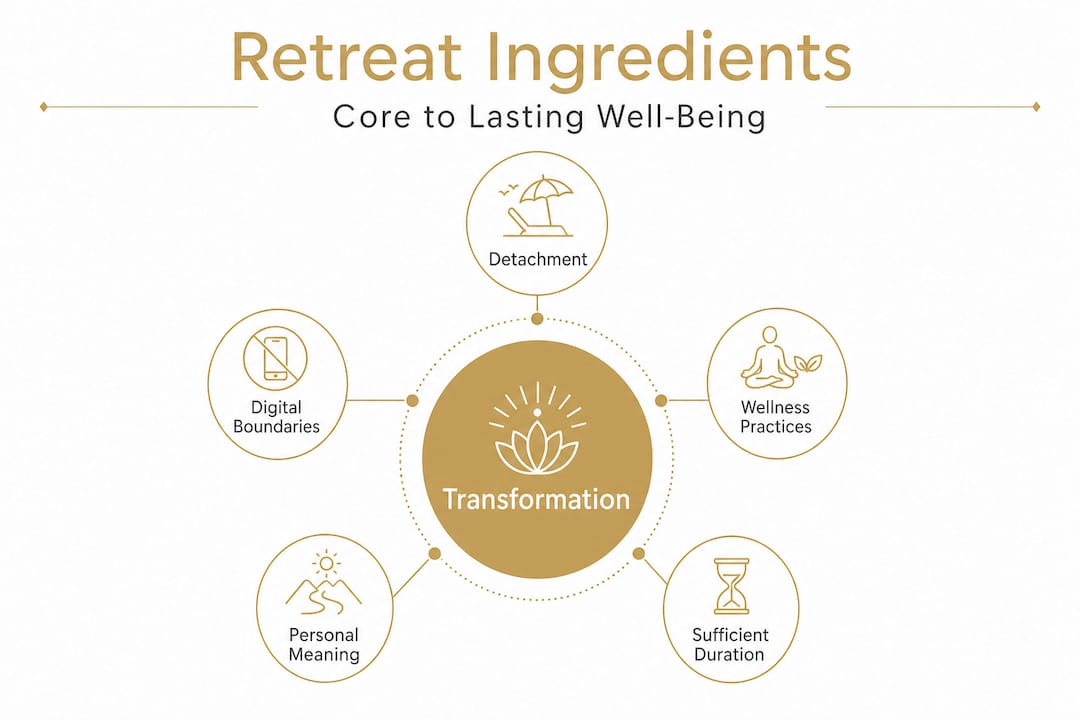
Here is what this looks like in practice, when a retreat is designed with genuine intention:
Psychological detachment and digital boundaries. This is the foundation. Without true separation from work demands, the nervous system remains on alert. Elite retreats establish clear communication protocols, encourage device-free windows, and support guests in genuinely setting down their professional identity for the duration of the stay.
Structured wellness programming. Guided mindfulness sessions, breathwork, personalized movement practices, and nutrition consultations all serve a dual purpose. They reduce stress in the moment, and they equip you with skills you can carry home. The difference between a retreat that transforms and one that merely refreshes lies in this transfer of capacity.
Sense of choice and personal meaning. The most effective programs hold space for both expert guidance and personal freedom. You might follow a morning meditation protocol, then choose your own afternoon rhythm between sea swimming, a cooking class, or stillness on a terrace overlooking olive groves. This balance reflects genuine respect for your autonomy, and it mirrors the research findings on perceived control.
Duration that allows accumulation. A weekend can offer respite. A purposefully designed week or longer allows the active ingredients to layer, deepen, and begin rewiring your habitual stress responses.
Compare the two most common approaches side by side:
| Retreat type | Key features | Stress relief outcome |
|---|---|---|
| Standard luxury hotel stay | Passive amenities, occasional spa | Brief relief, rapid fade |
| Structured anti-stress program | Digital detox, guided practices, personalized schedule | Deeper relief, skills retained |
For guests exploring wellness travel journeys that go beyond surface-level comfort, these distinctions are not trivial. They are the difference between a pleasant memory and a genuine shift in how you feel, and function, over the long term.
Pro Tip: Prioritize retreats that offer structured morning programming alongside genuinely flexible afternoons. This combination honors both the science of skill-building and your need for personal autonomy.
Why luxury wellness vacations in Greece stand out
Once you know what to seek in an anti-stress vacation, Greece emerges as an exemplary destination for luxury restorative travel.
The landscape itself does meaningful work. The Aegean light, the rhythm of the sea, the scent of wild thyme in the hills, and the unhurried pace of island life all facilitate the psychological detachment that research identifies as a primary driver of stress relief. You do not have to engineer this shift; the environment begins it the moment you arrive. This is not sentimentality. It is context, and context shapes biology.
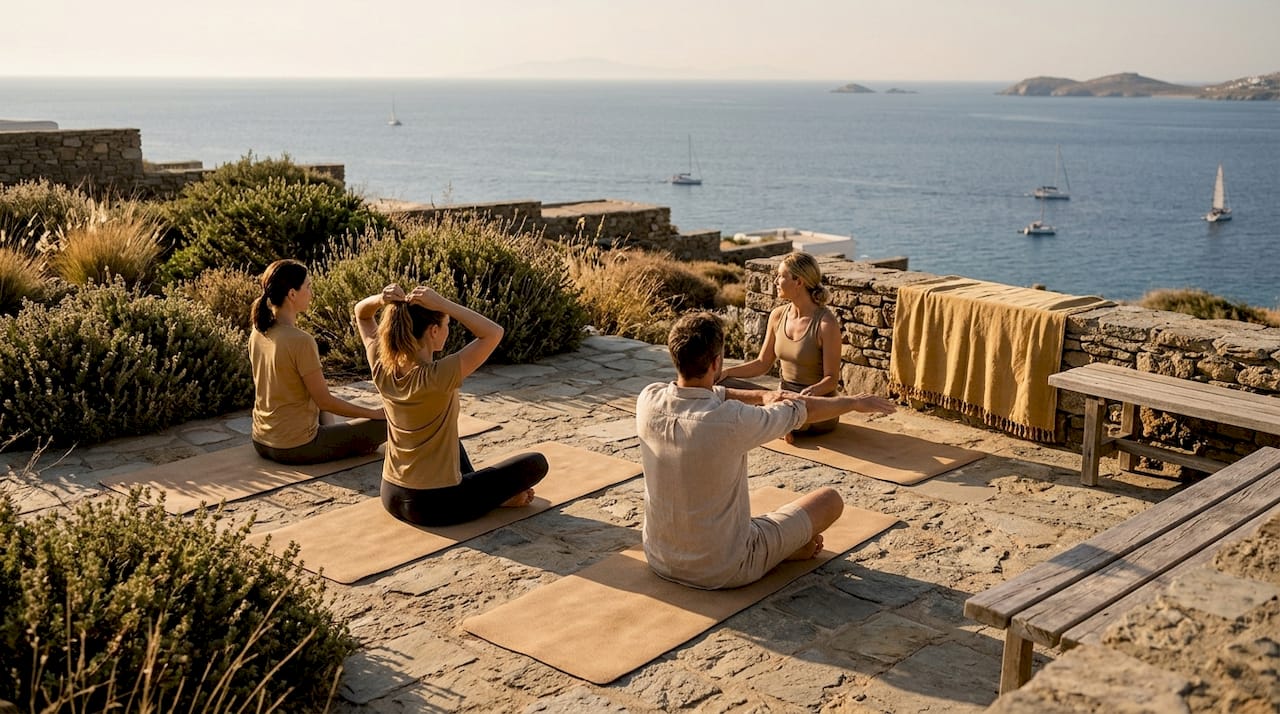
Greece also carries something that few destinations can offer: a living cultural tradition of balance. The ancient concepts of eudaimonia (the flourishing life), diaita (a balanced way of living across food, movement, and rest), and philoxenia (a warm, generous welcome of others) are not historical curiosities. They are woven into daily life, and they create an atmosphere that naturally supports the inner orientation required for genuine restoration.
World-class wellness resorts in Greece now combine these cultural roots with evidence-based programming. You will find programs that integrate mindfulness with traditional Greek herbal medicine, movement classes held on cliff-edge terraces at sunrise, sleep optimization protocols informed by circadian science, and nutrition plans built around the Mediterranean diet’s well-documented benefits for inflammation and mental health.
Research on structured restorative retreats supports this approach. Treating a retreat as an intervention rather than passive leisure, ensuring it includes mindfulness components and conditions that reduce cognitive load and work rumination, produces measurably better outcomes for high-net-worth travelers seeking repeatable well-being benefits.
Key features to look for when choosing a Greece wellness retreat:
- Fully customizable daily programs that honor your personal health goals
- Clear digital detox frameworks, not just gentle suggestions
- Access to expert practitioners across movement, nutrition, and emotional health
- Integration of local therapeutic traditions alongside modern evidence-based therapies
- Small guest ratios that allow genuine personalization
Those looking to optimize travel for health in Greece will find that the country’s unique combination of natural beauty, cultural wisdom, and sophisticated wellness infrastructure creates conditions that are genuinely difficult to replicate elsewhere.
Pro Tip: When evaluating Greek wellness resorts, ask specifically about their digital detox policy and how they support guests in transitioning out of work mode on arrival. The quality of this onboarding process is often a reliable signal of the overall program depth.
Maximizing and extending the benefits after your return
You’ve experienced the power of an anti-stress retreat. Here’s how to keep the impact alive long after you’re home.
The evidence is clear, and it asks us to be honest with ourselves: wellness vacation benefits fade after returning to work. This is not a failure of the retreat. It is the nature of returning to a high-demand environment without reinforcement structures in place. The good news is that the skills, habits, and inner awareness you develop during a well-designed retreat are genuine assets. They just require deliberate tending.
Here is a practical sequence for extending your benefits after returning home:
-
Protect your mornings. The mindfulness or breathwork practice you began at the retreat is most easily maintained in the first thirty minutes of your day, before the demands of work and connection flood in. Guard this window consistently.
-
Establish digital hygiene rituals. Set defined windows for checking email and messages. The digital detox boundary you practiced during your retreat was not just a retreat rule; it is a recoverable habit, and it reduces cognitive load measurably.
-
Schedule micro-restoration moments. Brief pauses, a ten-minute walk without your phone, five minutes of stillness after lunch, a quiet tea at dusk, serve as anchors that maintain the parasympathetic tone you cultivated during your stay.
-
Engage in ongoing skill progression. If you learned movement techniques, local cooking methods, or breathwork practices during your retreat, continue developing them at home. Skill progression sustains the sense of mastery and meaning that drove your stress reduction in the first place.
-
Plan your next restorative journey. Research consistently shows that the anticipation of a positive event has measurable benefits for mood and motivation. Having a future wellness retreat on your calendar is itself a stress-protective act.
“Mindfulness-style residential retreats can reduce perceived stress and anxiety and are associated with changes in biological stress and inflammation markers, suggesting effects that extend beyond subjective experience into the body’s stress biology.”
This finding matters deeply. The biology shifts during a well-designed retreat, and you have a window after returning home to reinforce those shifts before they recede. Use it with intention. For those who integrate wellness into a broader lifestyle, exploring golf wellness trends in 2026 offers another dimension of active restoration that sustains momentum between dedicated retreats.
Why the secret to lasting well-being is design, not just destination
Here is something the luxury travel industry rarely says aloud: the most beautiful resort in the world will not deliver lasting stress relief if the experience is not intentionally designed to produce it. Most marketing leans heavily on scenery, service, and amenity. These matter. But they are not the mechanism of benefit.
We have watched travelers return from genuinely extraordinary destinations feeling only marginally more restored than when they left. And we have seen others return from quieter, less iconic locations transformed in ways that lasted for months. The difference, every time, was structure and intention within the experience itself.
Elite retreats succeed when they pair the luxury of the setting with a transformative, research-driven architecture of daily experience. This means programs that are neither rigid nor shapeless. It means practitioners who listen before they prescribe. It means genuine autonomy within a framework of expertise, and genuine expertise within a framework that respects your individuality.
The most overlooked investment a discerning traveler can make is in professional guidance before they book. Understanding what matters in health enhancement travel before choosing a destination or program dramatically improves the quality of the experience and the durability of the benefits. We have observed this consistently across more than three decades of curating wellness journeys for guests who take their vitality seriously.
The travelers who benefit most treat their anti-stress retreat as a purposeful intervention, not simply a reward. They arrive with clear intentions, engage fully with the programming, and return home with a genuine plan for integration. That is not rigidity. It is wisdom applied to the act of resting.
Pro Tip: Before your next retreat, spend twenty minutes writing down three specific habits you want to establish or deepen during your stay. Share these with your program advisor. This simple act of intention-setting increases the probability that you will return home with durable, personalized practices rather than a general sense of refreshment.
Experience transformative wellness with Longevity Travel
If you’re ready to go beyond conventional relaxation and invest in truly transformative travel, here’s your next step.
At Longevity Travel, we have spent over three decades curating journeys that do exactly what this article describes: pairing the beauty and cultural richness of Greece with scientifically informed wellness programming. We do not believe in cookie-cutter retreats. Every journey we design is shaped by your goals, your rhythms, and the kind of well-being you want to carry home.
Our anti-stress programs are built around the active ingredients the research identifies, psychological detachment, structured practices, personal autonomy, and meaningful duration. Each journey is supported by advisors who listen first and design second. If you are ready to treat your next retreat as a genuine investment in your healthspan, we invite you to partner with Longevity Travel and discover what restorative travel, designed with precision and care, genuinely feels like. Begin by exploring Longevity Travel and take the first step toward a journey that matters.
Frequently asked questions
How long do the benefits of anti-stress vacations last?
Most benefits peak during and shortly after travel but tend to fade within weeks unless reinforced by consistent daily habits and mindful post-retreat routines.
Which retreat activities are most effective for stress reduction?
Mindfulness practices, guided meditation, and structured psychological detachment from work offer the most robust results, with mindfulness retreats showing measurable reductions in both perceived stress and biological stress markers.
Why choose Greece for a luxury anti-stress vacation?
Greece combines breathtaking natural landscapes and a cultural tradition of balanced living with world-class wellness retreats that offer personalized, evidence-based stress reduction in a setting that naturally supports psychological detachment.
Can anti-stress retreats change your biological stress markers?
Yes. Research confirms that mindfulness-style residential retreats reduce cortisol and shift inflammatory cytokines, indicating real physiological change that extends well beyond subjective feelings of relaxation.
Recommended
Looking for a holiday that renews body and mind? Explore our curated longevity and wellness journeys.
Browse destinationsNewsletter
Spomin na življenje
Tedensko po e-pošti: navdih, izbrani nasveti za dolgoživost in ekskluzivne ponudbe potovanj.