
The Role of Self-Care in Luxury Travel for Well-Being
Discover the role of self-care in luxury travel for well-being. Transform your journeys into restorative experiences that elevate your health.

TL;DR:
- Self-care in luxury travel involves intentionally embedding evidence-based practices like optimized sleep and mindfulness into every aspect of a journey for true restoration. It emphasizes slow pacing, circadian re-anchoring, and structured mindfulness to support physical and mental recovery beyond mere comfort. Utilizing wearable data and longer stays enhances lasting well-being, transforming travel into a preventive health strategy rather than superficial indulgence.
Self-care in luxury travel is defined as the intentional embedding of evidence-based wellness practices, from optimized sleep and mindfulness to deliberate pacing, into every layer of a high-end travel experience. This is not about adding a spa treatment to an itinerary. It is about designing a journey that actively restores your nervous system, supports your healthspan, and returns you home measurably better than when you left. The wellness travel industry now recognizes this shift formally, using the term restorative travel to describe experiences built around physiological and psychological recovery rather than passive indulgence. At Longevitytravel, we have watched this shift unfold over three decades, and the evidence behind it has never been stronger.
What is the role of self-care in luxury travel?
Self-care in the context of luxury travel functions as a preventive health strategy, not a reward. The distinction matters. When you treat a trip as a recovery protocol, you make different choices: you select accommodations designed for sleep quality, you build in unstructured time, and you choose destinations that calm rather than stimulate. This inner orientation toward restoration is what separates a genuinely restorative trip from an expensive one.
The shift toward well-being as the new logic of luxury reflects a deeper cultural change. Travelers are no longer measuring the success of a trip by the number of sights visited or the prestige of the hotel brand. They are measuring it by how they feel during and after. Burnout and overstimulation are now primary drivers pushing discerning travelers toward silence, mindful experiences, and genuine restoration. This means luxury hospitality must deliver more than comfort. It must deliver recovery.
The self-care benefits in travel are also not limited to the trip itself. Research confirms that embedding self-care routines during and after travel maximizes the cognitive and emotional benefits of the experience. Travel alone is not enough. The habits you carry into and out of a journey determine whether the restoration lasts.
How does sleep quality shape your luxury travel wellness?
Sleep is the single most powerful self-care lever available to any traveler, and luxury hospitality is only beginning to take it seriously. A 2025 Nature study analyzing 23 biological aging clocks found that optimal sleep duration of 6.4 to 7.8 hours is associated with lower biological aging and better systemic health in middle to older adults. Both short sleep under six hours and long sleep over eight hours carry measurable health risks. This means the goal is not simply more sleep. It is calibrated, restorative sleep.
Travel disrupts this calibration. Transmeridian flights shift your circadian rhythm, and circadian disruption during travel produces nonrestorative sleep even when you spend adequate hours in bed. The mechanism is well understood: your internal clock anchors to light cues, and crossing time zones misaligns those cues with local day and night cycles. Luxury accommodations that treat this seriously use blackout systems, temperature regulation, and curated morning light exposure to help guests re-anchor their circadian timing quickly.
The table below shows how sleep-focused design elements in luxury properties compare to standard hotel offerings:
| Feature | Standard hotel | Sleep-optimized luxury property |
|---|---|---|
| Lighting | Fixed overhead lighting | Circadian-tuned, dimmable systems |
| Mattress and bedding | Brand standard | Individually adjustable firmness |
| Sound environment | Passive soundproofing | Active acoustic management |
| Morning protocol | Wake-up call | Guided light exposure and movement |
| Technology | In-room entertainment | Wearable sleep tracking integration |
Pro Tip: On arrival at a new time zone, seek natural morning light for at least 20 minutes before 10 a.m. This single habit re-anchors your circadian clock faster than any supplement or sleep aid.
Why slower travel pacing is a core self-care strategy
The pace of a trip is a self-care decision. Rushing through five cities in seven days is not luxury travel. It is logistical stress with better hotels. The industry has a name for the alternative: Slow Hospitality, a conscious approach to travel that prioritizes depth of experience over breadth of destination.
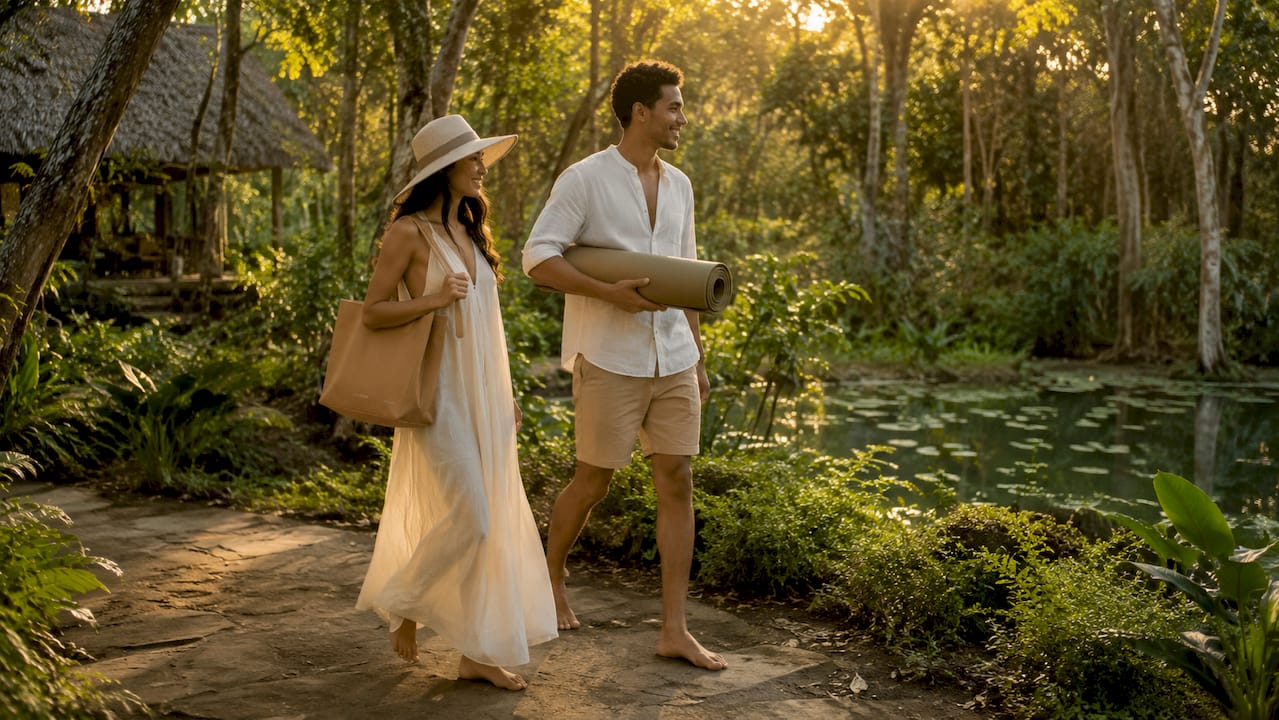
The data supports this shift clearly. According to Virtuoso’s 2025 Luxe Report, 55% of travel advisers report that clients are spending more per trip while choosing slower itineraries with fewer crowds and longer stays. This is not a niche preference. It is a structural change in how discerning travelers define value.
Slower pacing supports self-care in several specific ways:
- Stress recovery: The nervous system requires sustained calm to shift from a sympathetic stress state to a parasympathetic recovery state. Short trips rarely allow this transition to complete.
- Cultural immersion: Spending a week in one place rather than one night in seven places allows genuine connection with local rhythms, food, and people. This depth is restorative in a way that sightseeing is not.
- Sleep continuity: Frequent moves across time zones compound circadian disruption. Longer stays in one location allow your sleep architecture to stabilize and improve progressively.
- Intentional living: Privacy and experiential depth have replaced conspicuous consumption as the primary status markers for conscious luxury travelers. Staying longer in fewer places signals a different relationship with time itself.
At Longevitytravel, the destinations we curate in Greece and Lanzarote are chosen precisely because they reward this slower pace. A week in the Mani Peninsula or on the volcanic coast of Lanzarote offers the kind of unhurried immersion that genuinely resets your inner rhythm.
How does mindfulness in luxury travel work in practice?
Mindfulness in luxury travel is not a buzzword. It is a structured practice with measurable psychological benefits, and the best hospitality brands are now building it into the physical architecture of their properties. JW Marriott Tokyo has introduced Asia’s first Mindful Rooms and Suites, featuring breathwork stations, guided meditation programming, yoga movement spaces, and personalized wellness consultations. This is not a spa add-on. It is a room designed from the ground up to support a calmer nervous system.
The World Health Organization’s 2026 guidelines advocate for evidence-based psychological self-help delivered through digital and printed media as scalable mental health support. This framework applies directly to wellness-focused travel experiences. A luxury property that provides structured breathwork guides, sleep meditations, or journaling prompts is not offering a soft amenity. It is delivering a clinically grounded self-care intervention.
Pro Tip: Before booking a wellness retreat, ask the property specifically whether their mindfulness programming is guided by a certified practitioner or simply ambient. The difference in outcome is significant.
The comparison below illustrates how different levels of mindfulness integration function in luxury travel settings:
| Mindfulness approach | What it looks like | Self-care benefit |
|---|---|---|
| Ambient wellness | Aromatherapy, soft music, spa access | Mild relaxation, passive stress reduction |
| Structured programming | Daily guided meditation, breathwork sessions | Measurable reduction in cortisol and anxiety |
| Personalized consultation | One-on-one wellness assessment and bespoke ritual design | Targeted recovery aligned with individual health goals |
For readers planning wellness-focused stays, the distinction between these tiers matters enormously. Ambient wellness feels pleasant. Structured and personalized programming produces lasting change.
How to practice self-care as preventive healthcare during travel
The most effective framework for self-care during luxury travel treats the trip as a recovery protocol with measurable inputs and outputs. Corporate Wellness Magazine’s 2026 analysis of executive wellness and self-care defines self-care as preventive healthcare encompassing sleep health, physical activity, mental well-being, and boundary setting. This framework translates directly to travel planning.
Here is a practical sequence for operationalizing self-care across a luxury trip:
- Assess your baseline before departure. Use a wearable device to track your resting heart rate variability and sleep quality in the week before travel. This gives you a recovery baseline to compare against during the trip.
- Design your first 48 hours around circadian re-anchoring. Prioritize morning light exposure, avoid alcohol on the first night, and keep your sleep window aligned with local time from day one.
- Build one unstructured hour into each day. No activities, no screens, no social obligations. This is not wasted time. It is the window in which your nervous system actually recovers.
- Use wearable data to guide your pacing. A 2026 study of 1.2 million days of wearable data links sleep duration directly to heart rate and heart rate variability metrics. If your recovery scores are low, that is the day to rest, not to add an excursion.
- Set a post-travel integration plan. The cognitive and emotional benefits of a restorative trip extend significantly when you maintain the habits you practiced during travel. Identify two or three practices, whether morning light, a daily walk, or a brief meditation, and carry them home.
Physical activity deserves specific attention. Movement supports sleep quality, reduces cortisol, and maintains the metabolic benefits of a wellness-focused trip. The best luxury Mediterranean retreats integrate movement naturally into the daily rhythm through walking, swimming, or golf rather than treating it as an optional gym visit.
Key takeaways
Self-care in luxury travel is most effective when treated as a preventive health strategy built into every layer of the experience, from sleep design to travel pacing to mindfulness programming.
| Point | Details |
|---|---|
| Sleep is the foundation | Optimal sleep of 6.4 to 7.8 hours lowers biological aging; luxury properties should support circadian re-anchoring. |
| Slow pacing restores deeply | Longer stays in fewer places allow the nervous system to complete a full recovery cycle. |
| Mindfulness needs structure | Personalized wellness consultations and guided programming deliver measurably better outcomes than ambient spa access. |
| Wearable data guides recovery | Tracking heart rate variability during travel enables personalized, evidence-based self-care decisions. |
| Post-travel habits extend benefits | Carrying two or three restorative practices home maximizes the lasting cognitive and emotional gains of the trip. |
Why I think most luxury travelers are leaving restoration on the table
After more than three decades of curating wellness-focused travel, the pattern I see most often is this: people invest significantly in a luxury trip and then fill every hour of it. They book the best property, choose the finest destination, and then schedule themselves into exhaustion. The irony is real. The setting is restorative. The pace is not.
The misconception is that luxury travel is inherently restorative simply because it is comfortable. Comfort and restoration are not the same thing. Your nervous system does not recover because the thread count is high. It recovers because you gave it time, quiet, and consistent sleep. I have seen travelers return from two weeks in Greece more tired than when they left, not because Greece failed them, but because they treated it like a checklist.
The travelers who return genuinely renewed share one habit: they protect unstructured time the way they protect a business meeting. They treat their sleep window as non-negotiable. They choose one place and stay long enough to feel its rhythm. And they carry something home. Not a souvenir. A practice. That is what makes the difference between a trip that fades in two weeks and one that changes how you live.
If you are planning a bespoke wellness stay, start by asking yourself one question: what do I want to feel like on the last day? Build the itinerary backward from that answer.
— Robert
Design your restorative luxury travel experience with Longevitytravel
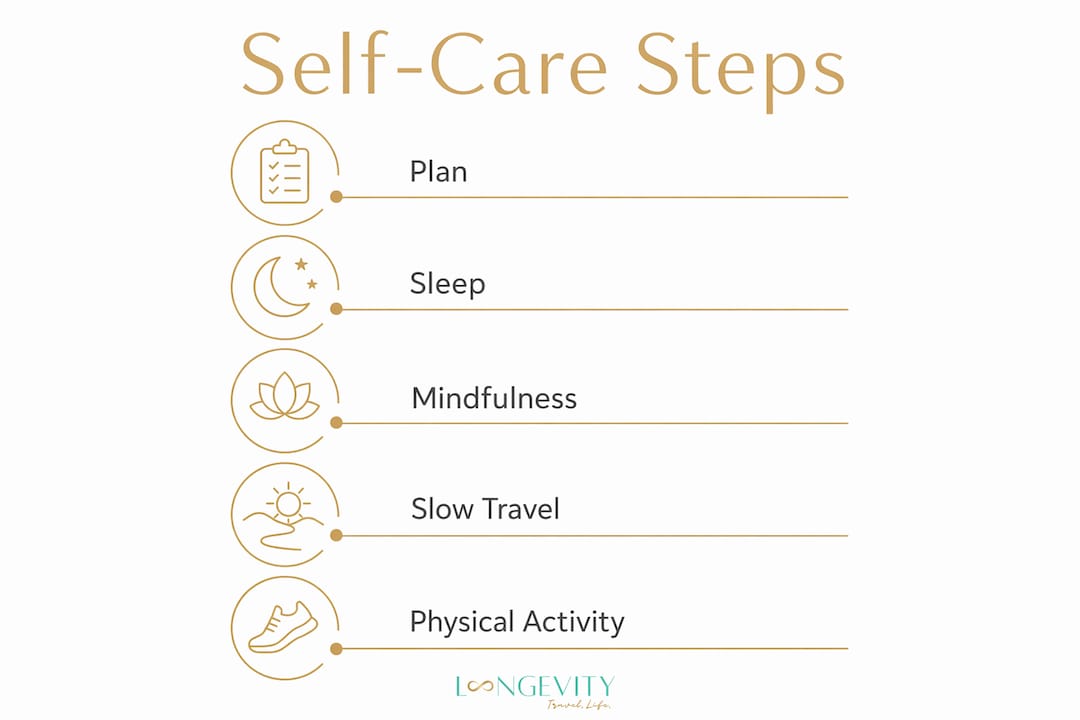
At Longevitytravel, we design journeys around one question: how do you want to feel? Our personalized travel consulting service builds itineraries that integrate sleep optimization, slow hospitality, mindfulness programming, and movement into a coherent, restorative experience. We draw on over 30 years of intimate knowledge of Greece and Lanzarote, two destinations that reward the slower, deeper travel pace that genuine self-care requires. Whether you are recovering from burnout, prioritizing your healthspan, or simply ready for a trip that gives back more than it takes, we are here to help you design it with intention.
FAQ
What is the role of self-care in luxury travel?
Self-care in luxury travel is the intentional integration of evidence-based wellness practices, including optimized sleep, mindfulness, and deliberate pacing, into the travel experience to support physical, mental, and emotional recovery. It functions as a preventive health strategy rather than a passive indulgence.
How does sleep affect well-being during a luxury trip?
A 2025 Nature study found that optimal sleep of 6.4 to 7.8 hours is associated with lower biological aging and better systemic health. Circadian disruption from long-haul travel compounds sleep problems, making sleep-focused accommodation design and circadian re-anchoring habits critical self-care tools.
What are self-care retreats and how do they differ from standard luxury hotels?
Self-care retreats are properties that integrate structured wellness programming, including guided mindfulness, personalized health consultations, and sleep-optimized design, into the guest experience. Standard luxury hotels offer comfort; self-care retreats offer measurable recovery.
Why is slower travel better for well-being?
Slower travel allows the nervous system to complete a full recovery cycle, which short or fragmented trips rarely permit. Virtuoso’s 2025 Luxe Report found that 55% of advisers report clients spending more per trip to access slower, less crowded itineraries with longer stays.
How can wearable technology support self-care during travel?
Wearables track physiological metrics like heart rate variability and sleep duration, giving travelers objective data to guide daily pacing decisions. A 2026 study of 1.2 million days of wearable data directly links sleep duration to recovery metrics, enabling personalized self-care rather than guesswork.
Recommended
Looking for a holiday that renews body and mind? Explore our curated longevity and wellness journeys.
Browse destinationsNewsletter
A memory for life
Weekly to your inbox: inspiration, longevity insights and exclusive travel offers.